100天搞定机器学习:模型训练好了,然后呢?
大家好,我是老胡。
许久没有更新100天搞定机器学习系列了,最近在看一个开源框架,其中有用到 gRPC ,它可以用于机器学习模型的部署,也可用于深度学习框架的开发,本文就当是《100天搞定机器学习》的番外篇吧。

gRPC(Remote Procedure Call)
gRPC 由 Google 开发,是一款语言中立、平台中立、开源的 RPC 框架。
RPC(Remote Procedure Call)即:远程过程调用,它是一种通过网络从远程计算机程序上请求服务,而不需要了解底层网络技术的协议。使用的时候,客户端调用server端提供的接口就像是调用本地的函数一样。
比如:有两台服务器A,B,一个应用部署在A服务器上,想要调用B服务器上应用提供的函数/方法,由于不在一个内存空间,不能直接调用,需要通过网络来表达调用的语义和传达调用的数据。
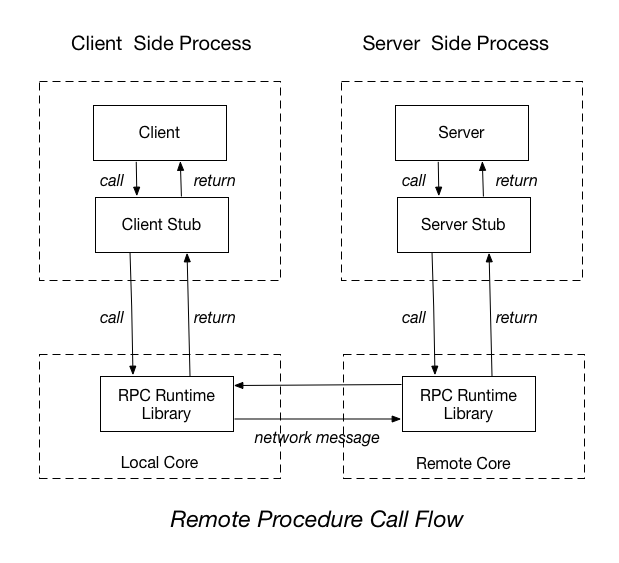
RPC更像是一种思想或机制,其实现方式有很多,除了gRPC ,还有阿里巴巴的 Dubbo、Facebook 的 Thrift、Twitter 的 Finagle 等。
gRPC 基于以下理念:定义一个服务,指定其能够被远程调用的方法(包含参数和返回类型)。在服务端实现这个接口,并运行一个 gRPC 服务器来处理客户端调用。在客户端拥有一个存根能够像服务端一样的方法。你可以很容易地用 c++ 创建一个 gRPC 服务端,用 Go、Python、Ruby 来创建客户端。
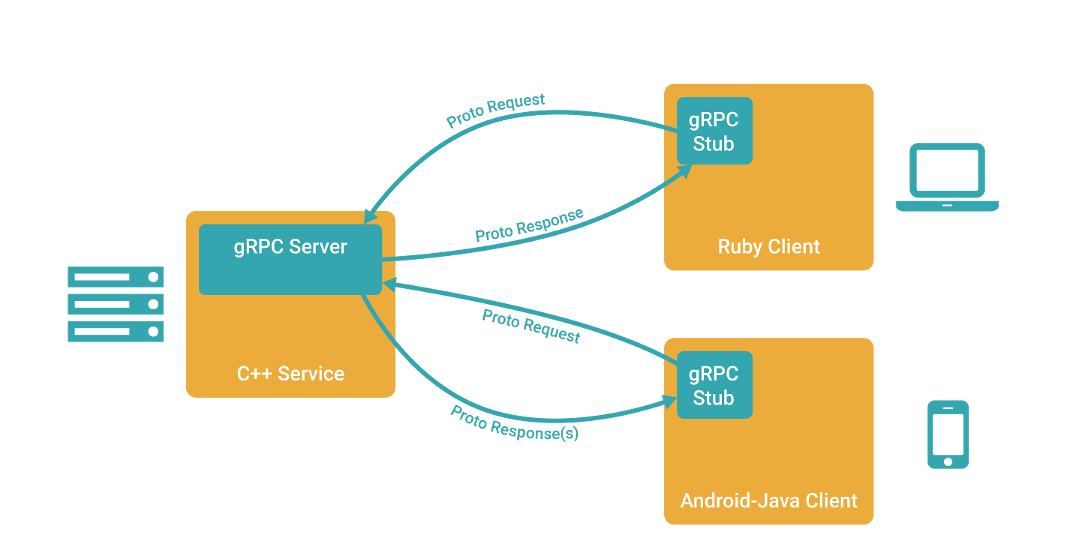
上图中的 Protocbuf 是gRPC的数据序列化工具,使用 Protobuf 将数据序列化成二进制的数据流,即可让用不同语言(proto3支持C++, Java, Python, Go, Ruby, Objective-C, C#)编写并在不同平台上运行的应用程序交换数据。ps:Protocbuf 也是 Google 开源的。
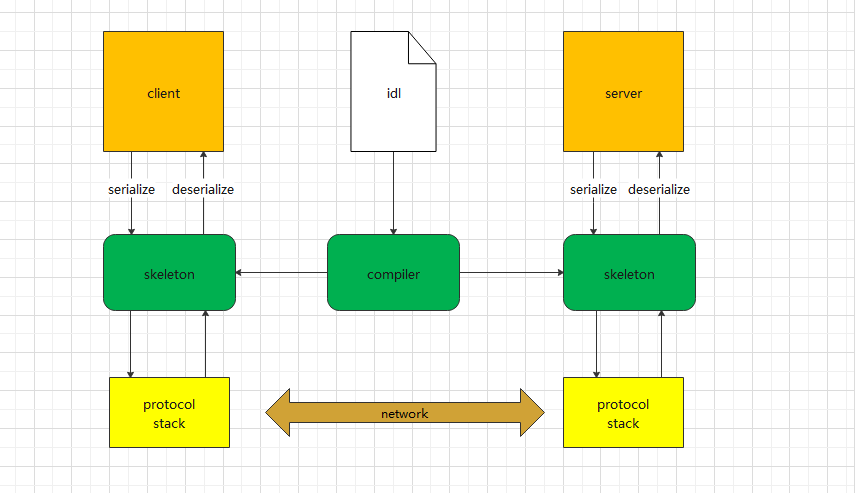
Protocol Buffer 官方提供了编译工具来对 proto 文件进行编译并生成语言相关的代码文件,可以极大地减少编码的工作量。对于序列化协议来说,使用方只需要关注业务对象本身,即 idl 定义,序列化和反序列化的代码只需要通过工具生成即可。
gRPC 实例详解——机器学习模型部署

开始实例之前,需要安装 gRPC 及相关工具
pip install -U grpcio
pip install -U grpcio-tools
pip install -U protobuf
gRPC的使用通常包括如下几个步骤:
- 通过protobuf来定义接口和数据类型
- 编写gRPC server端代码
- 编写gRPC client端代码
下面我们就以Iris数据集为例,用 gRPC server端部署一个随机森林分类器,client 端发起请求预测鸢尾花类型。
0、训练一个随机森林分类模型,把训练好的模型保存为pkl文件。
# train_model.py
from sklearn import datasets
from sklearn.pipeline import Pipeline
import joblib
from sklearn.ensemble import RandomForestClassifierdef main():clf = RandomForestClassifier()p = Pipeline([('clf', clf)])p.fit(X, y)filename_p = 'IrisClassifier.pkl'joblib.dump(p, filename_p)print('Model saved!')if __name__ == "__main__":iris = datasets.load_iris()X, y = iris.data, iris.targetmain()
1、通过protobuf定义接口和数据类型
新建一个iris_demo.proto文件
syntax = "proto3";package iris;message IrisPredictRequest {// 定义参数1float sepal_length = 1;//参数字段1float sepal_width = 2;//参数字段2float petal_length = 3;//参数字段3float petal_width = 4;//参数字段4
}message IrisPredictResponse {// 定义参数1int32 species = 1;
}service IrisPredictor{// 定义服务rpc predict_iris_species(IrisPredictRequest) returns (IrisPredictResponse){}
}
proto文件格式一般三部分组成,
- 头部的syntax 注明版本号为 “proto3”,必须写,没理由。
- 中间的 message 定义了predict_iris_species方法的参数IrisPredictRequest和IrisPredictResponse,还有参数字段的类型。
- 尾部的 service 定义一个服务IrisPredictor,其中包括 1 个predict_iris_species的RPC方法。这里可以定义多个RPC方法,在 message 中定义对应的参数即可。
2、使用gRPC protobuf生成Python的库函数
python -m grpc_tools.protoc -I=. --python_out=. --grpc_python_out=. ./iris_demo.proto
其中:
-I指定了源文件的路径
–python_out, 指定 xxx_pb2.py的输出路径,如果使用其它语言请使用对应语言的option
–grpc_python_out 指定xxx_pb2_grpc.py文件的输出路径
–*.proto是要编译的proto文件。
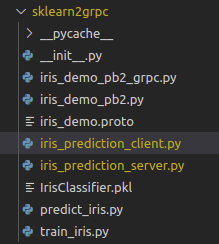
运行成功后,会自动生成iris_demo_pb2.py(里面有消息序列化类)和iris_demo_pb2_grpc.py(包含了服务器 Stub 类和客户端 Stub 类,以及待实现的服务 RPC 接口)。我们无需关心这两个py文件的细节,只需要直到在服务端和客户端怎么调用即可。
本例中,我们会用到的方法如下:
xxx_pb2.py
├── xxx_pb2.IrisPredictRequest 用于传入特征数据
├── xxx_pb2.IrisPredictResponse 用于预测
xxxx_pb2_grpc.py
├── xxx_pb2_grpc.IrisPredictorServicer 服务器 Stub 类
├── xxx_pb2_grpc.IrisPredictorStub 客户端 Stub 类
3、写一个服务器
这里的重点是定义 IrisPredictor 类的 predict_iris_species 方法,然后用 iris_demo_pb2_grpc.py 中的 add_IrisPredictorServicer_to_server 方法将 IrisPredictor 添加到 server。serve 函数里定义了 gRPC 的运行方式,使用 4 个 worker 的线程池。
# iris_prediction_server.py
import grpc
from concurrent import futures
import time
import joblib
import iris_demo_pb2
import iris_demo_pb2_grpc
import predict_iris
from sklearn.ensemble import RandomForestClassifierclass IrisPredictor(iris_demo_pb2_grpc.IrisPredictorServicer):@classmethoddef get_trained_model(cls):cls._model = joblib.load('IrisClassifier.pkl')return cls._modeldef predict_iris_species(self, request, context):model = self.__class__.get_trained_model()sepal_length = request.sepal_lengthsepal_width = request.sepal_widthpetal_length = request.petal_lengthpetal_width = request.petal_widthresult = model.predict([[sepal_length, sepal_width, petal_length, petal_width]])response = iris_demo_pb2.IrisPredictResponse(species=result[0])return response  # not suredef run():server = grpc.server(futures.ThreadPoolExecutor(max_workers=4))iris_demo_pb2_grpc.add_IrisPredictorServicer_to_server(IrisPredictor(), server)server.add_insecure_port('[::]:50055')server.start()print("grpc server start...")print("Listening on port 50055")server.wait_for_termination()if __name__ == '__main__':run()
4、写一个客户端
客户端的逻辑更加简单,连上gRPC服务,然后发起调用。
# iris_prediction_client.py
import grpc
import iris_demo_pb2
import iris_demo_pb2_grpcdef run():channel = grpc.insecure_channel('localhost:50055')stub = iris_demo_pb2_grpc.IrisPredictorStub(channel)request = iris_demo_pb2.IrisPredictRequest(sepal_length=6.7,sepal_width=3.0,petal_length=5.2,petal_width=2.3)response = stub.predict_iris_species(request)print('The prediction is :', response.species)if __name__ == '__main__':run()
5、调用 RPC
先开启服务端
$ python iris_prediction_server.py

另起一个terminal执行客户端代码,调用gRPC服务,结果如下:
$ python iris_prediction_client.py

referance
https://grpc.io/
http://doc.oschina.net/
https://zhuanlan.zhihu.com/p/148139089
https://yu-ishikawa.medium.com/machine-learning-as-a-microservice-in-python-16ba4b9ea4ee
本文来自互联网用户投稿,文章观点仅代表作者本人,不代表本站立场,不承担相关法律责任。如若转载,请注明出处。 如若内容造成侵权/违法违规/事实不符,请点击【内容举报】进行投诉反馈!