Arduino上位机调试工具:Windows Remote Arduino
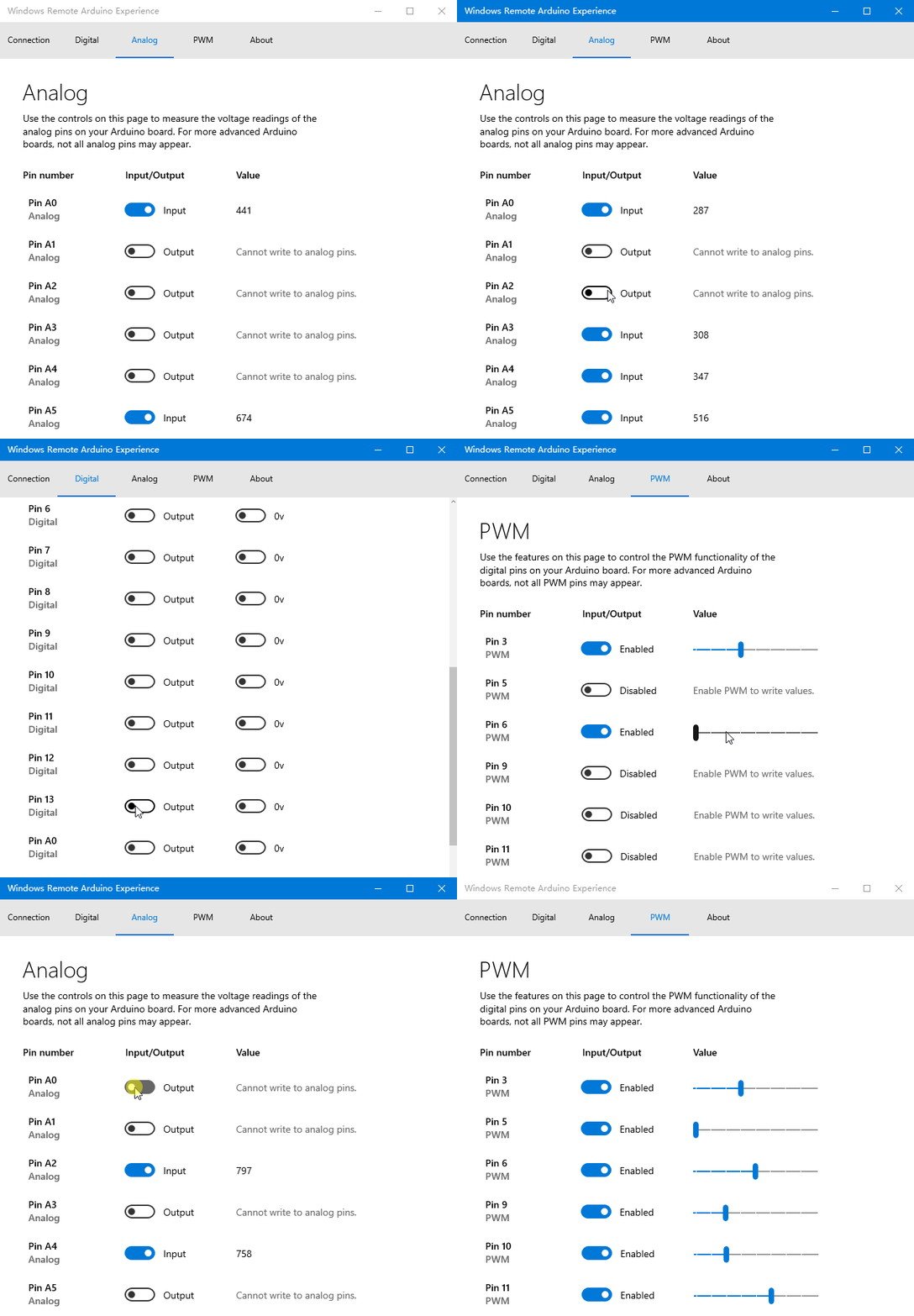
Windows Remote Arduino - 🌼功能演示
🛠安装教程(以Windows 10系统为例)
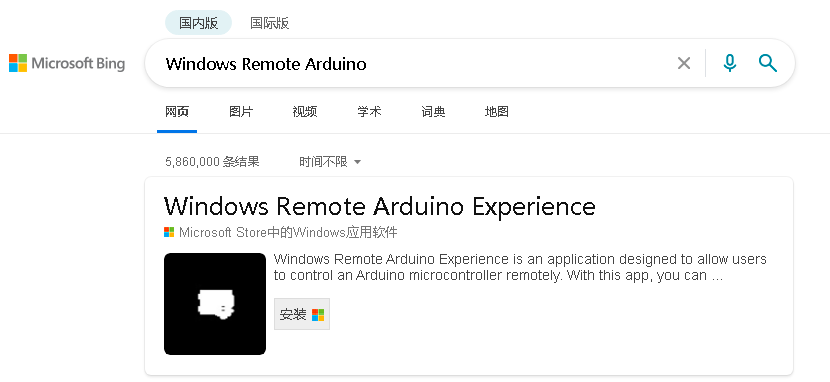
在浏览器搜索栏直接搜索关键字Windows Remote Arduino,点击安装,将自带打开Windows系统上的应用商店。
当然你也可以打开Windows10系统自带的应用商店,搜索并下载此应用。
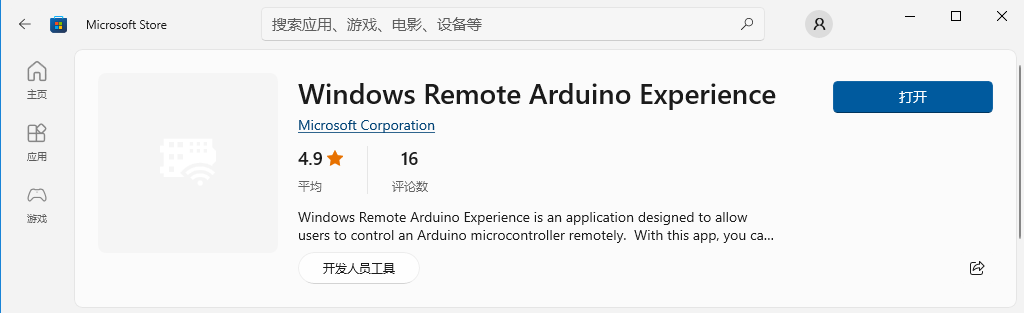
- 🌿我这里安装了就不做演示了,没安装的话,下图是获取并安装的按钮
- 🌿安装完毕后,给Arduino UNO开发板烧录指定的固件后才能通过此工具和Arduino UNo开发板通讯并连接上。
🔨固件烧录
1. 连接上Arduino UNO开发板
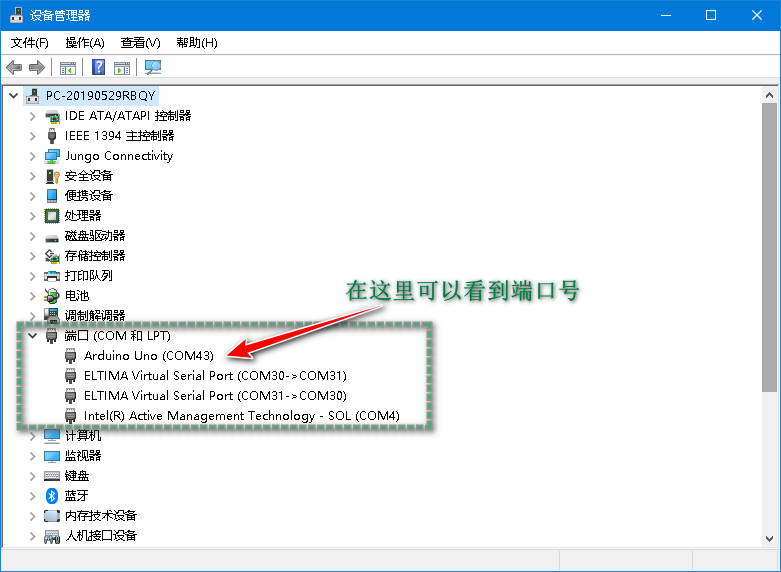
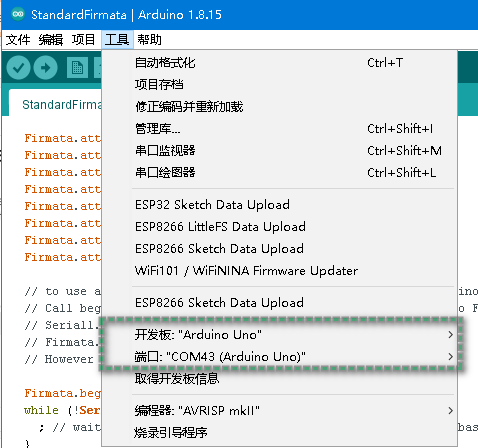
- 查看连接的端口号:
- 选择开发板型号:
2. 选择烧录指定的程序
- 如果手上有支持蓝牙的或者WIFI的 Arduino开发板可以选择其对应的固件示例代码进行烧录。这里只演示Arduino UNo开发板,所以选择
StandardFirmata此示例。
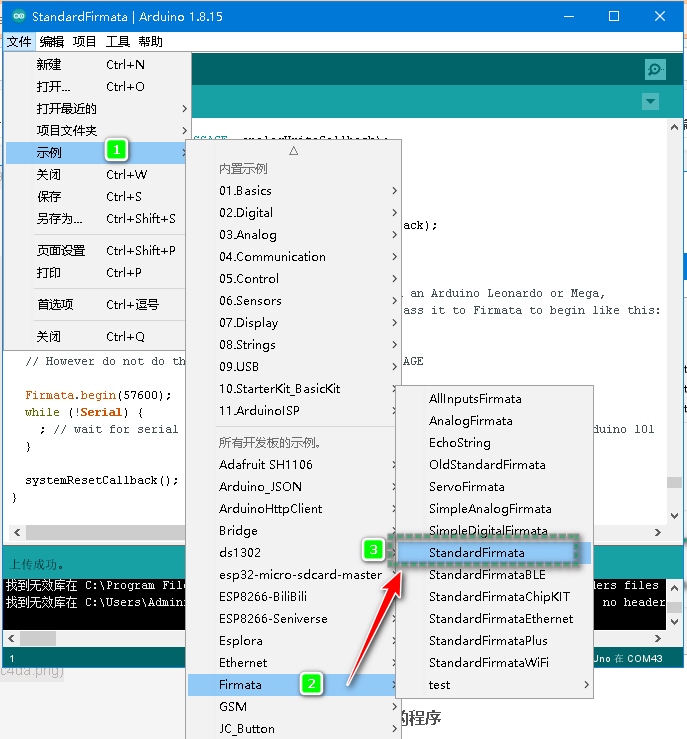
除了
StandardFirmata也可以选择StandardFirmataPlus,与标准版的固件不同的地方是模拟IO口输出的时候,输出的数值变化要缓慢一些,方便观察。
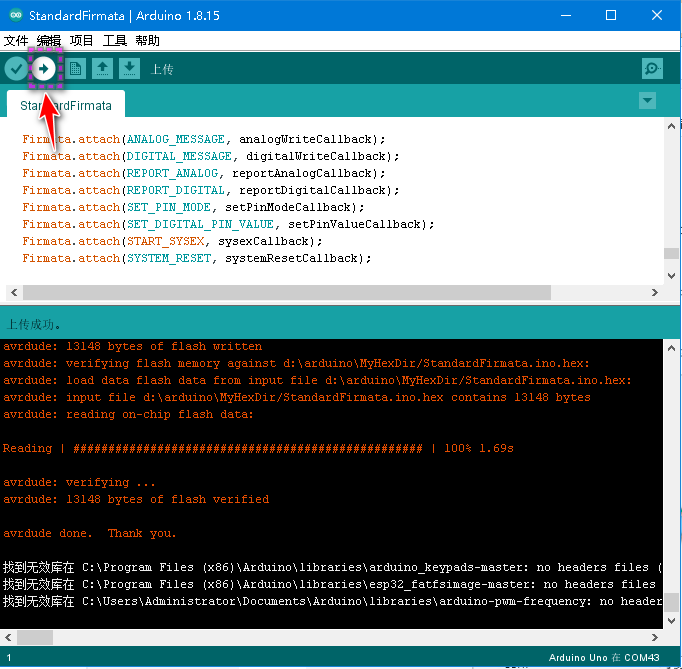
- 编译上传到Arduino UNO开发上。(如果不修改波特率默认
56700,就可以直接点击上传即可完成)
调试教程
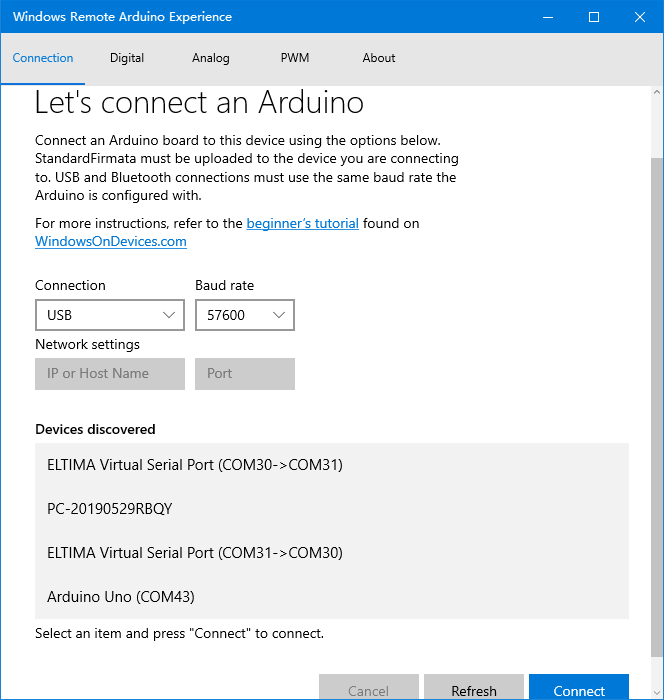
1. 通过USB连接到Arduino UNO开发板
固件烧录时,如果没有修改的话,默认的波特率是
57600.
2.控制界面操作
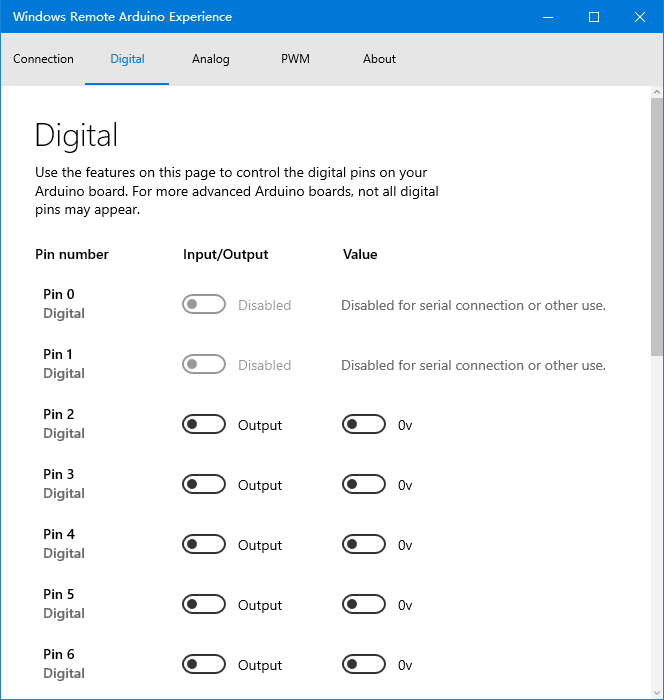
包含数字IO口控制,模拟口控制、以及PWM口控制。
-
通过鼠标点击PIN13的设置为Output,连接在IO13上的板载led灯将被点亮。

-
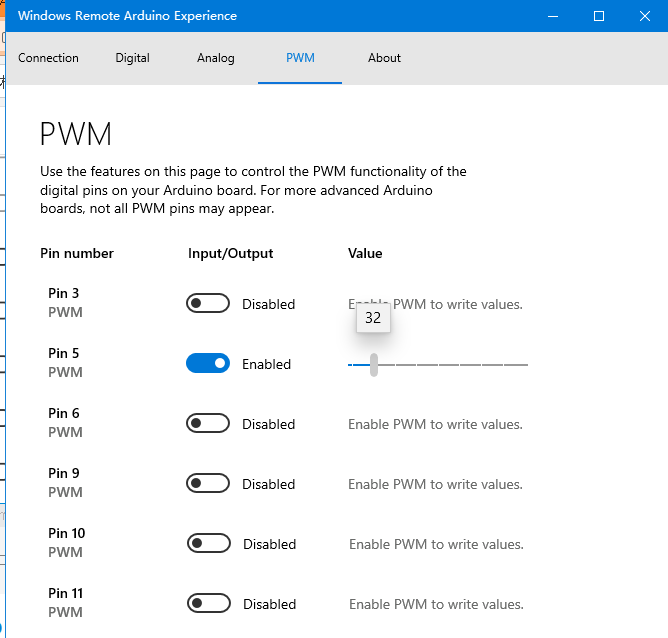
通过设置Pin 5 的PWM输出使能引脚,并将值调到32
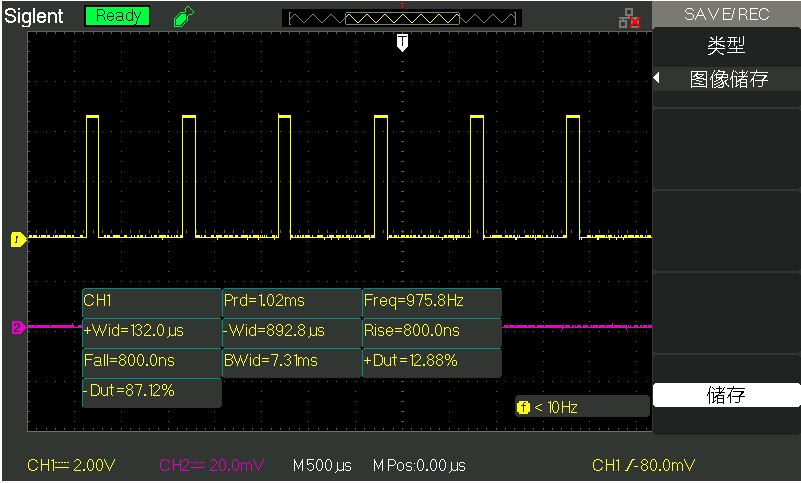
- 示波器采集到的波形参数,占空比是12.88%,相当接近。
32 255 = 0.1254901960784314 \frac{32}{255} = 0.1254901960784314 25532=0.1254901960784314
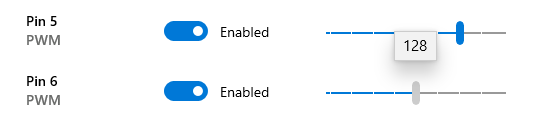
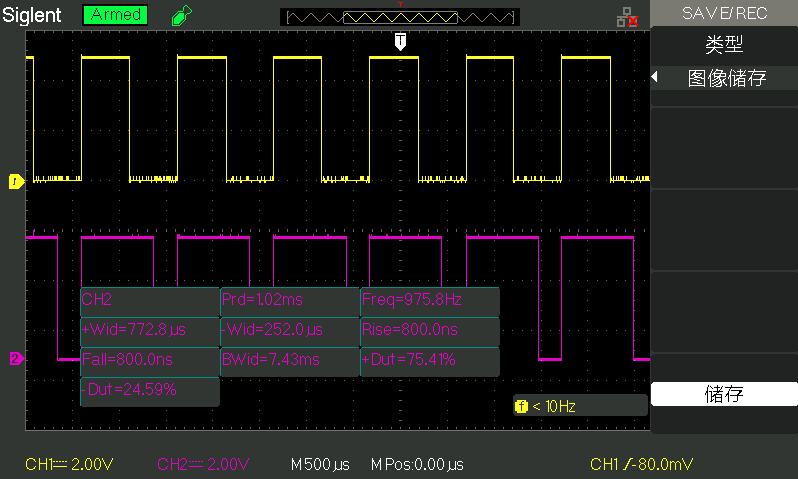
- 同时测试Pin5和Pin6,PWM数字调至192,和128.
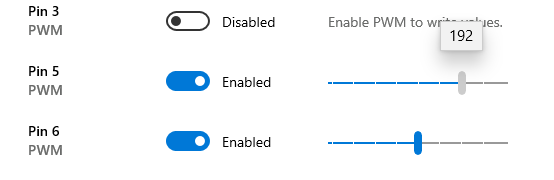
- 示波器截取的波形图像

- 模拟端口打开后,不能像PWM那样给定一个具体值,这里的值是一个不断变化的数字。
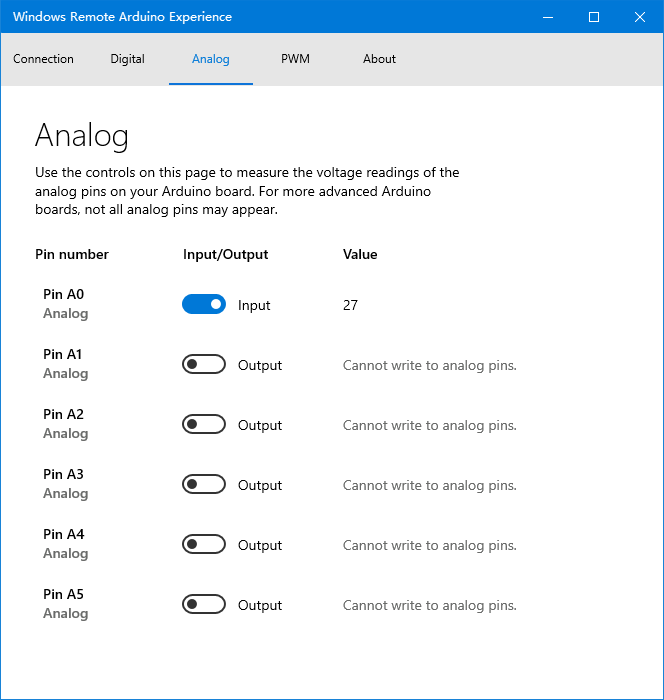
- 针对Arduino UNo开发板只能测试这些功能。
还提供了其它的两种连接方式;蓝牙和网络IP连接
由于手上没有相关的开发板无法进行测试。
相关代码
StandardFirmata代码
#include
#include
#include #define I2C_WRITE B00000000
#define I2C_READ B00001000
#define I2C_READ_CONTINUOUSLY B00010000
#define I2C_STOP_READING B00011000
#define I2C_READ_WRITE_MODE_MASK B00011000
#define I2C_10BIT_ADDRESS_MODE_MASK B00100000
#define I2C_END_TX_MASK B01000000
#define I2C_STOP_TX 1
#define I2C_RESTART_TX 0
#define I2C_MAX_QUERIES 8
#define I2C_REGISTER_NOT_SPECIFIED -1// the minimum interval for sampling analog input
#define MINIMUM_SAMPLING_INTERVAL 1/*==============================================================================* GLOBAL VARIABLES*============================================================================*/#ifdef FIRMATA_SERIAL_FEATURE
SerialFirmata serialFeature;
#endif/* analog inputs */
int analogInputsToReport = 0; // bitwise array to store pin reporting/* digital input ports */
byte reportPINs[TOTAL_PORTS]; // 1 = report this port, 0 = silence
byte previousPINs[TOTAL_PORTS]; // previous 8 bits sent/* pins configuration */
byte portConfigInputs[TOTAL_PORTS]; // each bit: 1 = pin in INPUT, 0 = anything else/* timer variables */
unsigned long currentMillis; // store the current value from millis()
unsigned long previousMillis; // for comparison with currentMillis
unsigned int samplingInterval = 19; // how often to run the main loop (in ms)/* i2c data */
struct i2c_device_info {byte addr;int reg;byte bytes;byte stopTX;
};/* for i2c read continuous more */
i2c_device_info query[I2C_MAX_QUERIES];byte i2cRxData[64];
boolean isI2CEnabled = false;
signed char queryIndex = -1;
// default delay time between i2c read request and Wire.requestFrom()
unsigned int i2cReadDelayTime = 0;Servo servos[MAX_SERVOS];
byte servoPinMap[TOTAL_PINS];
byte detachedServos[MAX_SERVOS];
byte detachedServoCount = 0;
byte servoCount = 0;boolean isResetting = false;// Forward declare a few functions to avoid compiler errors with older versions
// of the Arduino IDE.
void setPinModeCallback(byte, int);
void reportAnalogCallback(byte analogPin, int value);
void sysexCallback(byte, byte, byte*);/* utility functions */
void wireWrite(byte data)
{
#if ARDUINO >= 100Wire.write((byte)data);
#elseWire.send(data);
#endif
}byte wireRead(void)
{
#if ARDUINO >= 100return Wire.read();
#elsereturn Wire.receive();
#endif
}/*==============================================================================* FUNCTIONS*============================================================================*/void attachServo(byte pin, int minPulse, int maxPulse)
{if (servoCount < MAX_SERVOS) {// reuse indexes of detached servos until all have been reallocatedif (detachedServoCount > 0) {servoPinMap[pin] = detachedServos[detachedServoCount - 1];if (detachedServoCount > 0) detachedServoCount--;} else {servoPinMap[pin] = servoCount;servoCount++;}if (minPulse > 0 && maxPulse > 0) {servos[servoPinMap[pin]].attach(PIN_TO_DIGITAL(pin), minPulse, maxPulse);} else {servos[servoPinMap[pin]].attach(PIN_TO_DIGITAL(pin));}} else {Firmata.sendString("Max servos attached");}
}void detachServo(byte pin)
{servos[servoPinMap[pin]].detach();// if we're detaching the last servo, decrement the count// otherwise store the index of the detached servoif (servoPinMap[pin] == servoCount && servoCount > 0) {servoCount--;} else if (servoCount > 0) {// keep track of detached servos because we want to reuse their indexes// before incrementing the count of attached servosdetachedServoCount++;detachedServos[detachedServoCount - 1] = servoPinMap[pin];}servoPinMap[pin] = 255;
}void enableI2CPins()
{byte i;// is there a faster way to do this? would probaby require importing// Arduino.h to get SCL and SDA pinsfor (i = 0; i < TOTAL_PINS; i++) {if (IS_PIN_I2C(i)) {// mark pins as i2c so they are ignore in non i2c data requestssetPinModeCallback(i, PIN_MODE_I2C);}}isI2CEnabled = true;Wire.begin();
}/* disable the i2c pins so they can be used for other functions */
void disableI2CPins() {isI2CEnabled = false;// disable read continuous mode for all devicesqueryIndex = -1;
}void readAndReportData(byte address, int theRegister, byte numBytes, byte stopTX) {// allow I2C requests that don't require a register read// for example, some devices using an interrupt pin to signify new data available// do not always require the register read so upon interrupt you call Wire.requestFrom()if (theRegister != I2C_REGISTER_NOT_SPECIFIED) {Wire.beginTransmission(address);wireWrite((byte)theRegister);Wire.endTransmission(stopTX); // default = true// do not set a value of 0if (i2cReadDelayTime > 0) {// delay is necessary for some devices such as WiiNunchuckdelayMicroseconds(i2cReadDelayTime);}} else {theRegister = 0; // fill the register with a dummy value}Wire.requestFrom(address, numBytes); // all bytes are returned in requestFrom// check to be sure correct number of bytes were returned by slaveif (numBytes < Wire.available()) {Firmata.sendString("I2C: Too many bytes received");} else if (numBytes > Wire.available()) {Firmata.sendString("I2C: Too few bytes received");}i2cRxData[0] = address;i2cRxData[1] = theRegister;for (int i = 0; i < numBytes && Wire.available(); i++) {i2cRxData[2 + i] = wireRead();}// send slave address, register and received bytesFirmata.sendSysex(SYSEX_I2C_REPLY, numBytes + 2, i2cRxData);
}void outputPort(byte portNumber, byte portValue, byte forceSend)
{// pins not configured as INPUT are cleared to zerosportValue = portValue & portConfigInputs[portNumber];// only send if the value is different than previously sentif (forceSend || previousPINs[portNumber] != portValue) {Firmata.sendDigitalPort(portNumber, portValue);previousPINs[portNumber] = portValue;}
}/* -----------------------------------------------------------------------------* check all the active digital inputs for change of state, then add any events* to the Serial output queue using Serial.print() */
void checkDigitalInputs(void)
{/* Using non-looping code allows constants to be given to readPort().* The compiler will apply substantial optimizations if the inputs* to readPort() are compile-time constants. */if (TOTAL_PORTS > 0 && reportPINs[0]) outputPort(0, readPort(0, portConfigInputs[0]), false);if (TOTAL_PORTS > 1 && reportPINs[1]) outputPort(1, readPort(1, portConfigInputs[1]), false);if (TOTAL_PORTS > 2 && reportPINs[2]) outputPort(2, readPort(2, portConfigInputs[2]), false);if (TOTAL_PORTS > 3 && reportPINs[3]) outputPort(3, readPort(3, portConfigInputs[3]), false);if (TOTAL_PORTS > 4 && reportPINs[4]) outputPort(4, readPort(4, portConfigInputs[4]), false);if (TOTAL_PORTS > 5 && reportPINs[5]) outputPort(5, readPort(5, portConfigInputs[5]), false);if (TOTAL_PORTS > 6 && reportPINs[6]) outputPort(6, readPort(6, portConfigInputs[6]), false);if (TOTAL_PORTS > 7 && reportPINs[7]) outputPort(7, readPort(7, portConfigInputs[7]), false);if (TOTAL_PORTS > 8 && reportPINs[8]) outputPort(8, readPort(8, portConfigInputs[8]), false);if (TOTAL_PORTS > 9 && reportPINs[9]) outputPort(9, readPort(9, portConfigInputs[9]), false);if (TOTAL_PORTS > 10 && reportPINs[10]) outputPort(10, readPort(10, portConfigInputs[10]), false);if (TOTAL_PORTS > 11 && reportPINs[11]) outputPort(11, readPort(11, portConfigInputs[11]), false);if (TOTAL_PORTS > 12 && reportPINs[12]) outputPort(12, readPort(12, portConfigInputs[12]), false);if (TOTAL_PORTS > 13 && reportPINs[13]) outputPort(13, readPort(13, portConfigInputs[13]), false);if (TOTAL_PORTS > 14 && reportPINs[14]) outputPort(14, readPort(14, portConfigInputs[14]), false);if (TOTAL_PORTS > 15 && reportPINs[15]) outputPort(15, readPort(15, portConfigInputs[15]), false);
}// -----------------------------------------------------------------------------
/* sets the pin mode to the correct state and sets the relevant bits in the* two bit-arrays that track Digital I/O and PWM status*/
void setPinModeCallback(byte pin, int mode)
{if (Firmata.getPinMode(pin) == PIN_MODE_IGNORE)return;if (Firmata.getPinMode(pin) == PIN_MODE_I2C && isI2CEnabled && mode != PIN_MODE_I2C) {// disable i2c so pins can be used for other functions// the following if statements should reconfigure the pins properlydisableI2CPins();}if (IS_PIN_DIGITAL(pin) && mode != PIN_MODE_SERVO) {if (servoPinMap[pin] < MAX_SERVOS && servos[servoPinMap[pin]].attached()) {detachServo(pin);}}if (IS_PIN_ANALOG(pin)) {reportAnalogCallback(PIN_TO_ANALOG(pin), mode == PIN_MODE_ANALOG ? 1 : 0); // turn on/off reporting}if (IS_PIN_DIGITAL(pin)) {if (mode == INPUT || mode == PIN_MODE_PULLUP) {portConfigInputs[pin / 8] |= (1 << (pin & 7));} else {portConfigInputs[pin / 8] &= ~(1 << (pin & 7));}}Firmata.setPinState(pin, 0);switch (mode) {case PIN_MODE_ANALOG:if (IS_PIN_ANALOG(pin)) {if (IS_PIN_DIGITAL(pin)) {pinMode(PIN_TO_DIGITAL(pin), INPUT); // disable output driver
#if ARDUINO <= 100// deprecated since Arduino 1.0.1 - TODO: drop support in Firmata 2.6digitalWrite(PIN_TO_DIGITAL(pin), LOW); // disable internal pull-ups
#endif}Firmata.setPinMode(pin, PIN_MODE_ANALOG);}break;case INPUT:if (IS_PIN_DIGITAL(pin)) {pinMode(PIN_TO_DIGITAL(pin), INPUT); // disable output driver
#if ARDUINO <= 100// deprecated since Arduino 1.0.1 - TODO: drop support in Firmata 2.6digitalWrite(PIN_TO_DIGITAL(pin), LOW); // disable internal pull-ups
#endifFirmata.setPinMode(pin, INPUT);}break;case PIN_MODE_PULLUP:if (IS_PIN_DIGITAL(pin)) {pinMode(PIN_TO_DIGITAL(pin), INPUT_PULLUP);Firmata.setPinMode(pin, PIN_MODE_PULLUP);Firmata.setPinState(pin, 1);}break;case OUTPUT:if (IS_PIN_DIGITAL(pin)) {if (Firmata.getPinMode(pin) == PIN_MODE_PWM) {// Disable PWM if pin mode was previously set to PWM.digitalWrite(PIN_TO_DIGITAL(pin), LOW);}pinMode(PIN_TO_DIGITAL(pin), OUTPUT);Firmata.setPinMode(pin, OUTPUT);}break;case PIN_MODE_PWM:if (IS_PIN_PWM(pin)) {pinMode(PIN_TO_PWM(pin), OUTPUT);analogWrite(PIN_TO_PWM(pin), 0);Firmata.setPinMode(pin, PIN_MODE_PWM);}break;case PIN_MODE_SERVO:if (IS_PIN_DIGITAL(pin)) {Firmata.setPinMode(pin, PIN_MODE_SERVO);if (servoPinMap[pin] == 255 || !servos[servoPinMap[pin]].attached()) {// pass -1 for min and max pulse values to use default values set// by Servo libraryattachServo(pin, -1, -1);}}break;case PIN_MODE_I2C:if (IS_PIN_I2C(pin)) {// mark the pin as i2c// the user must call I2C_CONFIG to enable I2C for a deviceFirmata.setPinMode(pin, PIN_MODE_I2C);}break;case PIN_MODE_SERIAL:
#ifdef FIRMATA_SERIAL_FEATUREserialFeature.handlePinMode(pin, PIN_MODE_SERIAL);
#endifbreak;default:Firmata.sendString("Unknown pin mode"); // TODO: put error msgs in EEPROM}// TODO: save status to EEPROM here, if changed
}/** Sets the value of an individual pin. Useful if you want to set a pin value but* are not tracking the digital port state.* Can only be used on pins configured as OUTPUT.* Cannot be used to enable pull-ups on Digital INPUT pins.*/
void setPinValueCallback(byte pin, int value)
{if (pin < TOTAL_PINS && IS_PIN_DIGITAL(pin)) {if (Firmata.getPinMode(pin) == OUTPUT) {Firmata.setPinState(pin, value);digitalWrite(PIN_TO_DIGITAL(pin), value);}}
}void analogWriteCallback(byte pin, int value)
{if (pin < TOTAL_PINS) {switch (Firmata.getPinMode(pin)) {case PIN_MODE_SERVO:if (IS_PIN_DIGITAL(pin))servos[servoPinMap[pin]].write(value);Firmata.setPinState(pin, value);break;case PIN_MODE_PWM:if (IS_PIN_PWM(pin))analogWrite(PIN_TO_PWM(pin), value);Firmata.setPinState(pin, value);break;}}
}void digitalWriteCallback(byte port, int value)
{byte pin, lastPin, pinValue, mask = 1, pinWriteMask = 0;if (port < TOTAL_PORTS) {// create a mask of the pins on this port that are writable.lastPin = port * 8 + 8;if (lastPin > TOTAL_PINS) lastPin = TOTAL_PINS;for (pin = port * 8; pin < lastPin; pin++) {// do not disturb non-digital pins (eg, Rx & Tx)if (IS_PIN_DIGITAL(pin)) {// do not touch pins in PWM, ANALOG, SERVO or other modesif (Firmata.getPinMode(pin) == OUTPUT || Firmata.getPinMode(pin) == INPUT) {pinValue = ((byte)value & mask) ? 1 : 0;if (Firmata.getPinMode(pin) == OUTPUT) {pinWriteMask |= mask;} else if (Firmata.getPinMode(pin) == INPUT && pinValue == 1 && Firmata.getPinState(pin) != 1) {// only handle INPUT here for backwards compatibility
#if ARDUINO > 100pinMode(pin, INPUT_PULLUP);
#else// only write to the INPUT pin to enable pullups if Arduino v1.0.0 or earlierpinWriteMask |= mask;
#endif}Firmata.setPinState(pin, pinValue);}}mask = mask << 1;}writePort(port, (byte)value, pinWriteMask);}
}// -----------------------------------------------------------------------------
/* sets bits in a bit array (int) to toggle the reporting of the analogIns*/
//void FirmataClass::setAnalogPinReporting(byte pin, byte state) {
//}
void reportAnalogCallback(byte analogPin, int value)
{if (analogPin < TOTAL_ANALOG_PINS) {if (value == 0) {analogInputsToReport = analogInputsToReport & ~ (1 << analogPin);} else {analogInputsToReport = analogInputsToReport | (1 << analogPin);// prevent during system reset or all analog pin values will be reported// which may report noise for unconnected analog pinsif (!isResetting) {// Send pin value immediately. This is helpful when connected via// ethernet, wi-fi or bluetooth so pin states can be known upon// reconnecting.Firmata.sendAnalog(analogPin, analogRead(analogPin));}}}// TODO: save status to EEPROM here, if changed
}void reportDigitalCallback(byte port, int value)
{if (port < TOTAL_PORTS) {reportPINs[port] = (byte)value;// Send port value immediately. This is helpful when connected via// ethernet, wi-fi or bluetooth so pin states can be known upon// reconnecting.if (value) outputPort(port, readPort(port, portConfigInputs[port]), true);}// do not disable analog reporting on these 8 pins, to allow some// pins used for digital, others analog. Instead, allow both types// of reporting to be enabled, but check if the pin is configured// as analog when sampling the analog inputs. Likewise, while// scanning digital pins, portConfigInputs will mask off values from any// pins configured as analog
}/*==============================================================================* SYSEX-BASED commands*============================================================================*/void sysexCallback(byte command, byte argc, byte *argv)
{byte mode;byte stopTX;byte slaveAddress;byte data;int slaveRegister;unsigned int delayTime;switch (command) {case I2C_REQUEST:mode = argv[1] & I2C_READ_WRITE_MODE_MASK;if (argv[1] & I2C_10BIT_ADDRESS_MODE_MASK) {Firmata.sendString("10-bit addressing not supported");return;}else {slaveAddress = argv[0];}// need to invert the logic here since 0 will be default for client// libraries that have not updated to add support for restart txif (argv[1] & I2C_END_TX_MASK) {stopTX = I2C_RESTART_TX;}else {stopTX = I2C_STOP_TX; // default}switch (mode) {case I2C_WRITE:Wire.beginTransmission(slaveAddress);for (byte i = 2; i < argc; i += 2) {data = argv[i] + (argv[i + 1] << 7);wireWrite(data);}Wire.endTransmission();delayMicroseconds(70);break;case I2C_READ:if (argc == 6) {// a slave register is specifiedslaveRegister = argv[2] + (argv[3] << 7);data = argv[4] + (argv[5] << 7); // bytes to read}else {// a slave register is NOT specifiedslaveRegister = I2C_REGISTER_NOT_SPECIFIED;data = argv[2] + (argv[3] << 7); // bytes to read}readAndReportData(slaveAddress, (int)slaveRegister, data, stopTX);break;case I2C_READ_CONTINUOUSLY:if ((queryIndex + 1) >= I2C_MAX_QUERIES) {// too many queries, just ignoreFirmata.sendString("too many queries");break;}if (argc == 6) {// a slave register is specifiedslaveRegister = argv[2] + (argv[3] << 7);data = argv[4] + (argv[5] << 7); // bytes to read}else {// a slave register is NOT specifiedslaveRegister = (int)I2C_REGISTER_NOT_SPECIFIED;data = argv[2] + (argv[3] << 7); // bytes to read}queryIndex++;query[queryIndex].addr = slaveAddress;query[queryIndex].reg = slaveRegister;query[queryIndex].bytes = data;query[queryIndex].stopTX = stopTX;break;case I2C_STOP_READING:byte queryIndexToSkip;// if read continuous mode is enabled for only 1 i2c device, disable// read continuous reporting for that deviceif (queryIndex <= 0) {queryIndex = -1;} else {queryIndexToSkip = 0;// if read continuous mode is enabled for multiple devices,// determine which device to stop reading and remove it's data from// the array, shifiting other array data to fill the spacefor (byte i = 0; i < queryIndex + 1; i++) {if (query[i].addr == slaveAddress) {queryIndexToSkip = i;break;}}for (byte i = queryIndexToSkip; i < queryIndex + 1; i++) {if (i < I2C_MAX_QUERIES) {query[i].addr = query[i + 1].addr;query[i].reg = query[i + 1].reg;query[i].bytes = query[i + 1].bytes;query[i].stopTX = query[i + 1].stopTX;}}queryIndex--;}break;default:break;}break;case I2C_CONFIG:delayTime = (argv[0] + (argv[1] << 7));if (argc > 1 && delayTime > 0) {i2cReadDelayTime = delayTime;}if (!isI2CEnabled) {enableI2CPins();}break;case SERVO_CONFIG:if (argc > 4) {// these vars are here for clarity, they'll optimized away by the compilerbyte pin = argv[0];int minPulse = argv[1] + (argv[2] << 7);int maxPulse = argv[3] + (argv[4] << 7);if (IS_PIN_DIGITAL(pin)) {if (servoPinMap[pin] < MAX_SERVOS && servos[servoPinMap[pin]].attached()) {detachServo(pin);}attachServo(pin, minPulse, maxPulse);setPinModeCallback(pin, PIN_MODE_SERVO);}}break;case SAMPLING_INTERVAL:if (argc > 1) {samplingInterval = argv[0] + (argv[1] << 7);if (samplingInterval < MINIMUM_SAMPLING_INTERVAL) {samplingInterval = MINIMUM_SAMPLING_INTERVAL;}} else {//Firmata.sendString("Not enough data");}break;case EXTENDED_ANALOG:if (argc > 1) {int val = argv[1];if (argc > 2) val |= (argv[2] << 7);if (argc > 3) val |= (argv[3] << 14);analogWriteCallback(argv[0], val);}break;case CAPABILITY_QUERY:Firmata.write(START_SYSEX);Firmata.write(CAPABILITY_RESPONSE);for (byte pin = 0; pin < TOTAL_PINS; pin++) {if (IS_PIN_DIGITAL(pin)) {Firmata.write((byte)INPUT);Firmata.write(1);Firmata.write((byte)PIN_MODE_PULLUP);Firmata.write(1);Firmata.write((byte)OUTPUT);Firmata.write(1);}if (IS_PIN_ANALOG(pin)) {Firmata.write(PIN_MODE_ANALOG);Firmata.write(10); // 10 = 10-bit resolution}if (IS_PIN_PWM(pin)) {Firmata.write(PIN_MODE_PWM);Firmata.write(DEFAULT_PWM_RESOLUTION);}if (IS_PIN_DIGITAL(pin)) {Firmata.write(PIN_MODE_SERVO);Firmata.write(14);}if (IS_PIN_I2C(pin)) {Firmata.write(PIN_MODE_I2C);Firmata.write(1); // TODO: could assign a number to map to SCL or SDA}
#ifdef FIRMATA_SERIAL_FEATUREserialFeature.handleCapability(pin);
#endifFirmata.write(127);}Firmata.write(END_SYSEX);break;case PIN_STATE_QUERY:if (argc > 0) {byte pin = argv[0];Firmata.write(START_SYSEX);Firmata.write(PIN_STATE_RESPONSE);Firmata.write(pin);if (pin < TOTAL_PINS) {Firmata.write(Firmata.getPinMode(pin));Firmata.write((byte)Firmata.getPinState(pin) & 0x7F);if (Firmata.getPinState(pin) & 0xFF80) Firmata.write((byte)(Firmata.getPinState(pin) >> 7) & 0x7F);if (Firmata.getPinState(pin) & 0xC000) Firmata.write((byte)(Firmata.getPinState(pin) >> 14) & 0x7F);}Firmata.write(END_SYSEX);}break;case ANALOG_MAPPING_QUERY:Firmata.write(START_SYSEX);Firmata.write(ANALOG_MAPPING_RESPONSE);for (byte pin = 0; pin < TOTAL_PINS; pin++) {Firmata.write(IS_PIN_ANALOG(pin) ? PIN_TO_ANALOG(pin) : 127);}Firmata.write(END_SYSEX);break;case SERIAL_MESSAGE:
#ifdef FIRMATA_SERIAL_FEATUREserialFeature.handleSysex(command, argc, argv);
#endifbreak;}
}/*==============================================================================* SETUP()*============================================================================*/void systemResetCallback()
{isResetting = true;// initialize a defalt state// TODO: option to load config from EEPROM instead of default#ifdef FIRMATA_SERIAL_FEATUREserialFeature.reset();
#endifif (isI2CEnabled) {disableI2CPins();}for (byte i = 0; i < TOTAL_PORTS; i++) {reportPINs[i] = false; // by default, reporting offportConfigInputs[i] = 0; // until activatedpreviousPINs[i] = 0;}for (byte i = 0; i < TOTAL_PINS; i++) {// pins with analog capability default to analog input// otherwise, pins default to digital outputif (IS_PIN_ANALOG(i)) {// turns off pullup, configures everythingsetPinModeCallback(i, PIN_MODE_ANALOG);} else if (IS_PIN_DIGITAL(i)) {// sets the output to 0, configures portConfigInputssetPinModeCallback(i, OUTPUT);}servoPinMap[i] = 255;}// by default, do not report any analog inputsanalogInputsToReport = 0;detachedServoCount = 0;servoCount = 0;/* send digital inputs to set the initial state on the host computer,* since once in the loop(), this firmware will only send on change *//*TODO: this can never execute, since no pins default to digital inputbut it will be needed when/if we support EEPROM stored configfor (byte i=0; i < TOTAL_PORTS; i++) {outputPort(i, readPort(i, portConfigInputs[i]), true);}*/isResetting = false;
}void setup()
{Firmata.setFirmwareVersion(FIRMATA_FIRMWARE_MAJOR_VERSION, FIRMATA_FIRMWARE_MINOR_VERSION);Firmata.attach(ANALOG_MESSAGE, analogWriteCallback);Firmata.attach(DIGITAL_MESSAGE, digitalWriteCallback);Firmata.attach(REPORT_ANALOG, reportAnalogCallback);Firmata.attach(REPORT_DIGITAL, reportDigitalCallback);Firmata.attach(SET_PIN_MODE, setPinModeCallback);Firmata.attach(SET_DIGITAL_PIN_VALUE, setPinValueCallback);Firmata.attach(START_SYSEX, sysexCallback);Firmata.attach(SYSTEM_RESET, systemResetCallback);// to use a port other than Serial, such as Serial1 on an Arduino Leonardo or Mega,// Call begin(baud) on the alternate serial port and pass it to Firmata to begin like this:// Serial1.begin(57600);// Firmata.begin(Serial1);// However do not do this if you are using SERIAL_MESSAGEFirmata.begin(57600);while (!Serial) {; // wait for serial port to connect. Needed for ATmega32u4-based boards and Arduino 101}systemResetCallback(); // reset to default config
}/*==============================================================================* LOOP()*============================================================================*/
void loop()
{byte pin, analogPin;/* DIGITALREAD - as fast as possible, check for changes and output them to the* FTDI buffer using Serial.print() */checkDigitalInputs();/* STREAMREAD - processing incoming messagse as soon as possible, while still* checking digital inputs. */while (Firmata.available())Firmata.processInput();// TODO - ensure that Stream buffer doesn't go over 60 bytescurrentMillis = millis();if (currentMillis - previousMillis > samplingInterval) {previousMillis += samplingInterval;/* ANALOGREAD - do all analogReads() at the configured sampling interval */for (pin = 0; pin < TOTAL_PINS; pin++) {if (IS_PIN_ANALOG(pin) && Firmata.getPinMode(pin) == PIN_MODE_ANALOG) {analogPin = PIN_TO_ANALOG(pin);if (analogInputsToReport & (1 << analogPin)) {Firmata.sendAnalog(analogPin, analogRead(analogPin));}}}// report i2c data for all device with read continuous mode enabledif (queryIndex > -1) {for (byte i = 0; i < queryIndex + 1; i++) {readAndReportData(query[i].addr, query[i].reg, query[i].bytes, query[i].stopTX);}}}#ifdef FIRMATA_SERIAL_FEATUREserialFeature.update();
#endif
}
StandardFirmataPlus代码
#include
#include
#include // In order to use software serial, you will need to compile this sketch with
// Arduino IDE v1.6.6 or higher. Hardware serial should work back to Arduino 1.0.
#include "utility/SerialFirmata.h"#define I2C_WRITE B00000000
#define I2C_READ B00001000
#define I2C_READ_CONTINUOUSLY B00010000
#define I2C_STOP_READING B00011000
#define I2C_READ_WRITE_MODE_MASK B00011000
#define I2C_10BIT_ADDRESS_MODE_MASK B00100000
#define I2C_END_TX_MASK B01000000
#define I2C_STOP_TX 1
#define I2C_RESTART_TX 0
#define I2C_MAX_QUERIES 8
#define I2C_REGISTER_NOT_SPECIFIED -1// the minimum interval for sampling analog input
#define MINIMUM_SAMPLING_INTERVAL 1/*==============================================================================* GLOBAL VARIABLES*============================================================================*/#ifdef FIRMATA_SERIAL_FEATURE
SerialFirmata serialFeature;
#endif/* analog inputs */
int analogInputsToReport = 0; // bitwise array to store pin reporting/* digital input ports */
byte reportPINs[TOTAL_PORTS]; // 1 = report this port, 0 = silence
byte previousPINs[TOTAL_PORTS]; // previous 8 bits sent/* pins configuration */
byte portConfigInputs[TOTAL_PORTS]; // each bit: 1 = pin in INPUT, 0 = anything else/* timer variables */
unsigned long currentMillis; // store the current value from millis()
unsigned long previousMillis; // for comparison with currentMillis
unsigned int samplingInterval = 19; // how often to run the main loop (in ms)/* i2c data */
struct i2c_device_info {byte addr;int reg;byte bytes;byte stopTX;
};/* for i2c read continuous more */
i2c_device_info query[I2C_MAX_QUERIES];byte i2cRxData[64];
boolean isI2CEnabled = false;
signed char queryIndex = -1;
// default delay time between i2c read request and Wire.requestFrom()
unsigned int i2cReadDelayTime = 0;Servo servos[MAX_SERVOS];
byte servoPinMap[TOTAL_PINS];
byte detachedServos[MAX_SERVOS];
byte detachedServoCount = 0;
byte servoCount = 0;boolean isResetting = false;// Forward declare a few functions to avoid compiler errors with older versions
// of the Arduino IDE.
void setPinModeCallback(byte, int);
void reportAnalogCallback(byte analogPin, int value);
void sysexCallback(byte, byte, byte*);/* utility functions */
void wireWrite(byte data)
{
#if ARDUINO >= 100Wire.write((byte)data);
#elseWire.send(data);
#endif
}byte wireRead(void)
{
#if ARDUINO >= 100return Wire.read();
#elsereturn Wire.receive();
#endif
}/*==============================================================================* FUNCTIONS*============================================================================*/void attachServo(byte pin, int minPulse, int maxPulse)
{if (servoCount < MAX_SERVOS) {// reuse indexes of detached servos until all have been reallocatedif (detachedServoCount > 0) {servoPinMap[pin] = detachedServos[detachedServoCount - 1];if (detachedServoCount > 0) detachedServoCount--;} else {servoPinMap[pin] = servoCount;servoCount++;}if (minPulse > 0 && maxPulse > 0) {servos[servoPinMap[pin]].attach(PIN_TO_DIGITAL(pin), minPulse, maxPulse);} else {servos[servoPinMap[pin]].attach(PIN_TO_DIGITAL(pin));}} else {Firmata.sendString("Max servos attached");}
}void detachServo(byte pin)
{servos[servoPinMap[pin]].detach();// if we're detaching the last servo, decrement the count// otherwise store the index of the detached servoif (servoPinMap[pin] == servoCount && servoCount > 0) {servoCount--;} else if (servoCount > 0) {// keep track of detached servos because we want to reuse their indexes// before incrementing the count of attached servosdetachedServoCount++;detachedServos[detachedServoCount - 1] = servoPinMap[pin];}servoPinMap[pin] = 255;
}void enableI2CPins()
{byte i;// is there a faster way to do this? would probaby require importing// Arduino.h to get SCL and SDA pinsfor (i = 0; i < TOTAL_PINS; i++) {if (IS_PIN_I2C(i)) {// mark pins as i2c so they are ignore in non i2c data requestssetPinModeCallback(i, PIN_MODE_I2C);}}isI2CEnabled = true;Wire.begin();
}/* disable the i2c pins so they can be used for other functions */
void disableI2CPins() {isI2CEnabled = false;// disable read continuous mode for all devicesqueryIndex = -1;
}void readAndReportData(byte address, int theRegister, byte numBytes, byte stopTX) {// allow I2C requests that don't require a register read// for example, some devices using an interrupt pin to signify new data available// do not always require the register read so upon interrupt you call Wire.requestFrom()if (theRegister != I2C_REGISTER_NOT_SPECIFIED) {Wire.beginTransmission(address);wireWrite((byte)theRegister);Wire.endTransmission(stopTX); // default = true// do not set a value of 0if (i2cReadDelayTime > 0) {// delay is necessary for some devices such as WiiNunchuckdelayMicroseconds(i2cReadDelayTime);}} else {theRegister = 0; // fill the register with a dummy value}Wire.requestFrom(address, numBytes); // all bytes are returned in requestFrom// check to be sure correct number of bytes were returned by slaveif (numBytes < Wire.available()) {Firmata.sendString("I2C: Too many bytes received");} else if (numBytes > Wire.available()) {Firmata.sendString("I2C: Too few bytes received");}i2cRxData[0] = address;i2cRxData[1] = theRegister;for (int i = 0; i < numBytes && Wire.available(); i++) {i2cRxData[2 + i] = wireRead();}// send slave address, register and received bytesFirmata.sendSysex(SYSEX_I2C_REPLY, numBytes + 2, i2cRxData);
}void outputPort(byte portNumber, byte portValue, byte forceSend)
{// pins not configured as INPUT are cleared to zerosportValue = portValue & portConfigInputs[portNumber];// only send if the value is different than previously sentif (forceSend || previousPINs[portNumber] != portValue) {Firmata.sendDigitalPort(portNumber, portValue);previousPINs[portNumber] = portValue;}
}/* -----------------------------------------------------------------------------* check all the active digital inputs for change of state, then add any events* to the Serial output queue using Serial.print() */
void checkDigitalInputs(void)
{/* Using non-looping code allows constants to be given to readPort().* The compiler will apply substantial optimizations if the inputs* to readPort() are compile-time constants. */if (TOTAL_PORTS > 0 && reportPINs[0]) outputPort(0, readPort(0, portConfigInputs[0]), false);if (TOTAL_PORTS > 1 && reportPINs[1]) outputPort(1, readPort(1, portConfigInputs[1]), false);if (TOTAL_PORTS > 2 && reportPINs[2]) outputPort(2, readPort(2, portConfigInputs[2]), false);if (TOTAL_PORTS > 3 && reportPINs[3]) outputPort(3, readPort(3, portConfigInputs[3]), false);if (TOTAL_PORTS > 4 && reportPINs[4]) outputPort(4, readPort(4, portConfigInputs[4]), false);if (TOTAL_PORTS > 5 && reportPINs[5]) outputPort(5, readPort(5, portConfigInputs[5]), false);if (TOTAL_PORTS > 6 && reportPINs[6]) outputPort(6, readPort(6, portConfigInputs[6]), false);if (TOTAL_PORTS > 7 && reportPINs[7]) outputPort(7, readPort(7, portConfigInputs[7]), false);if (TOTAL_PORTS > 8 && reportPINs[8]) outputPort(8, readPort(8, portConfigInputs[8]), false);if (TOTAL_PORTS > 9 && reportPINs[9]) outputPort(9, readPort(9, portConfigInputs[9]), false);if (TOTAL_PORTS > 10 && reportPINs[10]) outputPort(10, readPort(10, portConfigInputs[10]), false);if (TOTAL_PORTS > 11 && reportPINs[11]) outputPort(11, readPort(11, portConfigInputs[11]), false);if (TOTAL_PORTS > 12 && reportPINs[12]) outputPort(12, readPort(12, portConfigInputs[12]), false);if (TOTAL_PORTS > 13 && reportPINs[13]) outputPort(13, readPort(13, portConfigInputs[13]), false);if (TOTAL_PORTS > 14 && reportPINs[14]) outputPort(14, readPort(14, portConfigInputs[14]), false);if (TOTAL_PORTS > 15 && reportPINs[15]) outputPort(15, readPort(15, portConfigInputs[15]), false);
}// -----------------------------------------------------------------------------
/* sets the pin mode to the correct state and sets the relevant bits in the* two bit-arrays that track Digital I/O and PWM status*/
void setPinModeCallback(byte pin, int mode)
{if (Firmata.getPinMode(pin) == PIN_MODE_IGNORE)return;if (Firmata.getPinMode(pin) == PIN_MODE_I2C && isI2CEnabled && mode != PIN_MODE_I2C) {// disable i2c so pins can be used for other functions// the following if statements should reconfigure the pins properlydisableI2CPins();}if (IS_PIN_DIGITAL(pin) && mode != PIN_MODE_SERVO) {if (servoPinMap[pin] < MAX_SERVOS && servos[servoPinMap[pin]].attached()) {detachServo(pin);}}if (IS_PIN_ANALOG(pin)) {reportAnalogCallback(PIN_TO_ANALOG(pin), mode == PIN_MODE_ANALOG ? 1 : 0); // turn on/off reporting}if (IS_PIN_DIGITAL(pin)) {if (mode == INPUT || mode == PIN_MODE_PULLUP) {portConfigInputs[pin / 8] |= (1 << (pin & 7));} else {portConfigInputs[pin / 8] &= ~(1 << (pin & 7));}}Firmata.setPinState(pin, 0);switch (mode) {case PIN_MODE_ANALOG:if (IS_PIN_ANALOG(pin)) {if (IS_PIN_DIGITAL(pin)) {pinMode(PIN_TO_DIGITAL(pin), INPUT); // disable output driver
#if ARDUINO <= 100// deprecated since Arduino 1.0.1 - TODO: drop support in Firmata 2.6digitalWrite(PIN_TO_DIGITAL(pin), LOW); // disable internal pull-ups
#endif}Firmata.setPinMode(pin, PIN_MODE_ANALOG);}break;case INPUT:if (IS_PIN_DIGITAL(pin)) {pinMode(PIN_TO_DIGITAL(pin), INPUT); // disable output driver
#if ARDUINO <= 100// deprecated since Arduino 1.0.1 - TODO: drop support in Firmata 2.6digitalWrite(PIN_TO_DIGITAL(pin), LOW); // disable internal pull-ups
#endifFirmata.setPinMode(pin, INPUT);}break;case PIN_MODE_PULLUP:if (IS_PIN_DIGITAL(pin)) {pinMode(PIN_TO_DIGITAL(pin), INPUT_PULLUP);Firmata.setPinMode(pin, PIN_MODE_PULLUP);Firmata.setPinState(pin, 1);}break;case OUTPUT:if (IS_PIN_DIGITAL(pin)) {if (Firmata.getPinMode(pin) == PIN_MODE_PWM) {// Disable PWM if pin mode was previously set to PWM.digitalWrite(PIN_TO_DIGITAL(pin), LOW);}pinMode(PIN_TO_DIGITAL(pin), OUTPUT);Firmata.setPinMode(pin, OUTPUT);}break;case PIN_MODE_PWM:if (IS_PIN_PWM(pin)) {pinMode(PIN_TO_PWM(pin), OUTPUT);analogWrite(PIN_TO_PWM(pin), 0);Firmata.setPinMode(pin, PIN_MODE_PWM);}break;case PIN_MODE_SERVO:if (IS_PIN_DIGITAL(pin)) {Firmata.setPinMode(pin, PIN_MODE_SERVO);if (servoPinMap[pin] == 255 || !servos[servoPinMap[pin]].attached()) {// pass -1 for min and max pulse values to use default values set// by Servo libraryattachServo(pin, -1, -1);}}break;case PIN_MODE_I2C:if (IS_PIN_I2C(pin)) {// mark the pin as i2c// the user must call I2C_CONFIG to enable I2C for a deviceFirmata.setPinMode(pin, PIN_MODE_I2C);}break;case PIN_MODE_SERIAL:
#ifdef FIRMATA_SERIAL_FEATUREserialFeature.handlePinMode(pin, PIN_MODE_SERIAL);
#endifbreak;default:Firmata.sendString("Unknown pin mode"); // TODO: put error msgs in EEPROM}// TODO: save status to EEPROM here, if changed
}/** Sets the value of an individual pin. Useful if you want to set a pin value but* are not tracking the digital port state.* Can only be used on pins configured as OUTPUT.* Cannot be used to enable pull-ups on Digital INPUT pins.*/
void setPinValueCallback(byte pin, int value)
{if (pin < TOTAL_PINS && IS_PIN_DIGITAL(pin)) {if (Firmata.getPinMode(pin) == OUTPUT) {Firmata.setPinState(pin, value);digitalWrite(PIN_TO_DIGITAL(pin), value);}}
}void analogWriteCallback(byte pin, int value)
{if (pin < TOTAL_PINS) {switch (Firmata.getPinMode(pin)) {case PIN_MODE_SERVO:if (IS_PIN_DIGITAL(pin))servos[servoPinMap[pin]].write(value);Firmata.setPinState(pin, value);break;case PIN_MODE_PWM:if (IS_PIN_PWM(pin))analogWrite(PIN_TO_PWM(pin), value);Firmata.setPinState(pin, value);break;}}
}void digitalWriteCallback(byte port, int value)
{byte pin, lastPin, pinValue, mask = 1, pinWriteMask = 0;if (port < TOTAL_PORTS) {// create a mask of the pins on this port that are writable.lastPin = port * 8 + 8;if (lastPin > TOTAL_PINS) lastPin = TOTAL_PINS;for (pin = port * 8; pin < lastPin; pin++) {// do not disturb non-digital pins (eg, Rx & Tx)if (IS_PIN_DIGITAL(pin)) {// do not touch pins in PWM, ANALOG, SERVO or other modesif (Firmata.getPinMode(pin) == OUTPUT || Firmata.getPinMode(pin) == INPUT) {pinValue = ((byte)value & mask) ? 1 : 0;if (Firmata.getPinMode(pin) == OUTPUT) {pinWriteMask |= mask;} else if (Firmata.getPinMode(pin) == INPUT && pinValue == 1 && Firmata.getPinState(pin) != 1) {// only handle INPUT here for backwards compatibility
#if ARDUINO > 100pinMode(pin, INPUT_PULLUP);
#else// only write to the INPUT pin to enable pullups if Arduino v1.0.0 or earlierpinWriteMask |= mask;
#endif}Firmata.setPinState(pin, pinValue);}}mask = mask << 1;}writePort(port, (byte)value, pinWriteMask);}
}// -----------------------------------------------------------------------------
/* sets bits in a bit array (int) to toggle the reporting of the analogIns*/
//void FirmataClass::setAnalogPinReporting(byte pin, byte state) {
//}
void reportAnalogCallback(byte analogPin, int value)
{if (analogPin < TOTAL_ANALOG_PINS) {if (value == 0) {analogInputsToReport = analogInputsToReport & ~ (1 << analogPin);} else {analogInputsToReport = analogInputsToReport | (1 << analogPin);// prevent during system reset or all analog pin values will be reported// which may report noise for unconnected analog pinsif (!isResetting) {// Send pin value immediately. This is helpful when connected via// ethernet, wi-fi or bluetooth so pin states can be known upon// reconnecting.Firmata.sendAnalog(analogPin, analogRead(analogPin));}}}// TODO: save status to EEPROM here, if changed
}void reportDigitalCallback(byte port, int value)
{if (port < TOTAL_PORTS) {reportPINs[port] = (byte)value;// Send port value immediately. This is helpful when connected via// ethernet, wi-fi or bluetooth so pin states can be known upon// reconnecting.if (value) outputPort(port, readPort(port, portConfigInputs[port]), true);}// do not disable analog reporting on these 8 pins, to allow some// pins used for digital, others analog. Instead, allow both types// of reporting to be enabled, but check if the pin is configured// as analog when sampling the analog inputs. Likewise, while// scanning digital pins, portConfigInputs will mask off values from any// pins configured as analog
}/*==============================================================================* SYSEX-BASED commands*============================================================================*/void sysexCallback(byte command, byte argc, byte *argv)
{byte mode;byte stopTX;byte slaveAddress;byte data;int slaveRegister;unsigned int delayTime;switch (command) {case I2C_REQUEST:mode = argv[1] & I2C_READ_WRITE_MODE_MASK;if (argv[1] & I2C_10BIT_ADDRESS_MODE_MASK) {Firmata.sendString("10-bit addressing not supported");return;}else {slaveAddress = argv[0];}// need to invert the logic here since 0 will be default for client// libraries that have not updated to add support for restart txif (argv[1] & I2C_END_TX_MASK) {stopTX = I2C_RESTART_TX;}else {stopTX = I2C_STOP_TX; // default}switch (mode) {case I2C_WRITE:Wire.beginTransmission(slaveAddress);for (byte i = 2; i < argc; i += 2) {data = argv[i] + (argv[i + 1] << 7);wireWrite(data);}Wire.endTransmission();delayMicroseconds(70);break;case I2C_READ:if (argc == 6) {// a slave register is specifiedslaveRegister = argv[2] + (argv[3] << 7);data = argv[4] + (argv[5] << 7); // bytes to read}else {// a slave register is NOT specifiedslaveRegister = I2C_REGISTER_NOT_SPECIFIED;data = argv[2] + (argv[3] << 7); // bytes to read}readAndReportData(slaveAddress, (int)slaveRegister, data, stopTX);break;case I2C_READ_CONTINUOUSLY:if ((queryIndex + 1) >= I2C_MAX_QUERIES) {// too many queries, just ignoreFirmata.sendString("too many queries");break;}if (argc == 6) {// a slave register is specifiedslaveRegister = argv[2] + (argv[3] << 7);data = argv[4] + (argv[5] << 7); // bytes to read}else {// a slave register is NOT specifiedslaveRegister = (int)I2C_REGISTER_NOT_SPECIFIED;data = argv[2] + (argv[3] << 7); // bytes to read}queryIndex++;query[queryIndex].addr = slaveAddress;query[queryIndex].reg = slaveRegister;query[queryIndex].bytes = data;query[queryIndex].stopTX = stopTX;break;case I2C_STOP_READING:byte queryIndexToSkip;// if read continuous mode is enabled for only 1 i2c device, disable// read continuous reporting for that deviceif (queryIndex <= 0) {queryIndex = -1;} else {queryIndexToSkip = 0;// if read continuous mode is enabled for multiple devices,// determine which device to stop reading and remove it's data from// the array, shifiting other array data to fill the spacefor (byte i = 0; i < queryIndex + 1; i++) {if (query[i].addr == slaveAddress) {queryIndexToSkip = i;break;}}for (byte i = queryIndexToSkip; i < queryIndex + 1; i++) {if (i < I2C_MAX_QUERIES) {query[i].addr = query[i + 1].addr;query[i].reg = query[i + 1].reg;query[i].bytes = query[i + 1].bytes;query[i].stopTX = query[i + 1].stopTX;}}queryIndex--;}break;default:break;}break;case I2C_CONFIG:delayTime = (argv[0] + (argv[1] << 7));if (argc > 1 && delayTime > 0) {i2cReadDelayTime = delayTime;}if (!isI2CEnabled) {enableI2CPins();}break;case SERVO_CONFIG:if (argc > 4) {// these vars are here for clarity, they'll optimized away by the compilerbyte pin = argv[0];int minPulse = argv[1] + (argv[2] << 7);int maxPulse = argv[3] + (argv[4] << 7);if (IS_PIN_DIGITAL(pin)) {if (servoPinMap[pin] < MAX_SERVOS && servos[servoPinMap[pin]].attached()) {detachServo(pin);}attachServo(pin, minPulse, maxPulse);setPinModeCallback(pin, PIN_MODE_SERVO);}}break;case SAMPLING_INTERVAL:if (argc > 1) {samplingInterval = argv[0] + (argv[1] << 7);if (samplingInterval < MINIMUM_SAMPLING_INTERVAL) {samplingInterval = MINIMUM_SAMPLING_INTERVAL;}} else {//Firmata.sendString("Not enough data");}break;case EXTENDED_ANALOG:if (argc > 1) {int val = argv[1];if (argc > 2) val |= (argv[2] << 7);if (argc > 3) val |= (argv[3] << 14);analogWriteCallback(argv[0], val);}break;case CAPABILITY_QUERY:Firmata.write(START_SYSEX);Firmata.write(CAPABILITY_RESPONSE);for (byte pin = 0; pin < TOTAL_PINS; pin++) {if (IS_PIN_DIGITAL(pin)) {Firmata.write((byte)INPUT);Firmata.write(1);Firmata.write((byte)PIN_MODE_PULLUP);Firmata.write(1);Firmata.write((byte)OUTPUT);Firmata.write(1);}if (IS_PIN_ANALOG(pin)) {Firmata.write(PIN_MODE_ANALOG);Firmata.write(10); // 10 = 10-bit resolution}if (IS_PIN_PWM(pin)) {Firmata.write(PIN_MODE_PWM);Firmata.write(DEFAULT_PWM_RESOLUTION);}if (IS_PIN_DIGITAL(pin)) {Firmata.write(PIN_MODE_SERVO);Firmata.write(14);}if (IS_PIN_I2C(pin)) {Firmata.write(PIN_MODE_I2C);Firmata.write(1); // TODO: could assign a number to map to SCL or SDA}
#ifdef FIRMATA_SERIAL_FEATUREserialFeature.handleCapability(pin);
#endifFirmata.write(127);}Firmata.write(END_SYSEX);break;case PIN_STATE_QUERY:if (argc > 0) {byte pin = argv[0];Firmata.write(START_SYSEX);Firmata.write(PIN_STATE_RESPONSE);Firmata.write(pin);if (pin < TOTAL_PINS) {Firmata.write(Firmata.getPinMode(pin));Firmata.write((byte)Firmata.getPinState(pin) & 0x7F);if (Firmata.getPinState(pin) & 0xFF80) Firmata.write((byte)(Firmata.getPinState(pin) >> 7) & 0x7F);if (Firmata.getPinState(pin) & 0xC000) Firmata.write((byte)(Firmata.getPinState(pin) >> 14) & 0x7F);}Firmata.write(END_SYSEX);}break;case ANALOG_MAPPING_QUERY:Firmata.write(START_SYSEX);Firmata.write(ANALOG_MAPPING_RESPONSE);for (byte pin = 0; pin < TOTAL_PINS; pin++) {Firmata.write(IS_PIN_ANALOG(pin) ? PIN_TO_ANALOG(pin) : 127);}Firmata.write(END_SYSEX);break;case SERIAL_MESSAGE:
#ifdef FIRMATA_SERIAL_FEATUREserialFeature.handleSysex(command, argc, argv);
#endifbreak;}
}/*==============================================================================* SETUP()*============================================================================*/void systemResetCallback()
{isResetting = true;// initialize a defalt state// TODO: option to load config from EEPROM instead of default#ifdef FIRMATA_SERIAL_FEATUREserialFeature.reset();
#endifif (isI2CEnabled) {disableI2CPins();}for (byte i = 0; i < TOTAL_PORTS; i++) {reportPINs[i] = false; // by default, reporting offportConfigInputs[i] = 0; // until activatedpreviousPINs[i] = 0;}for (byte i = 0; i < TOTAL_PINS; i++) {// pins with analog capability default to analog input// otherwise, pins default to digital outputif (IS_PIN_ANALOG(i)) {// turns off pullup, configures everythingsetPinModeCallback(i, PIN_MODE_ANALOG);} else if (IS_PIN_DIGITAL(i)) {// sets the output to 0, configures portConfigInputssetPinModeCallback(i, OUTPUT);}servoPinMap[i] = 255;}// by default, do not report any analog inputsanalogInputsToReport = 0;detachedServoCount = 0;servoCount = 0;/* send digital inputs to set the initial state on the host computer,* since once in the loop(), this firmware will only send on change *//*TODO: this can never execute, since no pins default to digital inputbut it will be needed when/if we support EEPROM stored configfor (byte i=0; i < TOTAL_PORTS; i++) {outputPort(i, readPort(i, portConfigInputs[i]), true);}*/isResetting = false;
}void setup()
{Firmata.setFirmwareVersion(FIRMATA_FIRMWARE_MAJOR_VERSION, FIRMATA_FIRMWARE_MINOR_VERSION);Firmata.attach(ANALOG_MESSAGE, analogWriteCallback);Firmata.attach(DIGITAL_MESSAGE, digitalWriteCallback);Firmata.attach(REPORT_ANALOG, reportAnalogCallback);Firmata.attach(REPORT_DIGITAL, reportDigitalCallback);Firmata.attach(SET_PIN_MODE, setPinModeCallback);Firmata.attach(SET_DIGITAL_PIN_VALUE, setPinValueCallback);Firmata.attach(START_SYSEX, sysexCallback);Firmata.attach(SYSTEM_RESET, systemResetCallback);// Save a couple of seconds by disabling the startup blink sequence.Firmata.disableBlinkVersion();// to use a port other than Serial, such as Serial1 on an Arduino Leonardo or Mega,// Call begin(baud) on the alternate serial port and pass it to Firmata to begin like this:// Serial1.begin(57600);// Firmata.begin(Serial1);// However do not do this if you are using SERIAL_MESSAGEFirmata.begin(57600);while (!Serial) {; // wait for serial port to connect. Needed for ATmega32u4-based boards and Arduino 101}systemResetCallback(); // reset to default config
}/*==============================================================================* LOOP()*============================================================================*/
void loop()
{byte pin, analogPin;/* DIGITALREAD - as fast as possible, check for changes and output them to the* FTDI buffer using Serial.print() */checkDigitalInputs();/* STREAMREAD - processing incoming messagse as soon as possible, while still* checking digital inputs. */while (Firmata.available())Firmata.processInput();// TODO - ensure that Stream buffer doesn't go over 60 bytescurrentMillis = millis();if (currentMillis - previousMillis > samplingInterval) {previousMillis += samplingInterval;/* ANALOGREAD - do all analogReads() at the configured sampling interval */for (pin = 0; pin < TOTAL_PINS; pin++) {if (IS_PIN_ANALOG(pin) && Firmata.getPinMode(pin) == PIN_MODE_ANALOG) {analogPin = PIN_TO_ANALOG(pin);if (analogInputsToReport & (1 << analogPin)) {Firmata.sendAnalog(analogPin, analogRead(analogPin));}}}// report i2c data for all device with read continuous mode enabledif (queryIndex > -1) {for (byte i = 0; i < queryIndex + 1; i++) {readAndReportData(query[i].addr, query[i].reg, query[i].bytes, query[i].stopTX);}}}#ifdef FIRMATA_SERIAL_FEATUREserialFeature.update();
#endif
}
| 读书不觉已春深,一寸光阴一寸金。____王贞白《白鹿洞二首·其一》 |
|---|
本文来自互联网用户投稿,文章观点仅代表作者本人,不代表本站立场,不承担相关法律责任。如若转载,请注明出处。 如若内容造成侵权/违法违规/事实不符,请点击【内容举报】进行投诉反馈!

