JavaScript高级 ES6类
ES6类
- 1. 认识class定义类
- 2. 类和构造函数的异同
- 3. 类的构造函数
- 4. 类的实例方法
- 5. 类的访问器方法
- 6. 类的静态方法
- 7. ES6类的继承
- 8. super关键字
- 9. 继承内置类
- 10. 类的混入
- 11. ES5 ES6 class 代码转换
- 12. ES5 ES6 extends 代码转换
- 13. JavaScript中的多态
1. 认识class定义类
我们会发现,按照前面ES5的构造函数形式创建类,不仅仅和编写普通的函数过于相似,而且代码并不容易理解,而在ES6新的标准中使用了class关键字来直接定义类,但是类本质上依然是前面所讲的构造函数、原型链的语法糖而已
使用class来定义类的方法有两种:类声明和类表达式
// ES5中定义类 // function Person() {}// ES6定义类class Person {}// 创建实例对象var p1 = new Person()var p2 = new Person()console.log(p1, p2)// 另外一种定义方法: 表达式写法(了解, 少用)var Student = class {}var stu1 = new Student()console.log(stu1)
2. 类和构造函数的异同
类和我们的构造函数的特性其实是一致的,但是不可以作为普通方法被调用
// function定义类function Person1(name, age) {}var p1 = new Person1()// 不同点: 作为普通函数去调用Person1()// class定义类class Person2 {constructor() {}}var p2 = new Per)// 不同点: class定义的类, 不能作为一个普通的函数进行调用Person2()
3. 类的构造函数
每个类都可以有一个自己的构造函数(方法),这个方法的名称是固定的constructor,当我们通过new操作符,操作一个类的时候会调用这个类的构造函数constructor,每个类只能有一个构造函数,如果包含多个构造函数,那么会抛出异常
当我们通过new关键字操作类的时候,会调用这个constructor函数,并且执行如下操作:
-
在内存中创建一个新的对象(空对象)
-
这个对象内部的[[prototype]]属性会被赋值为该类的prototype属性
-
构造函数内部的this,会指向创建出来的新对象
-
执行构造函数的内部代码(函数体代码)
-
如果构造函数没有返回非空对象,则返回创建出来的新对象;
// 编程: 高内聚低耦合class Person {// 1.类中的构造函数// 当我们通过new关键字调用一个Person类时, 默认调用class中的constructor方法constructor(name, age) {this.name = namethis.age = age}}// 创建实例对象var p1 = new Person("why", 18)// 使用实例对象中属性console.log(p1.name, p1.age)
4. 类的实例方法
在上面我们定义的属性都是直接放到了this上,也就意味着它是放到了创建出来的新对象中,在前面我们说过对于实例的方法,我们是希望放到原型上的,这样可以被多个实例来共享,这个时候我们可以直接在类中定义
// 编程: 高内聚低耦合class Person {// 1.类中的构造函数// 当我们通过new关键字调用一个Person类时, 默认调用class中的constructor方法constructor(name, age) {this.name = namethis.age = age}// 2.实例方法// 本质上是放在Person.prototyperunning() {console.log(this.name + " running~")}eating() {console.log(this.name + " eating~")}}// 创建实例对象var p1 = new Person("why", 18)// 使用实例对象中属性和方法console.log(p1.name, p1.age)p1.running()p1.eating()// 研究内容console.log(Person.prototype === p1.__proto__) // trueconsole.log(Person.running) // undefinedconsole.log(Person.prototype.running) // 返回函数
5. 类的访问器方法
对象的属性描述符时有讲过对象可以添加setter和getter函数的
// 针对对象// 方式一: 描述符// var obj = {// _name: "why"// }// Object.defineProperty(obj, "name", {// configurable: true,// enumerable: true,// set: function() {// },// get: function() {// }// })// 方式二: 直接在对象定义访问器// 监听_name什么时候被访问, 什么设置新的值var obj = {_name: "why",// setter方法set name(value) {this._name = value},// getter方法get name() {return this._name}}obj.name = "kobe"console.log(obj.name)
那么类也是可以添加setter和getter函数
// 1.访问器的编写方式class Person {// 程序员之间的约定: 以_开头的属性和方法, 是不在外界访问constructor(name, age) {this._name = name}set name(value) {console.log("设置name")this._name = value}get name() {console.log("获取name")return this._name}}var p1 = new Person("why", 18)p1.name = "kobe"console.log(p1.name)// console.log(p1._name)var p2 = new Person("james", 25)console.log(p2.name)// 2.访问器的应用场景class Rectangle {constructor(x, y, width, height) {this.x = xthis.y = ythis.width = widththis.height = height}get position() {return { x: this.x, y: this.y }}get size() {return { width: this.width, height: this.height }}}var rect1 = new Rectangle(10, 20, 100, 200)console.log(rect1.position)console.log(rect1.size)
6. 类的静态方法
静态方法通常用于定义直接使用类来执行的方法,不需要有类的实例,使用static关键字来定义
// class定义的类var names = ["abc", "cba", "nba", "mba"]class Person {constructor(name, age) {this.name = namethis.age = age}// 实例方法running() {console.log(this.name + " running~")}eating() {}// 类方法(静态方法)static randomPerson() {console.log(this)var randomName = names[Math.floor(Math.random() * names.length)]return new this(randomName, Math.floor(Math.random() * 100))}}var randomPerson = Person.randomPerson()console.log(randomPerson)
7. ES6类的继承
在ES6中新增了使用extends关键字,可以方便的帮助我们实现继承
// 定义父类class Person {constructor(name, age) {this.name = namethis.age = age}running() {console.log("running~")}eating() {console.log("eating~")}}class Student extends Person {constructor(name, age, sno, score) {super(name, age)this.sno = snothis.score = score}studying() {console.log("studying~")}}class Teacher extends Person {constructor(name, age, title) {super(name, age)this.title = title}teaching() {console.log("teaching~")}}var stu1 = new Student("why", 18, 111, 100)stu1.running()stu1.eating()stu1.studying()
8. super关键字
我们会发现在上面的代码中我使用了一个super关键字,这个super关键字有不同的使用方式,但是在子类的构造函数中使用this或者返回默认对象之前,必须先通过super调用父类的构造函数
super() 执行父类的构造方法
super.method() 执行父类的方法
super的使用位置有三个:子类的构造函数、实例方法、静态方法
class Animal {running() {console.log("running")}eating() {console.log("eating")}static sleep() {console.log("static animal sleep")}}class Dog extends Animal {// 子类如果对于父类的方法实现不满足(继承过来的方法)// 重新实现称之为重写(父类方法的重写)running() {console.log("dog四条腿")// 调用父类的方法super.running()// console.log("running~")// console.log("dog四条腿running~")}static sleep() {console.log("趴着")super.sleep()}}var dog = new Dog()dog.running()dog.eating()Dog.sleep()
9. 继承内置类
// 1.创建一个新的类, 继承自Array进行扩展class HYArray extends Array {get lastItem() {return this[this.length - 1]}get firstItem() {return this[0]}}var arr = new HYArray(10, 20, 30)console.log(arr)console.log(arr.length)console.log(arr[0])console.log(arr.lastItem)console.log(arr.firstItem)// 2.直接对Array进行扩展Array.prototype.lastItem = function() {return this[this.length - 1]}var arr = new Array(10, 20, 30)console.log(arr.__proto__ === Array.prototype)console.log(arr.lastItem())// 函数apply/call/bind方法 -> Function.prototype
10. 类的混入
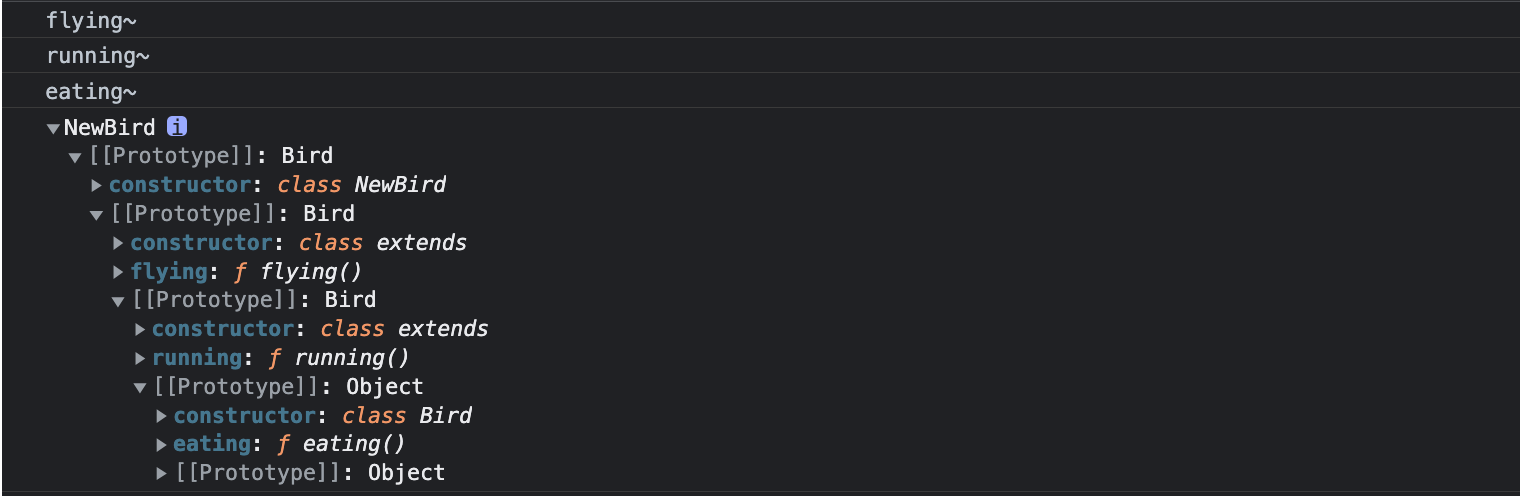
// JavaScript只支持单继承(不支持多继承)function mixinAnimal(BaseClass) {return class extends BaseClass {running() {console.log("running~")}}}function mixinRunner(BaseClass) {return class extends BaseClass {flying() {console.log("flying~")}}}class Bird {eating() {console.log("eating~")}}// var NewBird = mixinRunner(mixinAnimal(Bird))class NewBird extends mixinRunner(mixinAnimal(Bird)) {}var bird = new NewBird()bird.flying()bird.running()bird.eating()console.log(bird);
11. ES5 ES6 class 代码转换
babeljs.io
ES6 class
class Person {constructor(name, age) {this.name = namethis.age = age}running() {}eating() {}static randomPerson() {}}var p1 = new Person()
es5
"use strict";// 检测是否使用函数调用
// 如果作为函数调用, instance 传入的值为 window,Constructor 传入的值为 Person 构造函数
// new 调用传入的则是 this 指向的空对象
function _classCallCheck(instance, Constructor) {if (!(instance instanceof Constructor)) {throw new TypeError("Cannot call a class as a function");}
}function _defineProperties(target, props) {for (var i = 0; i < props.length; i++) {var descriptor = props[i];descriptor.enumerable = descriptor.enumerable || false;descriptor.configurable = true;if ("value" in descriptor) descriptor.writable = true;Object.defineProperty(target, descriptor.key, descriptor);}
}function _createClass(Constructor, protoProps, staticProps) {if (protoProps) _defineProperties(Constructor.prototype, protoProps);if (staticProps) _defineProperties(Constructor, staticProps);Object.defineProperty(Constructor, "prototype", { writable: false });return Constructor;
}// 纯函数: 相同输入一定产生相同的输出, 并且不会产生副作用
// 立即执行函数进行调用
var Person = /*#__PURE__*/ (function () {debuggerfunction Person(name, age) {_classCallCheck(this, Person);this.name = name;this.age = age;}_createClass(// 对应方法的三个参数 Constructor构造函数, protoProps实例方法, staticProps类方法Person,[{key: "running",value: function running() {}},{key: "eating",value: function eating() {}}],[{key: "randomPerson",value: function randomPerson() {}}]);return Person;
})();var p1 = new Person("why", 18)
12. ES5 ES6 extends 代码转换
ES6 class
class Person {constructor(name, age) {this.name = namethis.age = age}running() {}eating() {}static randomPerson() {}}class Student extends Person {constructor(name, age, sno, score) {super(name, age)this.sno = snothis.score = score}studying() {}static randomStudent() {}}var stu = new Student()
es5
"use strict";function _typeof(obj) {"@babel/helpers - typeof";return ((_typeof ="function" == typeof Symbol && "symbol" == typeof Symbol.iterator? function (obj) {return typeof obj;}: function (obj) {return obj &&"function" == typeof Symbol &&obj.constructor === Symbol &&obj !== Symbol.prototype? "symbol": typeof obj;}),_typeof(obj));}// 继承机制function _inherits(subClass, superClass) {if (typeof superClass !== "function" && superClass !== null) {throw new TypeError("Super expression must either be null or a function");}// 核心代码subClass.prototype = Object.create(superClass && superClass.prototype, {constructor: { value: subClass, writable: true, configurable: true }});Object.defineProperty(subClass, "prototype", { writable: false });// 核心代码结束if (superClass) _setPrototypeOf(subClass, superClass);}function _setPrototypeOf(o, p) {_setPrototypeOf = Object.setPrototypeOf? Object.setPrototypeOf.bind(): function _setPrototypeOf(o, p) {o.__proto__ = p;return o;};return _setPrototypeOf(o, p);}function _createSuper(Derived) {var hasNativeReflectConstruct = _isNativeReflectConstruct();return function _createSuperInternal() {var Super = _getPrototypeOf(Derived),result;if (hasNativeReflectConstruct) {var NewTarget = _getPrototypeOf(this).constructor;result = Reflect.construct(Super, arguments, NewTarget);} else {result = Super.apply(this, arguments);}return _possibleConstructorReturn(this, result);};}function _possibleConstructorReturn(self, call) {if (call && (_typeof(call) === "object" || typeof call === "function")) {return call;} else if (call !== void 0) {throw new TypeError("Derived constructors may only return object or undefined");}return _assertThisInitialized(self);}function _assertThisInitialized(self) {if (self === void 0) {throw new ReferenceError("this hasn't been initialised - super() hasn't been called");}return self;}function _isNativeReflectConstruct() {if (typeof Reflect === "undefined" || !Reflect.construct) return false;if (Reflect.construct.sham) return false;if (typeof Proxy === "function") return true;try {Boolean.prototype.valueOf.call(Reflect.construct(Boolean, [], function () {}));return true;} catch (e) {return false;}}function _getPrototypeOf(o) {_getPrototypeOf = Object.setPrototypeOf? Object.getPrototypeOf.bind(): function _getPrototypeOf(o) {return o.__proto__ || Object.getPrototypeOf(o);};return _getPrototypeOf(o);}function _classCallCheck(instance, Constructor) {if (!(instance instanceof Constructor)) {throw new TypeError("Cannot call a class as a function");}}function _defineProperties(target, props) {for (var i = 0; i < props.length; i++) {var descriptor = props[i];descriptor.enumerable = descriptor.enumerable || false;descriptor.configurable = true;if ("value" in descriptor) descriptor.writable = true;Object.defineProperty(target, descriptor.key, descriptor);}}function _createClass(Constructor, protoProps, staticProps) {if (protoProps) _defineProperties(Constructor.prototype, protoProps);if (staticProps) _defineProperties(Constructor, staticProps);Object.defineProperty(Constructor, "prototype", { writable: false });return Constructor;}var Person = /*#__PURE__*/ (function () {function Person(name, age) {_classCallCheck(this, Person);this.name = name;this.age = age;}_createClass(Person,[{key: "running",value: function running() {}},{key: "eating",value: function eating() {}}],[{key: "randomPerson",value: function randomPerson() {}}]);return Person;})();function inherit(SubType, SuperType) {SubType.prototype = Object.create(SuperType.prototype)SubType.prototype.constructor = SubType}debuggervar Student = /*#__PURE__*/ (function (_Person) {_inherits(Student, _Person);var _super = _createSuper(Student);function Student(name, age, sno, score) {var _this;_classCallCheck(this, Student);_this = _super.call(this, name, age);_this.sno = sno;_this.score = score;return _this;}_createClass(Student,[{key: "studying",value: function studying() {}}],[{key: "randomStudent",value: function randomStudent() {}}]);return Student;})(Person);var stu = new Student("why", 18, 111, 100);
13. JavaScript中的多态
维基百科对多态的定义:多态(英语:polymorphism)指为不同数据类型的实体提供统一的接口,或使用一个单一的符号来表示多个不同的类型
那么从上面的定义来看,JavaScript是一定存在多态的
// 继承是多态的前提// shape形状class Shape {getArea() {}}class Rectangle extends Shape {constructor(width, height) {super()this.width = widththis.height = height}getArea() {return this.width * this.height}}class Circle extends Shape {constructor(radius) {super()this.radius = radius}getArea() {return this.radius * this.radius * 3.14}}var rect1 = new Rectangle(100, 200)var rect2 = new Rectangle(20, 30)var c1 = new Circle(10)var c2 = new Circle(15)// 表现形式就是多态/*在严格意义的面向对象语言中, 多态的是存在如下条件的:1.必须有继承(实现接口)2.必须有父类引用指向子类对象*/function getShapeArea(shape) {console.log(shape.getArea())}getShapeArea(rect1)getShapeArea(c1)// 多态的表现: JS到处都是多态function sum(a1, a2) {return a1 + a2}sum(20, 30)sum("abc", "cba")// 多态的表现var foo = 123foo = "Hello World"console.log(foo.split())foo = {running: function() {}}foo.running()foo = []console.log(foo.length)
本文来自互联网用户投稿,文章观点仅代表作者本人,不代表本站立场,不承担相关法律责任。如若转载,请注明出处。 如若内容造成侵权/违法违规/事实不符,请点击【内容举报】进行投诉反馈!