Java运行期追踪堆栈信息
字符串常量池与堆空间
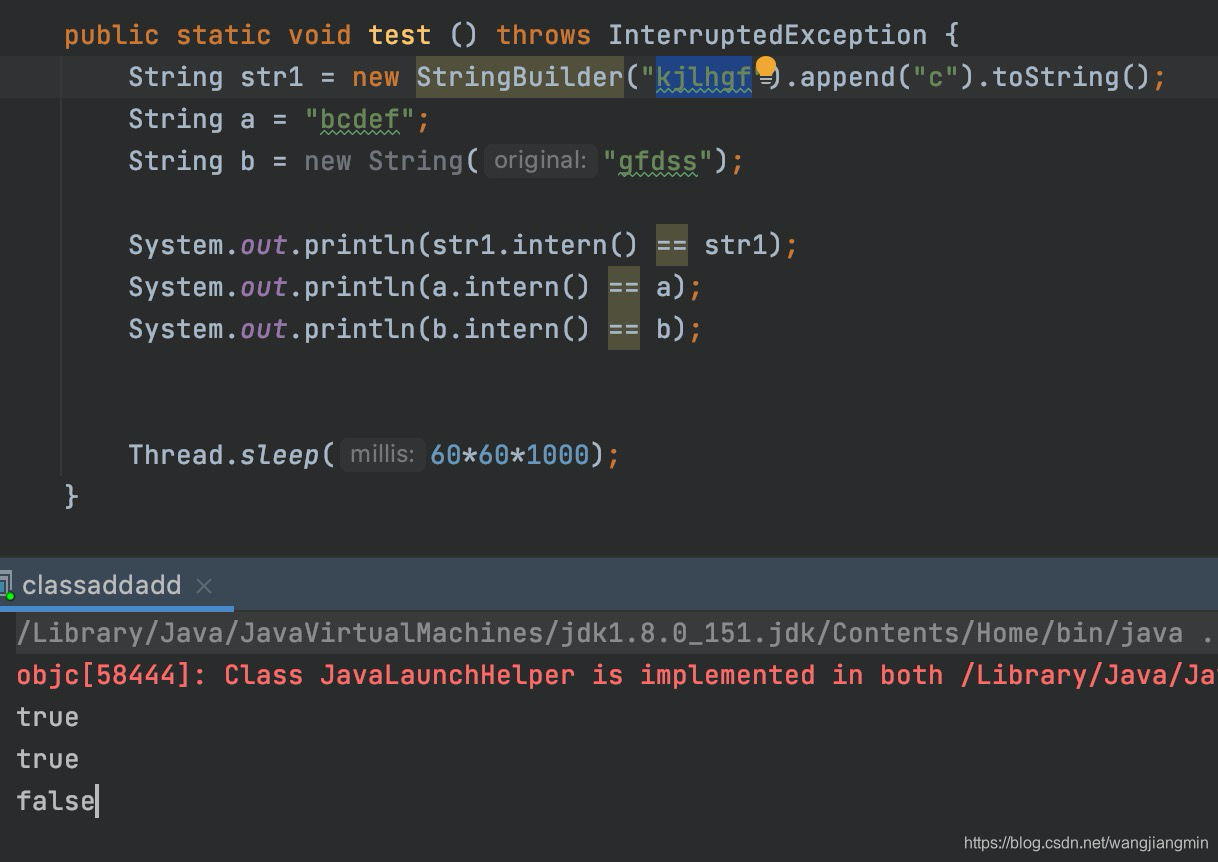
运行后 为了不会被回收空间,sleep一小时
jps命令查询Java程序
使用jamp查询堆空间
jmap -dump:format=b,file=aa.bin(aa.bin=随意名字) pid(pid=Java线程id)
jhat aa.bin
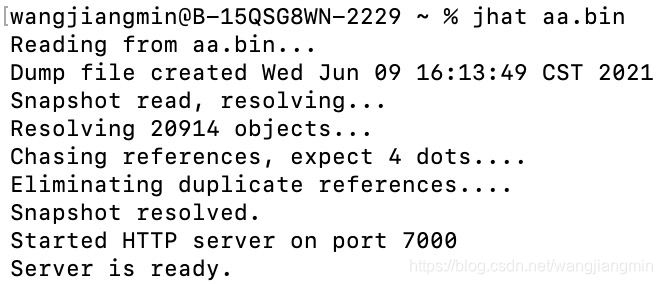
访问 http://localhost:7000/
我是访问的是http://localhost:7000/oql/
OQL Java虚拟机语言 查询字符串地址
select s.value.toString() from java.lang.String s
where /kjlhgfc/.test(s.value.toString())
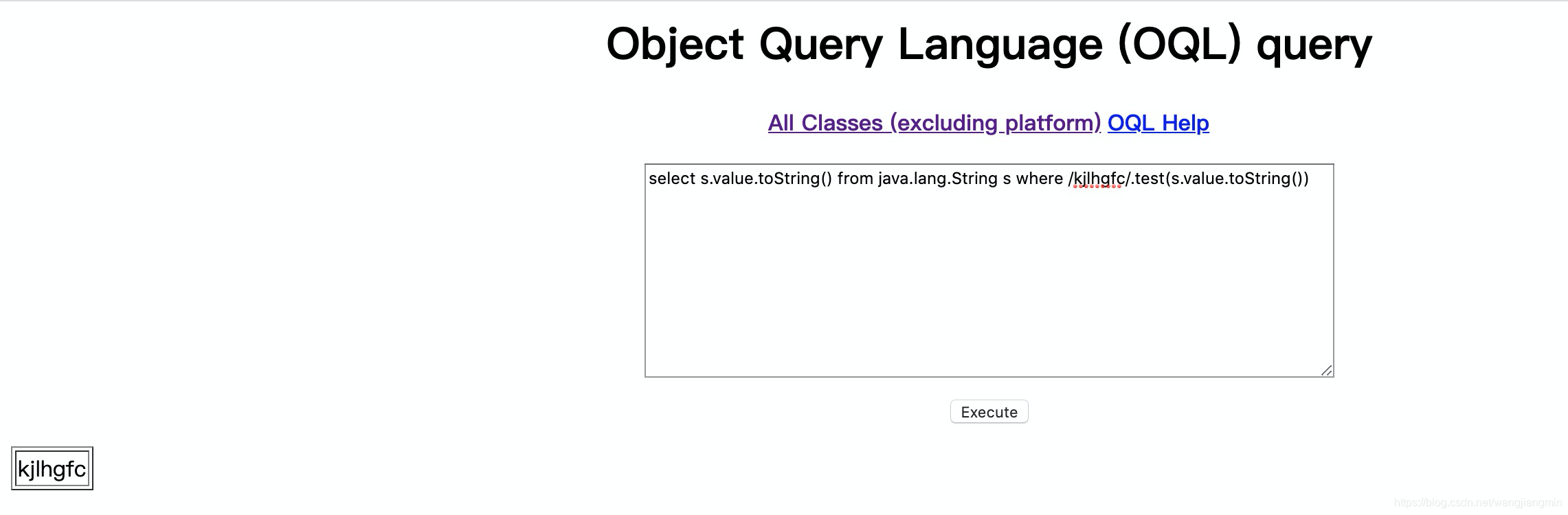
kjlhgfc 查询结果只有一个 说明只在堆中存在,而字符串常量池中保存的是引用地址
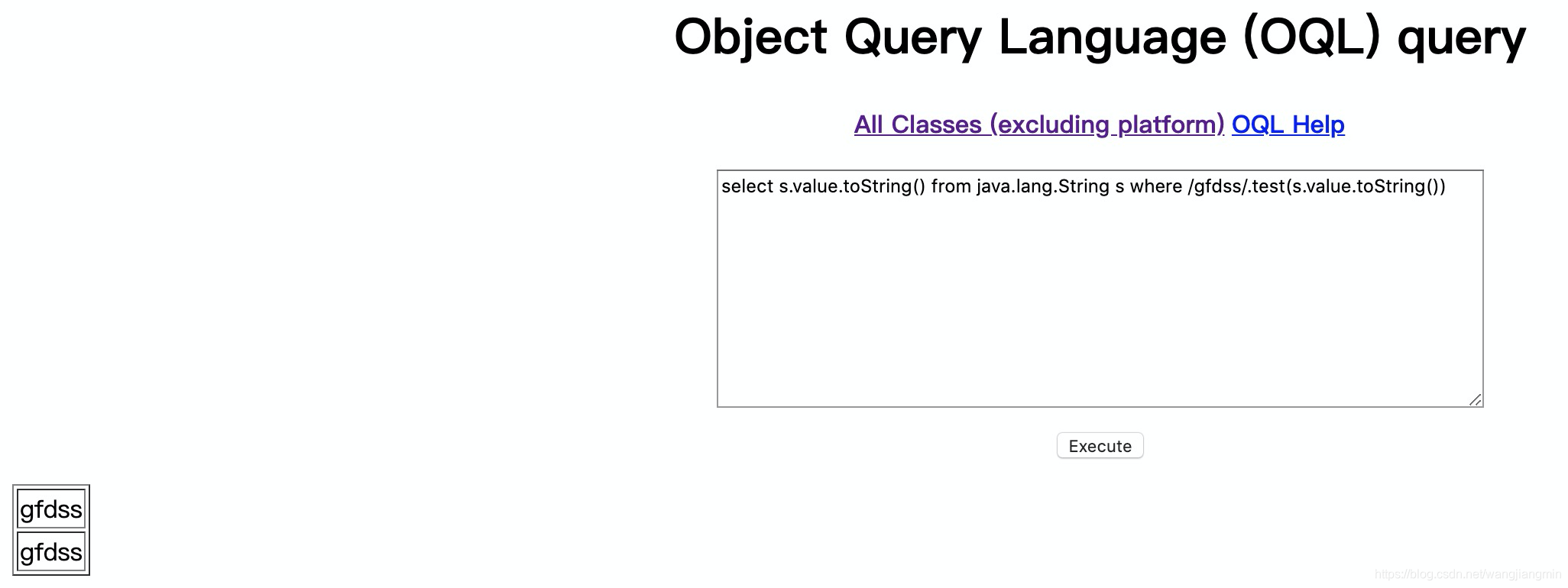
gfdss 查询结果有两个 说明只在堆中存在,而字符串常量池中保存的是也是字符串,所以地址不一样
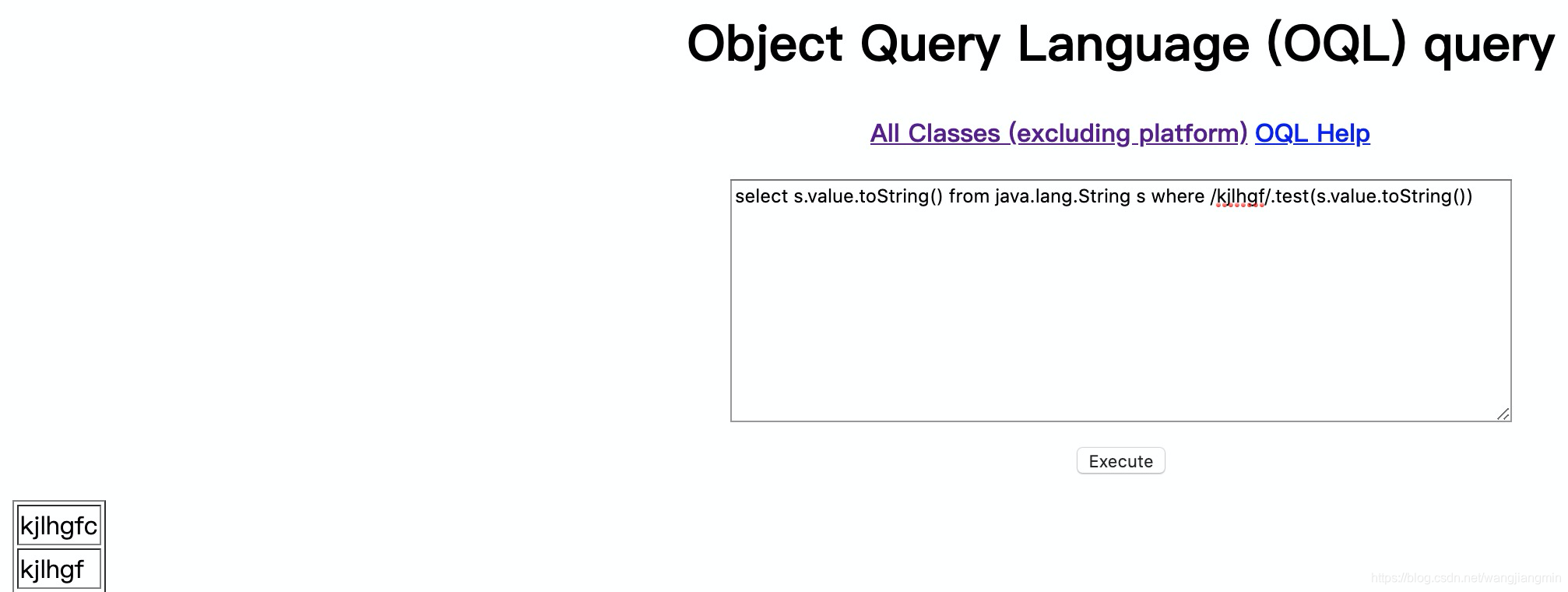
在使用"kjlhgf" 时 编译期就会存入常量池,也会在堆中放入,但是在append后就被修改为kjlhgfc,所以查询结果只剩下一个。
lsof -i:7000
查询7000端口使用者
intern方法的解释
/*** Returns a canonical representation for the string object.* * A pool of strings, initially empty, is maintained privately by the* class {@code String}.*
* When the intern method is invoked, if the pool already contains a* string equal to this {@code String} object as determined by* the {@link #equals(Object)} method, then the string from the pool is* returned. Otherwise, this {@code String} object is added to the* pool and a reference to this {@code String} object is returned.*
* It follows that for any two strings {@code s} and {@code t},* {@code s.intern() == t.intern()} is {@code true}* if and only if {@code s.equals(t)} is {@code true}.*
* All literal strings and string-valued constant expressions are* interned. String literals are defined in section 3.10.5 of the* The Java™ Language Specification.** @return a string that has the same contents as this string, but is* guaranteed to be from a pool of unique strings.*/
public native String intern();
本文来自互联网用户投稿,文章观点仅代表作者本人,不代表本站立场,不承担相关法律责任。如若转载,请注明出处。 如若内容造成侵权/违法违规/事实不符,请点击【内容举报】进行投诉反馈!