史上最强数据结构----栈和队列相关笔试面试题
栈的队列相关笔试面试题
- 1. 栈和队列面试题
- 1.1 括号匹配问题
- 1.2 用队列实现栈
- 1.3 用栈实现队列
- 1.4 设计循环队列
- 2. 概念选择题
- 3. 栈和队列的用途
1. 栈和队列面试题
1.1 括号匹配问题
题目:
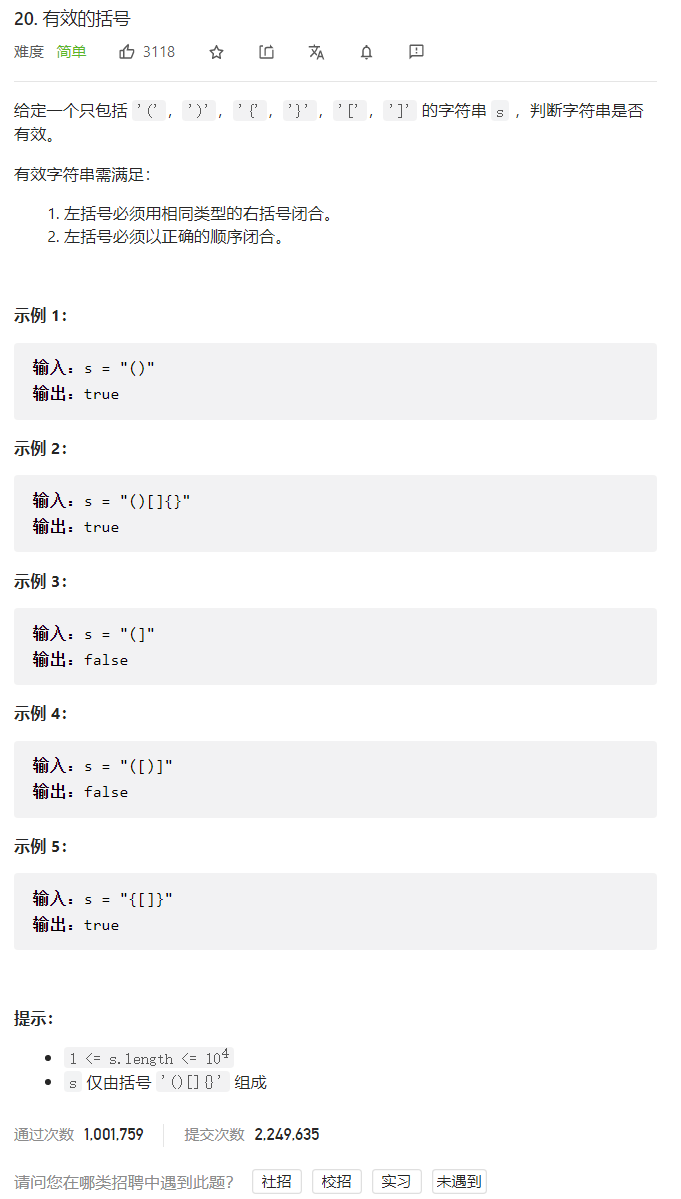
思路:
首先将所给的字符串进行遍历,如果是左括号就将它压入栈中,根据栈后进先出的特性,然后逐个取出栈中的左括号与后面剩下的右括号进行逐对进行匹配,如果不匹配就返回false,如果都匹配了就返回true。
例如:
代码:
typedef char STDataType;
typedef struct Stack
{STDataType* a;int top;//栈顶的位置int capacity;//容量
}ST;
void StackInit(ST* ps)
{assert(ps);ps->a = NULL;ps->capacity = 0;ps->top = 0;
}
void StackDestory(ST*ps)
{assert(ps);free(ps->a);ps->a = NULL;ps->capacity =ps->top =  0;
}
void StackPush(ST* ps, STDataType x)
{assert(ps);if (ps->top == ps->capacity)//满了进行扩容{int newCapacity = ps->capacity == 0 ? 4 : 2 * ps->capacity;ps->a = (STDataType*)realloc(ps->a,sizeof(STDataType)*newCapacity);if (ps->a == NULL){printf("fail malloc\n");exit(-1);}ps->capacity = newCapacity;}ps->a[ps->top++] = x;
}
void StackPop(ST* ps)
{assert(ps);assert(ps->top > 0);--ps->top;
}
bool StackEmpty(ST* ps)
{assert(ps);return ps->top == 0;
}
STDataType StackTop(ST* ps)
{assert(ps);assert(ps->top > 0);return ps->a[ps->top - 1];
}
int SizeStack(ST* ps)
{assert(ps);return ps->top;
}
//前面的所有代码就是定义一个栈以及栈的相关函数
bool isValid(char * s){ST st;StackInit(&st);while(*s){if(*s=='['||*s=='('||*s=='{'){StackPush(&st,*s);++s;}else{if(StackEmpty(&st))//当所给的字符串中只有右括号时直接返回false{StackDestory(&st);return false;}char top = StackTop(&st);//从栈中取一个左括号StackPop(&st);//进行出栈操作,让刚才取的字符出栈if((*s==']'&&top!='[')||(*s=='}'&&top!='{')||(*s==')'&&top!='('))//两个字符不相匹配的情况下直接返回false{StackDestory(&st);return false;}else{++s;}}}//栈为空,说明所有左括号都匹配了bool ret =  StackEmpty(&st);//判断是否只有左括号,如果只有左括号此时ret就为false,如果前面都已经匹配完了ret就等于trueStackDestory(&st);return ret;
}
1.2 用队列实现栈
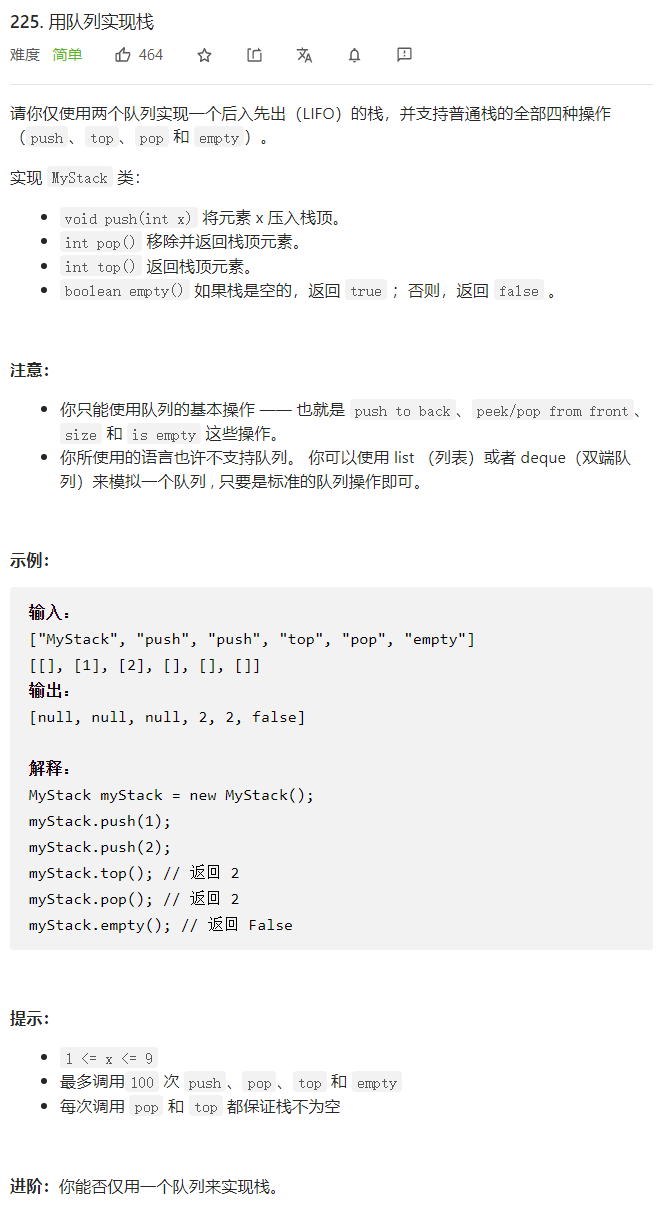
解析上面的实例:
输入的第一行是执行的操作。第二行是执行操作的数据。
输出是对应的返回值。
思路:用两个队列实现栈。
栈的基本结构:
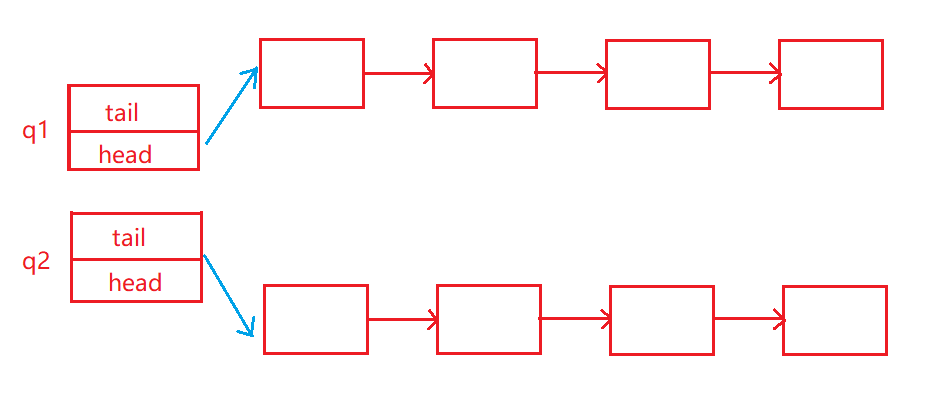
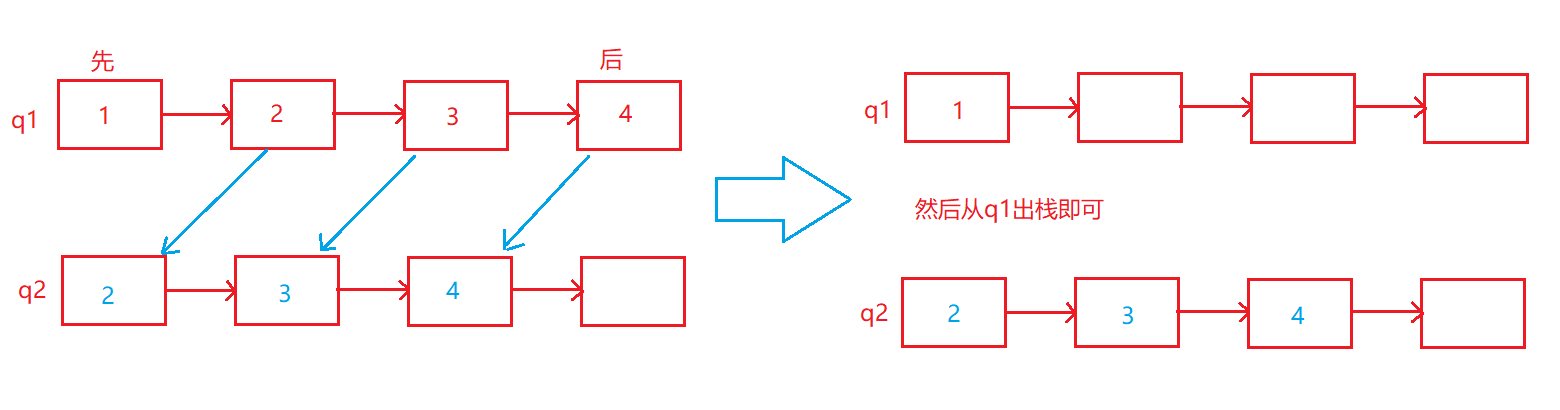
1、入栈,push数据到不为空的队列。
2、出栈,把不为空的队列的数据前N-1导入到另一个空队列,最后剩下的一个删掉。
代码:
typedef int QDataType;
typedef struct QueueNode
{QDataType data;struct QueueNode* next;
}QNode;
typedef struct Queue
{QNode* head;QNode* tail;
}Queue;
void QueueInit(Queue* pq);
void QueueDestory(Queue* pq);
void QueuePush(Queue*pq,QDataType x);
void QueuePop(Queue*pq);
size_t QueueSize(Queue* pq);
QDataType QueueFront(Queue* pq);
QDataType QueueBack(Queue* pq);
bool QueueEmpty(Queue* pq);
void QueueInit(Queue* pq)
{assert(pq);pq->head =pq->tail = NULL;
}
QNode* BuyQNode(QDataType x)
{QNode* newnode = (QNode*)malloc(sizeof(QNode));if (newnode == NULL){printf("fail malloc\n");exit(-1);}newnode->data = x;newnode->next = NULL;return newnode;
}
void QueuePush(Queue* pq, QDataType x)
{assert(pq);QNode* newnode = BuyQNode(x);if (pq->tail == NULL){assert(pq->head == NULL);pq->head= pq->tail = newnode;}else{pq->tail->next = newnode;pq->tail = newnode;}}
void QueuePop(Queue* pq)
{assert(pq);assert(pq->tail&&pq->head);if (pq->head->next==NULL)//处理只有一个节点的时候{free(pq->tail);pq->tail = pq->head = NULL;}else//有多个节点{QNode* next = pq->head->next;free(pq->head);pq->head = next;}
}
size_t QueueSize(Queue* pq)
{assert(pq);size_t size = 0;QNode* cur = pq->head;while (cur!= pq->tail->next){size++;cur = cur->next;}return size;
}
QDataType QueueFront(Queue* pq)
{assert(pq);assert(pq->head);return pq->head->data;
}
QDataType QueueBack(Queue* pq)
{assert(pq);assert(pq->tail);return pq->tail->data;
}
void QueueDestory(Queue* pq)
{assert(pq);QNode* cur = pq->head;while (cur){QNode* next = cur->next;free(cur);cur = next;}pq->head = pq->tail = NULL;
}
bool QueueEmpty(Queue* pq)
{assert(pq);return pq->head==NULL&&pq->tail==NULL;
}
typedef struct {Queue q1;Queue q2;
} MyStack;MyStack* myStackCreate() {MyStack* pst = (MyStack*)malloc(sizeof(MyStack));assert(pst);QueueInit(&pst->q1);//这一行代码和后面这一行代码等价:QueueInit(&(pst->q1));QueueInit(&pst->q2);//这一行代码和后面这一行代码等价:QueueInit(&(pst->q2));return pst;
}void myStackPush(MyStack* obj, int x) {assert(obj);if(!QueueEmpty(&obj->q1)){QueuePush(&obj->q1,x);}else{QueuePush(&obj->q2,x);}
}int myStackPop(MyStack* obj) {assert(obj);Queue *emptyQ = &obj->q1;Queue*nonEmptyQ = &obj->q2;if(!QueueEmpty(&obj->q1)){emptyQ = &obj->q2;nonEmptyQ = &obj->q1;}//把非空队列的前N个数据,导入空队列,剩下一个删掉//就实现了后进先出while(QueueSize(nonEmptyQ)>1){QueuePush(emptyQ,QueueFront(nonEmptyQ));//将非空队列的队头数据push到非空队列中QueuePop(nonEmptyQ);//将非空队列的队头数据出队}QDataType top = QueueFront(nonEmptyQ);QueuePop(nonEmptyQ);return top;
}int myStackTop(MyStack* obj) {assert(obj);if(!QueueEmpty(&obj->q1)){return QueueBack(&obj->q1);}else{return QueueBack(&obj->q2);}}
bool myStackEmpty(MyStack* obj) {assert(obj);return QueueEmpty(&obj->q1)&&QueueEmpty(&obj->q2);
}void myStackFree(MyStack* obj) {assert(obj);QueueDestory(&obj->q1);QueueDestory(&obj->q2);free(obj);
}
1.3 用栈实现队列
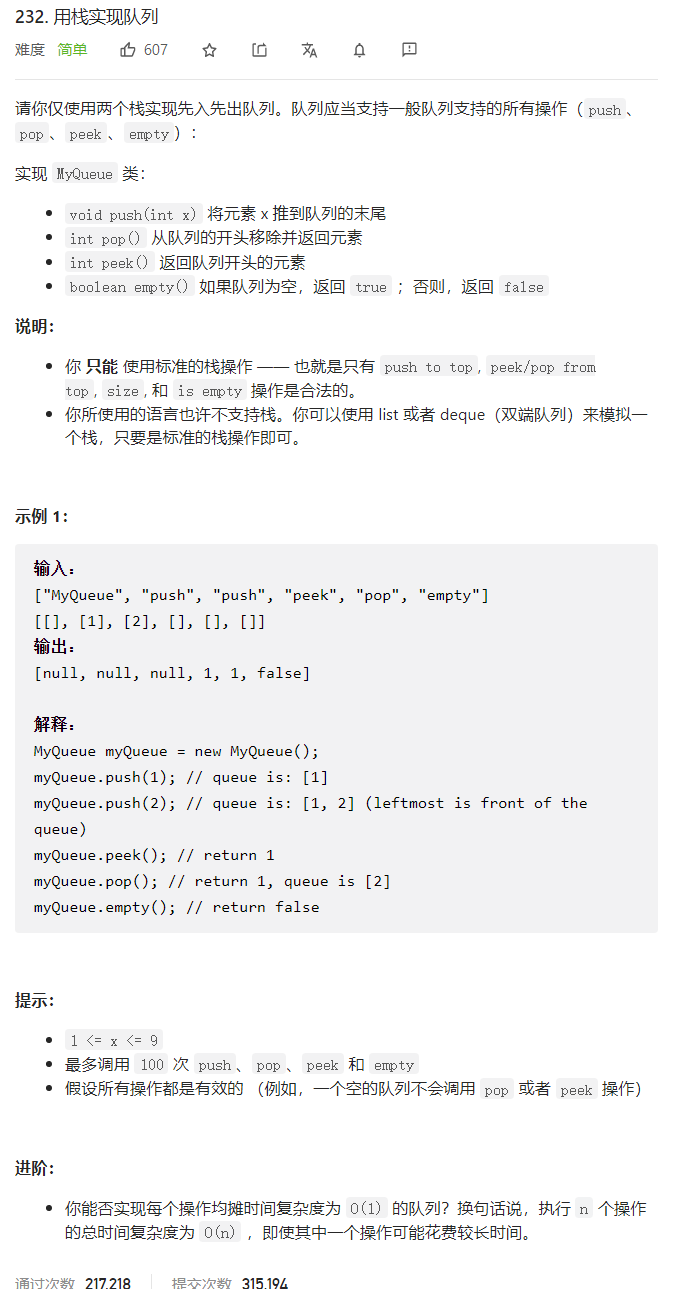
思路:
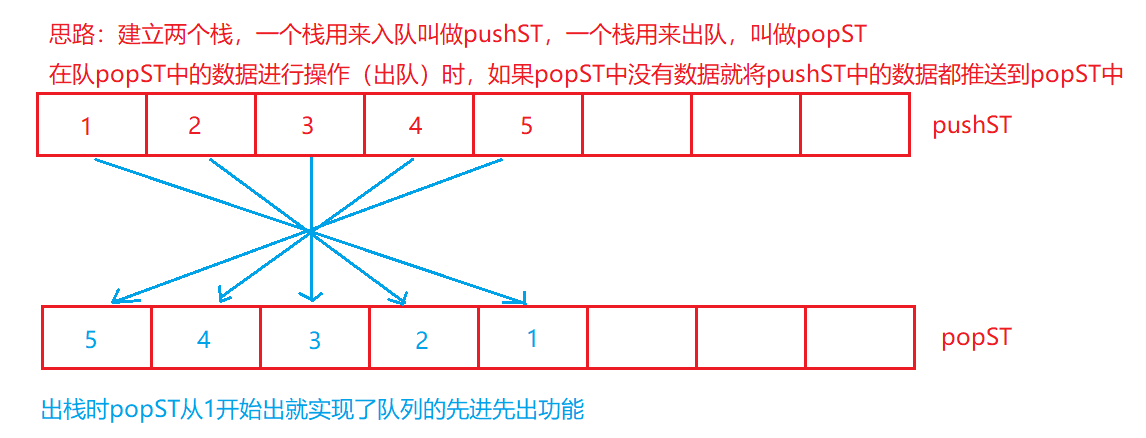
注意:在上面的代码中,在进行出队操作时,只要popST这个栈中有数据,那么我们就不进行倒数据的操作(即将push中的数据倒到popST这个栈中),只有当pop中的数据为空且我们要进行出队时才进行倒数据。
队列结构:
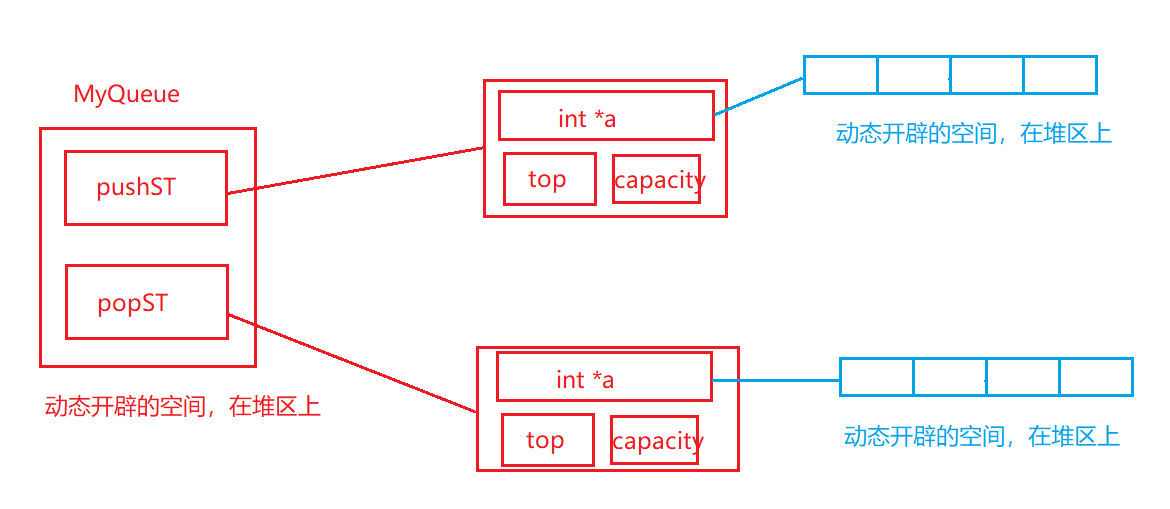
代码:
typedef int STDataType;
//数组栈的实现
typedef struct Stack
{STDataType* a;int top;//栈顶的位置int capacity;//容量
}ST;
void StackInit(ST* ps)
{assert(ps);ps->a = NULL;ps->capacity = 0;ps->top = 0;
}
void StackDestory(ST*ps)
{assert(ps);free(ps->a);ps->a = NULL;ps->capacity =ps->top =  0;
}
void StackPush(ST* ps, STDataType x)
{assert(ps);if (ps->top == ps->capacity)//满了进行扩容{int newCapacity = ps->capacity == 0 ? 2 : 2 * ps->capacity;STDataType*new = (STDataType*)realloc(ps->a,sizeof(STDataType)*newCapacity);if (new == NULL){printf("fail malloc\n");exit(-1);}ps->a = new;ps->capacity = newCapacity;}ps->a[ps->top++] = x;
}
void StackPop(ST* ps)
{assert(ps);assert(ps->top > 0);--ps->top;
}
bool StackEmpty(ST* ps)
{assert(ps);return ps->top == 0;
}
STDataType StackTop(ST* ps)
{assert(ps);assert(ps->top > 0);return ps->a[ps->top - 1];
}
int SizeStack(ST* ps)
{assert(ps);return ps->top;
}
void StackInit(ST*ps);
void StackDestory(ST* ps);
void StackPush(ST* ps,STDataType x);
void StackPop(ST* ps);
bool StackEmpty(ST* ps);
int SizeStack(ST* ps);
STDataType StackTop(ST* ps);
typedef struct {ST pushST;ST popST;
} MyQueue;MyQueue* myQueueCreate() {MyQueue * myQueue = (MyQueue*)malloc(sizeof(MyQueue));assert(myQueue);StackInit(&myQueue->pushST);StackInit(&myQueue->popST);return myQueue;
}void myQueuePush(MyQueue* obj, int x) {assert(obj);StackPush(&obj->pushST,x);//入队直接向pushST插入即可
}int myQueuePop(MyQueue* obj){assert(obj);if(StackEmpty(&obj->popST))//push为空,就进行倒数据,就符合先进先出的顺序了{while(!StackEmpty(&obj->pushST)){StackPush(&obj->popST,StackTop(&obj->pushST));StackPop(&obj->pushST);}}STDataType ret = StackTop(&obj->popST);//临时保存返回的数据StackPop(&obj->popST);return ret;
}int myQueuePeek(MyQueue* obj) {assert(obj);if(StackEmpty(&obj->popST)){while(!StackEmpty(&obj->pushST)){StackPush(&obj->popST,StackTop(&obj->pushST));StackPop(&obj->pushST);}}return StackTop(&obj->popST);
}bool myQueueEmpty(MyQueue* obj) {assert(obj);return StackEmpty(&obj->pushST)&&StackEmpty(&obj->popST);
}void myQueueFree(MyQueue* obj) {assert(obj);StackDestory(&obj->pushST);StackDestory(&obj->popST);free(obj);
}
1.4 设计循环队列
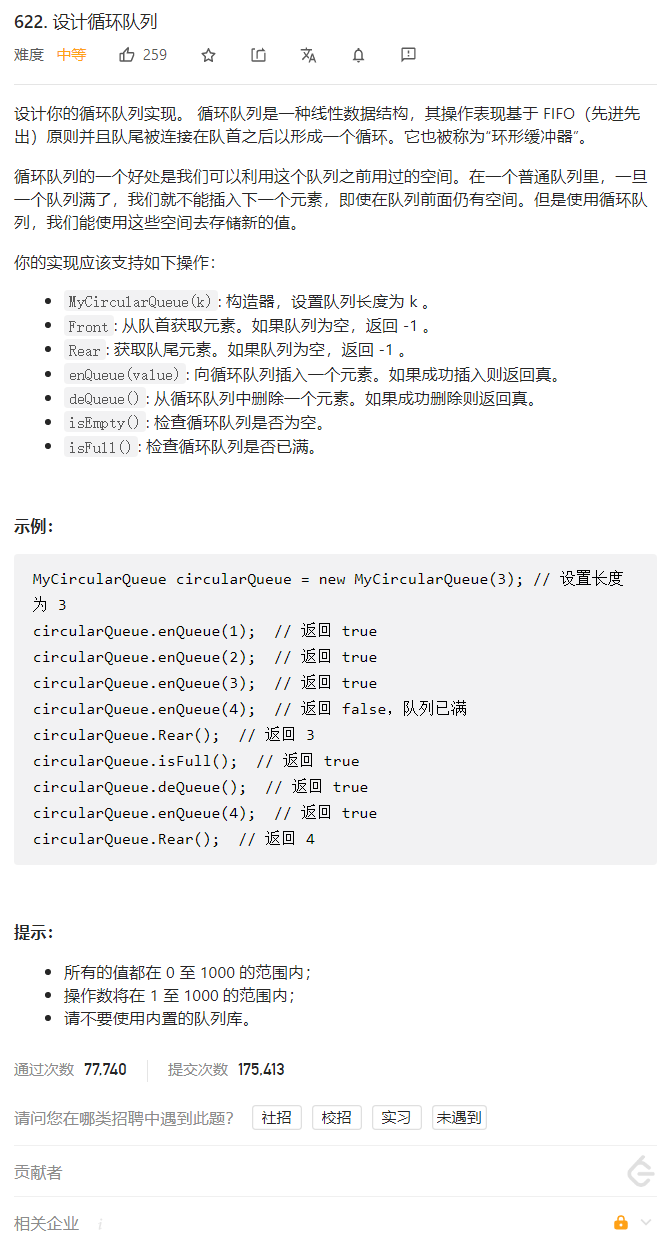
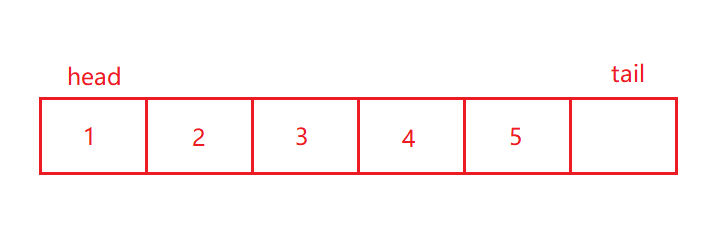
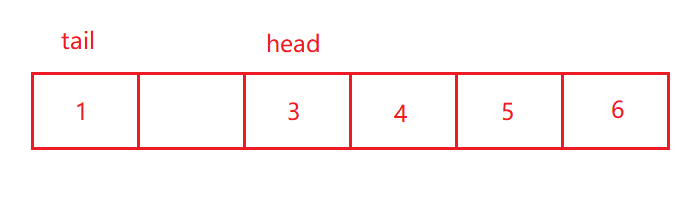
为了避免空和满混淆,无法区分,多开一个空间。
1. front = tail时是空
2. tail下一个位置是front时是满
满的两种情况:
1、obj->tail = k && obj->head = 0
2、obj->tail+1 = obj->head
代码:
typedef struct {int *a;int head;//循环队列的头int tail;//循环队列的尾int capacity;//循环队列元素的最大数目
} MyCircularQueue;bool myCircularQueueIsEmpty(MyCircularQueue* obj);//判断循环队列是否为空的声明
bool myCircularQueueIsFull(MyCircularQueue* obj);//判断循环队列是否为满的声明
MyCircularQueue* myCircularQueueCreate(int k) //循环队列的初始化
{MyCircularQueue*myCircularQ = (MyCircularQueue*)malloc(sizeof(MyCircularQueue));assert(myCircularQ);int *tmp = (int*)malloc(sizeof(int)*(k+1));assert(tmp);myCircularQ->a = tmp;myCircularQ->head = 0;myCircularQ->tail = 0;myCircularQ->capacity = k;return myCircularQ;
}bool myCircularQueueEnQueue(MyCircularQueue* obj, int value) //向循环队列插入一个元素,如果成功插入则返回真。
{assert(obj);if(myCircularQueueIsFull(obj))//满了的情况{return false;}obj->a[obj->tail] = value;if(obj->tail==obj->capacity)//此时已经到达了开辟数组的最后一个位置,tail再进行++操作后会跳跃到第一个位置{obj->tail = 0;}else{++obj->tail;}return true;
}bool myCircularQueueDeQueue(MyCircularQueue* obj) //从循环队列中删除一个元素,如果成功删除则返回真。
{assert(obj);if(myCircularQueueIsEmpty(obj))//循环队列中为空的情况{return false;}if(obj->head==obj->capacity)//循环队列中的head在开辟的最后的一个空间位置的情况,head要发生跳跃{obj->head = 0;}else{++obj->head;}return true;
}int myCircularQueueFront(MyCircularQueue* obj) //从队首获取元素,如果队列为空,返回 -1 。
{assert(obj);if(myCircularQueueIsEmpty(obj))//队列元素为空的情况return -1;return obj->a[obj->head];
}int myCircularQueueRear(MyCircularQueue* obj)//获取队尾元素,如果队列为空,返回 -1 。
{assert(obj);if(myCircularQueueIsEmpty(obj))//循环队列元素为空的情况return -1;if(obj->tail==0)//尾在头的时候,就要返回最后一个空间的位置{return obj->a[obj->capacity];}else{return obj->a[obj->tail-1];//正常情况返回tail的前一个位置}
}bool myCircularQueueIsEmpty(MyCircularQueue* obj) //判断循环队列是否满
{assert(obj);return obj->tail==obj->head;//尾下标等于头下标的时候就是空
}bool myCircularQueueIsFull(MyCircularQueue* obj) //判断循环队列是否满
{assert(obj);if(obj->tail==obj->capacity && obj->head==0)//判断的是尾下标指向最后一块空间,头下标在最靠前的空间{return true;}else{return obj->tail+1 ==obj->head;}
}  void myCircularQueueFree(MyCircularQueue* obj) //循环队列的销毁
{assert(obj);free(obj->a);free(obj);
}
2. 概念选择题
1.一个栈的初始状态为空。现将元素1、2、3、4、5、A、B、C、D、E依次入栈,然后再依次出栈,则元素出 栈的顺序是(B)。
A 12345ABCDE
B EDCBA54321
C ABCDE12345
D 54321EDCBA
2.若进栈序列为 1,2,3,4 ,进栈过程中可以出栈,则下列不可能的一个出栈序列是(C)
A 1,4,3,2
B 2,3,4,1
C 3,1,4,2
D 3,4,2,1
解析:C选项中,3出来之后要想出1的话,就必须先出2。
3.循环队列的存储空间为 Q(1:100) ,初始状态为 front=rear=100 。经过一系列正常的入队与退队操作 后, front=rear=99 ,则循环队列中的元素个数为( D)
A 1
B 2
C 99
D 0
解析:由前面循环队列的实现,很容易就得知此时元素的个数为0。
4.以下( )不是队列的基本运算? (B)
A 从队尾插入一个新元素
B 从队列中删除第i个元素
C 判断一个队列是否为空
D 读取队头元素的值
5.现有一循环队列,其队头指针为front,队尾指针为rear;循环队列长度为N,实际最多存储N - 1个数据。其队内有效长度为(B)(假设队头不存放数据)
A (rear - front + N) % N + 1
B (rear - front + N) % N
C ear - front) % (N + 1)
D (rear - front + N) % (N - 1)
解析:此题要考虑两种情况:
第一种情况:front在rear的前面
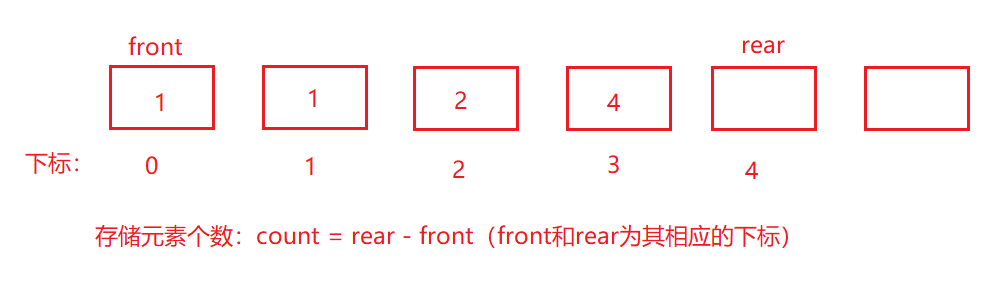
第二种情况:front在rear的后面
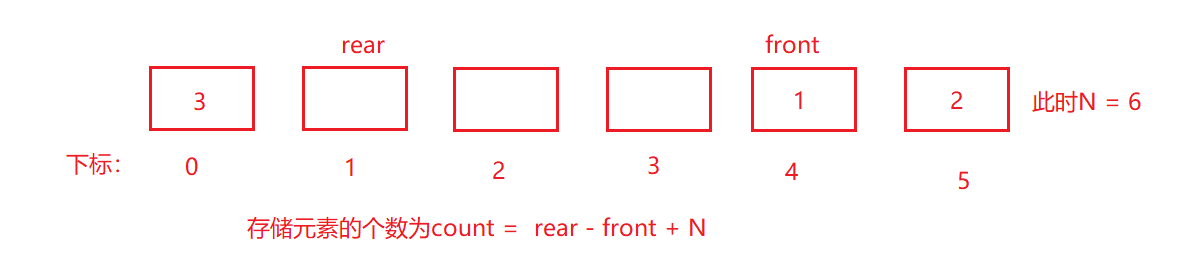
注意:从最后绕到了最前面其实就相当于在最后面越界继续相加!如下图所示:
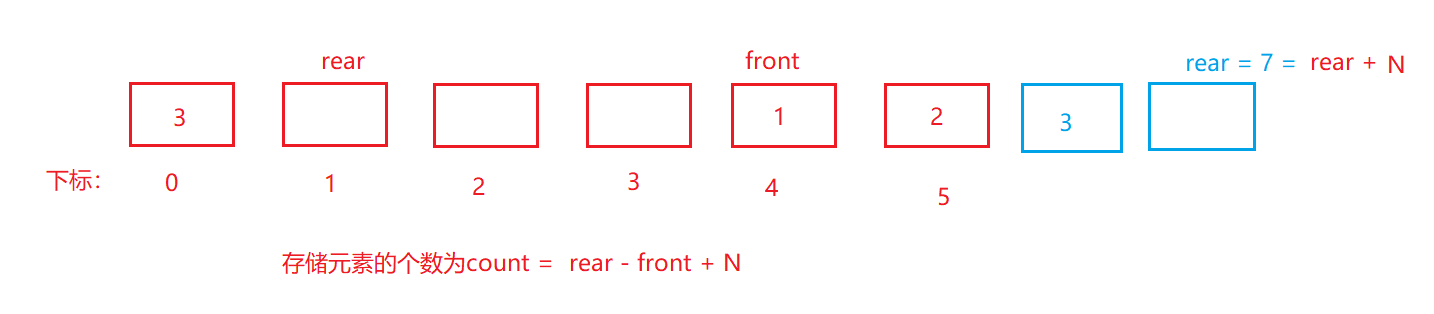
综合上面两种情况:最终公式为:
count = (rear - front + N ) % N (为什么第一种也加了N?因为对于front在rear前面的情况来说,是否加N对结果没有任何的影响,因为还要对N进行取模操作)
3. 栈和队列的用途
栈:用来解决括号匹配,逆波兰表达式的求解,递归改非递归等等。
队列:公平排队,广度优先遍历等等。
本文来自互联网用户投稿,文章观点仅代表作者本人,不代表本站立场,不承担相关法律责任。如若转载,请注明出处。 如若内容造成侵权/违法违规/事实不符,请点击【内容举报】进行投诉反馈!