springboot:定时任务
目录
一、实现定时任务的方法一:基于JDK
方法一:使用JDK自带的Timer类
法二:使用ScheduleExecutorsService类
二、基于Spring Task实现定时任务(推荐使用)
三、基于Quartz实现定时调度
四、使用分布式定时任务框架:elastic-job
五、分布式任务调度:国产组件XXL-Job
定时任务在项目中的应用:
- 每日凌晨对前一日的数据进行汇总
- 定时清理系统缓存
- 对每日的数据进行分析和总结
- 银行月底汇总账单
- 月底话费账单
- 订单在30分钟内未支付会自动取消
- 文章的缓存更新
一、实现定时任务的方法一:基于JDK
方法一:使用JDK自带的Timer类
优点:
- 使用方便
缺点:
- 该类是单线程实现,如果任务执行时间太长或者发生异常,会影响其他任务的执行
Timer类有三种重载方法:
- schedule(TimerTask task,long delay) :延迟delay毫秒再执行任务
- schedule(TimerTask task,Date time) :在特定的time时间执行任务:
- schedule(TimerTask task,long delay,long period) :延迟delay毫秒并每隔period毫秒执行一次
package com.study.demo.dingshi;import java.time.LocalDateTime;
import java.time.format.DateTimeFormatter;
import java.util.Timer;
import java.util.TimerTask;public class TimerDemo {//定义时间格式private static DateTimeFormatter pattern=DateTimeFormatter.ofPattern("yyyy-MM-dd HH:mm:ss");public static void main(String[] args) {Timer timer=new Timer();//从当前时刻开始,每1s执行一次,单位为毫秒timer.schedule(new MyTask(),0,1000);}//自定义的、定时要执行的任务private static class MyTask extends TimerTask {@Overridepublic void run() {LocalDateTime now=LocalDateTime.now();System.out.println("这是定时任务,时间是:"+pattern.format(now));}}
}
法二:使用ScheduleExecutorsService类
特点:使用线程池技术,可实现线程复用
package com.study.demo.dingshi;import java.time.LocalDateTime;
import java.time.format.DateTimeFormatter;
import java.util.concurrent.Executors;
import java.util.concurrent.ScheduledExecutorService;
import java.util.concurrent.TimeUnit;public class ScheduledExecutorServiceDemo {//定义时间格式private static DateTimeFormatter pattern=DateTimeFormatter.ofPattern("yyyy-MM-dd HH:mm:ss");public static void main(String[] args) {ScheduledExecutorService service= Executors.newScheduledThreadPool(1);service.scheduleAtFixedRate(() -> {LocalDateTime now =LocalDateTime.now();System.out.println("schedule这是定时任务,时间是:"+pattern.format(now));},0,1000, TimeUnit.MILLISECONDS);}
}
二、基于Spring Task实现定时任务(推荐使用)
- @EnableScheduling:开启定时任务
- @Component:将类标记为一个被Spring管理的功能组件
- @Scheduled(。。。): 自定义定时任务的相关配置,详查http://t.csdn.cn/CnBYy
- fixedDelay
- cron
- fixedRate
package com.study.demo.dingshi;import org.springframework.scheduling.annotation.EnableScheduling;
import org.springframework.scheduling.annotation.Scheduled;
import org.springframework.stereotype.Component;import java.time.LocalDateTime;
import java.time.format.DateTimeFormatter;@EnableScheduling//开启定时任务
@Component
public class SpringTaskDemo {private static DateTimeFormatter pattern=DateTimeFormatter.ofPattern("yyyy-MM-dd HH:mm:ss");@Scheduled(cron="0/1 * * * * ?")//每秒钟执行一次,以空格分隔public void cron(){LocalDateTime now=LocalDateTime.now();System.out.println("spring task 这是定时任务,时间是:"+pattern.format(now));}
}
三、基于Quartz实现定时调度
Quartz的基本介绍:
- Quartz是一个由java编写的开源任务调度框架
- 原理:通过触发器设置作业定时运行规则和运行时间
- 扩展:
- 搭建成集群服务:故障切换和负载平衡
- 作用:
- 定时发送信息
- 定时生成报表
- 。。。
- 核心组件:
- 调度器:作业的总指挥
- 触发器:作业的操作者
- 作业:应用的功能模块
- 常用类:
- JobDetail:描述Job(任务的核心逻辑)的实现类及其他相关的静态信息,对Job的进一步封装,完成一些属性设置
- Trigger:触发器,定时任务的定时管理工具,一个Trigger只能对应一个定时任务,而一个定时任务可以对应多个触发器
- Scheduler:调度器,定时任务的管理窗口,是Quartz最上层的接口,使所有触发器和定时任务协调工作,一个Scheduler可以注册多个JobDetail和Trigger
思路:
- pom.xml文件添加依赖
- 自定义定时任务的类需要实现Job接口并重写execute(JobExecutionContext context)方法,并在该方法中实现定时业务逻辑,JobExecutionContext类提供了调度上下文的各种信息,每次执行Job时都需要重新创建一个Job实例
- 创建配置类
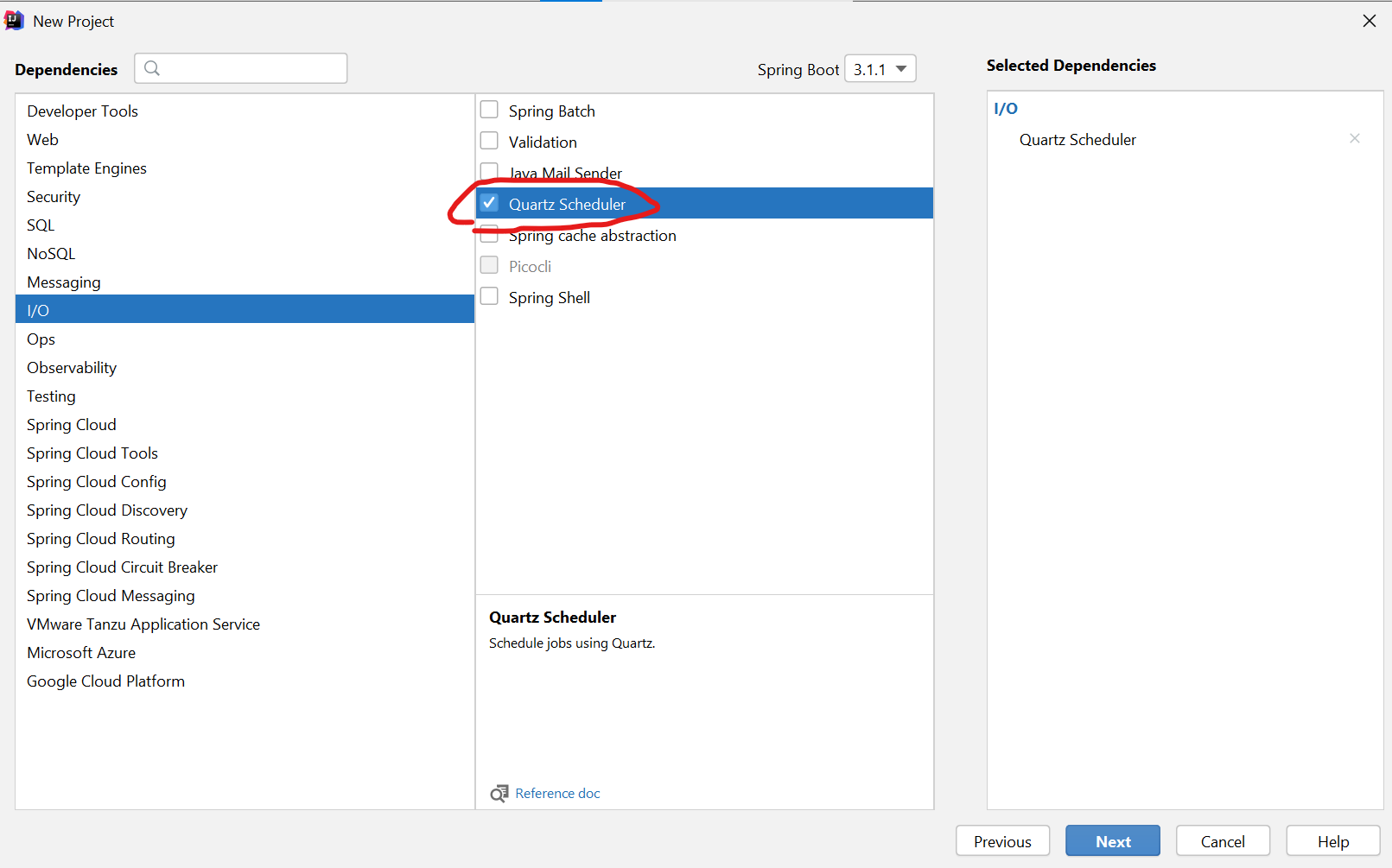
pom.xml添加依赖的小贴士:
如果在创建springboot项目时勾选了“Quartz Scheduler”,就不用再添加依赖了
否则,要在pom.xml文件里添加依赖
org.springframework.boot spring-boot-starter-quartz
package com.study.demo.dingshi;import org.quartz.*;
import org.springframework.context.annotation.Bean;
import org.springframework.context.annotation.Configuration;@Configuration
public class QuartzConfig {@Bean/*** JobDetail对Job的进一步封装,如设置名称和分组、是否持久化、是否可恢复……*/public JobDetail testQuartz1(){return JobBuilder.newJob(MyQuartzTask.class).withIdentity("myQuartzTask")//使用给定的触发器名称创建Trigger的唯一标识.storeDurably().build();}@Bean/*** Trigger用来指定Job的触发规则,如开始时间、频率、优先级……*/public Trigger testQuartz2(){//配置定时任务的执行频率SimpleScheduleBuilder scheduleBuilder=SimpleScheduleBuilder.simpleSchedule().withIntervalInSeconds(1)//1秒执行一次.repeatForever();//频率return TriggerBuilder.newTrigger()//调用自己的无参数构造函数.forJob(testQuartz1()).withIdentity("myQuartzTask").withSchedule(scheduleBuilder)//用于设置ScheduleBuilder,而ScheduleBuilder在负责真正实例化出一个Trigger.build();//使用withSchedule()方法设置的ScheduleBuilder实例化一个MutableTrigger}
}
package com.study.demo.dingshi;import org.quartz.JobExecutionContext;
import org.quartz.JobExecutionException;
import org.springframework.scheduling.quartz.QuartzJobBean;import java.time.LocalDateTime;
import java.time.format.DateTimeFormatter;public class MyQuartzTask extends QuartzJobBean {//QuartzJobBean是Spring对Job的进一步封装private static DateTimeFormatter pattern=DateTimeFormatter.ofPattern("yyyy-MM-dd HH:mm:ss");@Overrideprotected void executeInternal(JobExecutionContext jobExecutionContext) throws JobExecutionException {LocalDateTime now=LocalDateTime.now();System.out.println("quartz 这是定时任务,时间是:"+pattern.format(now));}
}
四、使用分布式定时任务框架:elastic-job
五、分布式任务调度:国产组件XXL-Job
在开发中可以直接使用Timer和ScheduledExecutorService来进行定时任务的测试。
在实际生产环境中,依需选择Spring Task或Quartz。
本文来自互联网用户投稿,文章观点仅代表作者本人,不代表本站立场,不承担相关法律责任。如若转载,请注明出处。 如若内容造成侵权/违法违规/事实不符,请点击【内容举报】进行投诉反馈!