分布式session ——Spring Session原理、实战解决 子域之间的 session 共享问题、不同服务器 session 共享解决方案
文章目录
- 一、分布式 session 的问题
- 二、不同服务器 session 共享解决方案
- 1.session 复制
- 2.客户端存储 session
- 3.hash一致性
- 4.统一存储(真正的解决方法)
- 三、子域之间的 session 共享解决方案
- 四、Spring Session 实战解决
- 五、Spring Session 原理
- 1.注解 `@EnableRedisHttpSession`
- 2. `RedisHttpSessionConfiguration`配置类
- 3. `SpringHttpSessionConfiguration`配置类
- 3.`SessionRepositoryFilter`仓库过滤器
一、分布式 session 的问题
解决方法直接看 实战:四
- session 是将用户信息按键值对的方式存储到服务器中

- 在微服务情景下,不能跨不同域名共享
- 不同服务之间是不能共享 session 的


二、不同服务器 session 共享解决方案
1.session 复制
在大型项目中,一个 Tomcat 需要保存其他所有 Tomcat 的 session 数据,之间的来回复制占用资源,同时保存数据占用内存
适用场景:
- 小型项目,几个 Tomcat 服务器

2.客户端存储 session
不安全
使用场景:
- 无

3.hash一致性
根据用户访问的 ip 地址固定用户访问的服务器
适用场景:
- 基本适用各种需求
- 虽然横向扩展(增加服务器需要重新解决 ip 分配问题)会丢失数据,但是不是很影响,可以使用

4.统一存储(真正的解决方法)

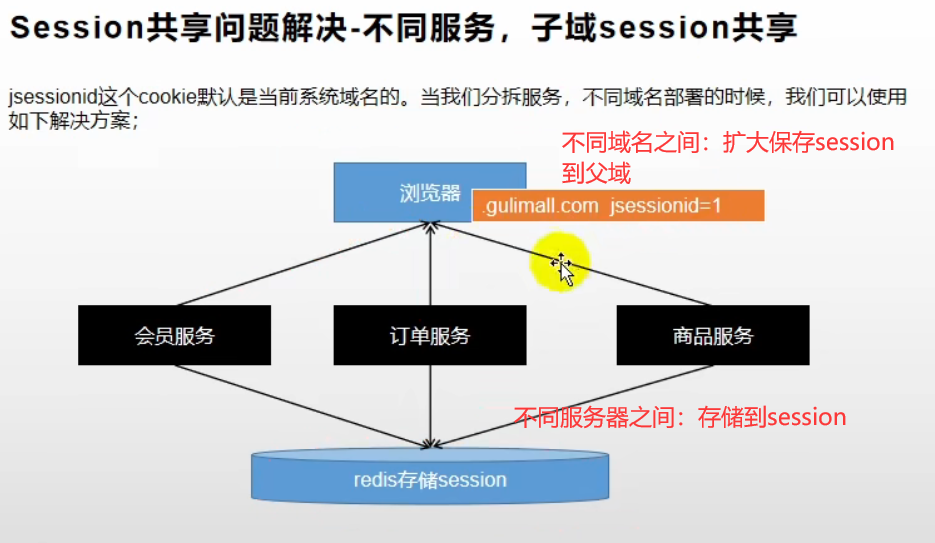
三、子域之间的 session 共享解决方案
- 第一次使用session的时候,浏览器会保存 JSESSIONID 这个 cookie
- 以后浏览器访问哪个子域就会带上这个网站的 cookie
解决方法:
- 在保存 session 的时候,即使在子域操作的,也保存在父域
使用SpringSession 解决以下两个问题
四、Spring Session 实战解决
Spring Session官网:Spring Session
<dependency><groupId>org.springframework.bootgroupId><artifactId>spring-boot-starter-data-redisartifactId>
dependency>

<dependency><groupId>org.springframework.sessiongroupId><artifactId>spring-session-data-redisartifactId>
dependency>
配置:
spring.redis.host=192.168.137.128
spring.redis.port=6379
# session 存储方式
spring.session.store-type=redis
# session 过期时间
server.servlet.session.timeout=30m
# Spring Session 的刷新模式,
# spring.session.redis.flush-mode=on_save
# 命名空间 (默认 ‘spring:session ’)
# spring.session.redis.namespace=spring:session
主类加上@EnableRedisHttpSession
注意:如果是以实体类的形式向 redis 存储 session,相关的实体类要实现序列化implements Serializable
redis 中 保存的 session

解决 session 共享域问题:
根据官方文档新建一个配置类来设置存储的 CookieName 以及 设置保存到父域
@Configuration
public class MySessionConfig {@Beanpublic CookieSerializer cookieSerializer(){DefaultCookieSerializer cookieSerializer = new DefaultCookieSerializer();cookieSerializer.setDomainName("gulimall.com");//父域cookieSerializer.setCookieName("GULISESSION");//cookie namereturn cookieSerializer;}@Beanpublic RedisSerializer<Object> springSessionDefaultRedisSerializer(){return new GenericJackson2JsonRedisSerializer();}
}

五、Spring Session 原理
通过实战发现,Spring Session的实现非常简单,主要通过一个注解、一个配置类就可以解决分布式 session 的问题,接下来通过源码探究 Spring Session 的原理
1.注解 @EnableRedisHttpSession
注解 @EnableRedisHttpSession默认了:
-
在 redis 中的命名空间(spring:session)
-
默认的刷新模式为 ON_SAVE:
-
Spring Session 有两种刷新模式:
-
ON_SAVE:只有当 SessionRepository.save(Session)方法被调用时,才会将session中的数据同步到redis中。在web 应用中,当请求完成响应后,才开始同步。也就是说在执行response 之前session数据都是缓存在本地的.
-
IMMEDIATE:实时同步session 数据到redis。当执行 SessionRepository.createSession()时, 会将session数据同步到redis中;当对 session的attribute进行set/remove 等操作时,也会同步session中的数据到redis中
-
@Deprecated
public enum RedisFlushMode {ON_SAVE(FlushMode.ON_SAVE),IMMEDIATE(FlushMode.IMMEDIATE);private final FlushMode flushMode;private RedisFlushMode(FlushMode flushMode) {this.flushMode = flushMode;}public FlushMode getFlushMode() {return this.flushMode;}
}
-
-
-
默认的保存模式为 ON_SET_ATTRIBUTE:
-
public enum SaveMode {ON_SET_ATTRIBUTE,ON_GET_ATTRIBUTE,ALWAYS;private SaveMode() {}
}
-
//
// Source code recreated from a .class file by IntelliJ IDEA
// (powered by FernFlower decompiler)
//package org.springframework.session.data.redis.config.annotation.web.http;import java.lang.annotation.Documented;
import java.lang.annotation.ElementType;
import java.lang.annotation.Retention;
import java.lang.annotation.RetentionPolicy;
import java.lang.annotation.Target;
import org.springframework.context.annotation.Configuration;
import org.springframework.context.annotation.Import;
import org.springframework.session.FlushMode;
import org.springframework.session.SaveMode;
import org.springframework.session.data.redis.RedisFlushMode;@Retention(RetentionPolicy.RUNTIME)
@Target({ElementType.TYPE})
@Documented
@Import({RedisHttpSessionConfiguration.class})
@Configuration(proxyBeanMethods = false
)
public @interface EnableRedisHttpSession {int maxInactiveIntervalInSeconds() default 1800;String redisNamespace() default "spring:session";/** @deprecated */@DeprecatedRedisFlushMode redisFlushMode() default RedisFlushMode.ON_SAVE;FlushMode flushMode() default FlushMode.ON_SAVE;String cleanupCron() default "0 * * * * *";SaveMode saveMode() default SaveMode.ON_SET_ATTRIBUTE;
}
2. RedisHttpSessionConfiguration配置类
在注解 @EnableRedisHttpSession中导入了 RedisHttpSessionConfiguration配置类
其中又注册了一个RedisIndexedSessionRepository组件,这个组件主要包括 在 redis 中对 session CRUD的封装类,以及一些默认的配置,如序列化配置、刷新模式等,等会我们可以自定义覆盖配置
[外链图片转存失败,源站可能有防盗链机制,建议将图片保存下来直接上传(img-mCvlvbdn-1659493462963)(C:\Users\10418\AppData\Roaming\Typora\typora-user-images\image-20220803093946245.png)]
RedisIndexedSessionRepository相当于redis 中 session 的仓库,包含了一系列CRUD的操作。(后面还有仓库的过滤器)

同时 RedisHttpSessionConfiguration又继承了SpringHttpSessionConfiguration配置类
3. SpringHttpSessionConfiguration配置类

自定义序列化器,扩大 session 作用域,解决子域session 不共享问题:
@Configuration
public class MySessionConfig {/*** 配置session 的一些信息* @return*/@Beanpublic CookieSerializer cookieSerializer(){DefaultCookieSerializer cookieSerializer = new DefaultCookieSerializer();cookieSerializer.setDomainName("gulimall.com");//父域cookieSerializer.setCookieName("GULISESSION");//cookie namereturn cookieSerializer;}/*** 序列化方式* @return*/@Beanpublic RedisSerializer<Object> springSessionDefaultRedisSerializer(){return new GenericJackson2JsonRedisSerializer();}
}
SessionRepositoryFilter过滤器,前面提到的仓库的过滤器

3.SessionRepositoryFilter仓库过滤器

核心:
protected void doFilterInternal(HttpServletRequest request, HttpServletResponse response, FilterChain filterChain) throws ServletException, IOException {//一次请求中的所有 session 的CRUD操作,都是在这一个 sessionRepositoryrequest.setAttribute(SESSION_REPOSITORY_ATTR, this.sessionRepository);//对原生的 HttpServletRequest、HttpServletResponse 进行包装=》SessionRepositoryRequestWrapper、SessionRepositoryResponseWrapperSessionRepositoryFilter<S>.SessionRepositoryRequestWrapper wrappedRequest = new SessionRepositoryFilter.SessionRepositoryRequestWrapper(request, response);SessionRepositoryFilter.SessionRepositoryResponseWrapper wrappedResponse = new SessionRepositoryFilter.SessionRepositoryResponseWrapper(wrappedRequest, response);try {//将包装后的wrappedRequest、wrappedResponse 执行过滤链filterChain.doFilter(wrappedRequest, wrappedResponse);} finally {wrappedRequest.commitSession();}}
包装成 SessionRepositoryRequestWrapper、SessionRepositoryResponseWrapper 的目的是为了将整个操作包括 获取session(getSession())的的操作都在 RedisIndexedSessionRepository 中执行
原生的 session 获取方法:
HttpServletRequest  request = new HttpServletRequest();
HttpSession session1 =  request.getSession()
从 RedisIndexedSessionRepository 中获取session,也就是存到 redis 中的session

public SessionRepositoryFilter<S>.SessionRepositoryRequestWrapper.HttpSessionWrapper getSession(boolean create) {SessionRepositoryFilter<S>.SessionRepositoryRequestWrapper.HttpSessionWrapper currentSession = this.getCurrentSession();if (currentSession != null) {return currentSession;} else {S requestedSession = this.getRequestedSession();if (requestedSession != null) {if (this.getAttribute(SessionRepositoryFilter.INVALID_SESSION_ID_ATTR) == null) {requestedSession.setLastAccessedTime(Instant.now());this.requestedSessionIdValid = true;currentSession = new SessionRepositoryFilter.SessionRepositoryRequestWrapper.HttpSessionWrapper(requestedSession, this.getServletContext());currentSession.markNotNew();this.setCurrentSession(currentSession);return currentSession;}} else {if (SessionRepositoryFilter.SESSION_LOGGER.isDebugEnabled()) {SessionRepositoryFilter.SESSION_LOGGER.debug("No session found by id: Caching result for getSession(false) for this HttpServletRequest.");}this.setAttribute(SessionRepositoryFilter.INVALID_SESSION_ID_ATTR, "true");}if (!create) {return null;} else if (SessionRepositoryFilter.this.httpSessionIdResolver instanceof CookieHttpSessionIdResolver && this.response.isCommitted()) {throw new IllegalStateException("Cannot create a session after the response has been committed");} else {if (SessionRepositoryFilter.SESSION_LOGGER.isDebugEnabled()) {SessionRepositoryFilter.SESSION_LOGGER.debug("A new session was created. To help you troubleshoot where the session was created we provided a StackTrace (this is not an error). You can prevent this from appearing by disabling DEBUG logging for " + SessionRepositoryFilter.SESSION_LOGGER_NAME, new RuntimeException("For debugging purposes only (not an error)"));}S session = SessionRepositoryFilter.this.sessionRepository.createSession();session.setLastAccessedTime(Instant.now());currentSession = new SessionRepositoryFilter.SessionRepositoryRequestWrapper.HttpSessionWrapper(session, this.getServletContext());this.setCurrentSession(currentSession);return currentSession;}}
}
本文来自互联网用户投稿,文章观点仅代表作者本人,不代表本站立场,不承担相关法律责任。如若转载,请注明出处。 如若内容造成侵权/违法违规/事实不符,请点击【内容举报】进行投诉反馈!