java的Class类源码详解
java的Class类源码详解
类的定义
ublic final class Class implements java.io.Serializable,GenericDeclaration,Type,AnnotatedElement {private static final int ANNOTATION= 0x00002000;private static final int ENUM      = 0x00004000;private static final int SYNTHETIC = 0x00001000;private static native void registerNatives();static {registerNatives();}private Class(ClassLoader loader) {// Initialize final field for classLoader.  The initialization value of non-null// prevents future JIT optimizations from assuming this final field is null.classLoader = loader;}public String toString() {return (isInterface() ? "interface " : (isPrimitive() ? "" : "class "))+ getName();}public String toGenericString() {if (isPrimitive()) {return toString();} else {StringBuilder sb = new StringBuilder();// Class modifiers are a superset of interface modifiersint modifiers = getModifiers() & Modifier.classModifiers();if (modifiers != 0) {sb.append(Modifier.toString(modifiers));sb.append(' ');}if (isAnnotation()) {sb.append('@');}if (isInterface()) { // Note: all annotation types are interfacessb.append("interface");} else {if (isEnum())sb.append("enum");elsesb.append("class");}sb.append(' ');sb.append(getName());TypeVariable[] typeparms = getTypeParameters();if (typeparms.length > 0) {boolean first = true;sb.append('<');for(TypeVariable typeparm: typeparms) {if (!first)sb.append(',');sb.append(typeparm.getTypeName());first = false;}sb.append('>');}return sb.toString();}}@CallerSensitivepublic static Class forName(String className)throws ClassNotFoundException {Class caller = Reflection.getCallerClass();return forName0(className, true, ClassLoader.getClassLoader(caller), caller);}@CallerSensitivepublic static Class forName(String name, boolean initialize,ClassLoader loader)throws ClassNotFoundException{Class caller = null;SecurityManager sm = System.getSecurityManager();if (sm != null) {// Reflective call to get caller class is only needed if a security manager// is present.  Avoid the overhead of making this call otherwise.caller = Reflection.getCallerClass();if (sun.misc.VM.isSystemDomainLoader(loader)) {ClassLoader ccl = ClassLoader.getClassLoader(caller);if (!sun.misc.VM.isSystemDomainLoader(ccl)) {sm.checkPermission(SecurityConstants.GET_CLASSLOADER_PERMISSION);}}}return forName0(name, initialize, loader, caller);}/** Called after security check for system loader access checks have been made. */private static native Class forName0(String name, boolean initialize,ClassLoader loader,Class caller)throws ClassNotFoundException;@CallerSensitivepublic T newInstance()throws InstantiationException, IllegalAccessException{if (System.getSecurityManager() != null) {checkMemberAccess(Member.PUBLIC, Reflection.getCallerClass(), false);}// NOTE: the following code may not be strictly correct under// the current Java memory model.// Constructor lookupif (cachedConstructor == null) {if (this == Class.class) {throw new IllegalAccessException("Can not call newInstance() on the Class for java.lang.Class");}try {Class[] empty = {};final Constructor c = getConstructor0(empty, Member.DECLARED);// Disable accessibility checks on the constructor// since we have to do the security check here anyway// (the stack depth is wrong for the Constructor's// security check to work)java.security.AccessController.doPrivileged(new java.security.PrivilegedAction() {public Void run() {c.setAccessible(true);return null;}});cachedConstructor = c;} catch (NoSuchMethodException e) {throw (InstantiationException)new InstantiationException(getName()).initCause(e);}}Constructor tmpConstructor = cachedConstructor;// Security check (same as in java.lang.reflect.Constructor)int modifiers = tmpConstructor.getModifiers();if (!Reflection.quickCheckMemberAccess(this, modifiers)) {Class caller = Reflection.getCallerClass();if (newInstanceCallerCache != caller) {Reflection.ensureMemberAccess(caller, this, null, modifiers);newInstanceCallerCache = caller;}}// Run constructortry {return tmpConstructor.newInstance((Object[])null);} catch (InvocationTargetException e) {Unsafe.getUnsafe().throwException(e.getTargetException());// Not reachedreturn null;}}private volatile transient Constructor cachedConstructor;private volatile transient Class       newInstanceCallerCache;public native boolean isInstance(Object obj);public native boolean isAssignableFrom(Class cls);public native boolean isInterface();public native boolean isArray();public native boolean isPrimitive();public boolean isAnnotation() {return (getModifiers() & ANNOTATION) != 0;}public boolean isSynthetic() {return (getModifiers() & SYNTHETIC) != 0;}public String getName() {String name = this.name;if (name == null)this.name = name = getName0();return name;}// cache the name to reduce the number of calls into the VMprivate transient String name;private native String getName0();@CallerSensitivepublic ClassLoader getClassLoader() {ClassLoader cl = getClassLoader0();if (cl == null)return null;SecurityManager sm = System.getSecurityManager();if (sm != null) {ClassLoader.checkClassLoaderPermission(cl, Reflection.getCallerClass());}return cl;}// Package-private to allow ClassLoader accessClassLoader getClassLoader0() { return classLoader; }// Initialized in JVM not by private constructor// This field is filtered from reflection access, i.e. getDeclaredField// will throw NoSuchFieldExceptionprivate final ClassLoader classLoader;@SuppressWarnings("unchecked")public TypeVariable>[] getTypeParameters() {ClassRepository info = getGenericInfo();if (info != null)return (TypeVariable>[])info.getTypeParameters();elsereturn (TypeVariable>[])new TypeVariable[0];}public native Class getSuperclass();public Type getGenericSuperclass() {ClassRepository info = getGenericInfo();if (info == null) {return getSuperclass();}// Historical irregularity:// Generic signature marks interfaces with superclass = Object// but this API returns null for interfacesif (isInterface()) {return null;}return info.getSuperclass();}public Package getPackage() {return Package.getPackage(this);}public Class[] getInterfaces() {ReflectionData rd = reflectionData();if (rd == null) {// no cloning requiredreturn getInterfaces0();} else {Class[] interfaces = rd.interfaces;if (interfaces == null) {interfaces = getInterfaces0();rd.interfaces = interfaces;}// defensively copy before handing over to user codereturn interfaces.clone();}}private native Class[] getInterfaces0();public Type[] getGenericInterfaces() {ClassRepository info = getGenericInfo();return (info == null) ?  getInterfaces() : info.getSuperInterfaces();}public native Class getComponentType();public native int getModifiers();public native Object[] getSigners();native void setSigners(Object[] signers);@CallerSensitivepublic Method getEnclosingMethod() throws SecurityException {EnclosingMethodInfo enclosingInfo = getEnclosingMethodInfo();if (enclosingInfo == null)return null;else {if (!enclosingInfo.isMethod())return null;MethodRepository typeInfo = MethodRepository.make(enclosingInfo.getDescriptor(),getFactory());Class   returnType       = toClass(typeInfo.getReturnType());Type []    parameterTypes   = typeInfo.getParameterTypes();Class[] parameterClasses = new Class[parameterTypes.length];// Convert Types to Classes; returned types *should*// be class objects since the methodDescriptor's used// don't have generics informationfor(int i = 0; i < parameterClasses.length; i++)parameterClasses[i] = toClass(parameterTypes[i]);// Perform access checkClass enclosingCandidate = enclosingInfo.getEnclosingClass();enclosingCandidate.checkMemberAccess(Member.DECLARED,Reflection.getCallerClass(), true);/** Loop over all declared methods; match method name,* number of and type of parameters, *and* return* type.  Matching return type is also necessary* because of covariant returns, etc.*/for(Method m: enclosingCandidate.getDeclaredMethods()) {if (m.getName().equals(enclosingInfo.getName()) ) {Class[] candidateParamClasses = m.getParameterTypes();if (candidateParamClasses.length == parameterClasses.length) {boolean matches = true;for(int i = 0; i < candidateParamClasses.length; i++) {if (!candidateParamClasses[i].equals(parameterClasses[i])) {matches = false;break;}}if (matches) { // finally, check return typeif (m.getReturnType().equals(returnType) )return m;}}}}throw new InternalError("Enclosing method not found");}}private native Object[] getEnclosingMethod0();private EnclosingMethodInfo getEnclosingMethodInfo() {Object[] enclosingInfo = getEnclosingMethod0();if (enclosingInfo == null)return null;else {return new EnclosingMethodInfo(enclosingInfo);}}@CallerSensitivepublic Class getDeclaringClass() throws SecurityException {final Class candidate = getDeclaringClass0();if (candidate != null)candidate.checkPackageAccess(ClassLoader.getClassLoader(Reflection.getCallerClass()), true);return candidate;}private native Class getDeclaringClass0();@CallerSensitivepublic Class getEnclosingClass() throws SecurityException {// There are five kinds of classes (or interfaces):// a) Top level classes// b) Nested classes (static member classes)// c) Inner classes (non-static member classes)// d) Local classes (named classes declared within a method)// e) Anonymous classes// JVM Spec 4.8.6: A class must have an EnclosingMethod// attribute if and only if it is a local class or an// anonymous class.EnclosingMethodInfo enclosingInfo = getEnclosingMethodInfo();Class enclosingCandidate;if (enclosingInfo == null) {// This is a top level or a nested class or an inner class (a, b, or c)enclosingCandidate = getDeclaringClass();} else {Class enclosingClass = enclosingInfo.getEnclosingClass();// This is a local class or an anonymous class (d or e)if (enclosingClass == this || enclosingClass == null)throw new InternalError("Malformed enclosing method information");elseenclosingCandidate = enclosingClass;}if (enclosingCandidate != null)enclosingCandidate.checkPackageAccess(ClassLoader.getClassLoader(Reflection.getCallerClass()), true);return enclosingCandidate;}public String getSimpleName() {if (isArray())return getComponentType().getSimpleName()+"[]";String simpleName = getSimpleBinaryName();if (simpleName == null) { // top level classsimpleName = getName();return simpleName.substring(simpleName.lastIndexOf(".")+1); // strip the package name}// According to JLS3 "Binary Compatibility" (13.1) the binary// name of non-package classes (not top level) is the binary// name of the immediately enclosing class followed by a '$' followed by:// (for nested and inner classes): the simple name.// (for local classes): 1 or more digits followed by the simple name.// (for anonymous classes): 1 or more digits.// Since getSimpleBinaryName() will strip the binary name of// the immediatly enclosing class, we are now looking at a// string that matches the regular expression "\$[0-9]*"// followed by a simple name (considering the simple of an// anonymous class to be the empty string).// Remove leading "\$[0-9]*" from the nameint length = simpleName.length();if (length < 1 || simpleName.charAt(0) != '$')throw new InternalError("Malformed class name");int index = 1;while (index < length && isAsciiDigit(simpleName.charAt(index)))index++;// Eventually, this is the empty string iff this is an anonymous classreturn simpleName.substring(index);}public String getTypeName() {if (isArray()) {try {Class cl = this;int dimensions = 0;while (cl.isArray()) {dimensions++;cl = cl.getComponentType();}StringBuilder sb = new StringBuilder();sb.append(cl.getName());for (int i = 0; i < dimensions; i++) {sb.append("[]");}return sb.toString();} catch (Throwable e) { /*FALLTHRU*/ }}return getName();}private static boolean isAsciiDigit(char c) {return '0' <= c && c <= '9';}public String getCanonicalName() {if (isArray()) {String canonicalName = getComponentType().getCanonicalName();if (canonicalName != null)return canonicalName + "[]";elsereturn null;}if (isLocalOrAnonymousClass())return null;Class enclosingClass = getEnclosingClass();if (enclosingClass == null) { // top level classreturn getName();} else {String enclosingName = enclosingClass.getCanonicalName();if (enclosingName == null)return null;return enclosingName + "." + getSimpleName();}}public boolean isAnonymousClass() {return "".equals(getSimpleName());}public boolean isLocalClass() {return isLocalOrAnonymousClass() && !isAnonymousClass();}public boolean isMemberClass() {return getSimpleBinaryName() != null && !isLocalOrAnonymousClass();}@CallerSensitivepublic Class[] getClasses() {checkMemberAccess(Member.PUBLIC, Reflection.getCallerClass(), false);// Privileged so this implementation can look at DECLARED classes,// something the caller might not have privilege to do.  The code here// is allowed to look at DECLARED classes because (1) it does not hand// out anything other than public members and (2) public member access// has already been ok'd by the SecurityManager.return java.security.AccessController.doPrivileged(new java.security.PrivilegedAction[]>() {public Class[] run() {List> list = new ArrayList<>();Class currentClass = Class.this;while (currentClass != null) {Class[] members = currentClass.getDeclaredClasses();for (int i = 0; i < members.length; i++) {if (Modifier.isPublic(members[i].getModifiers())) {list.add(members[i]);}}currentClass = currentClass.getSuperclass();}return list.toArray(new Class[0]);}});}@CallerSensitivepublic Field[] getFields() throws SecurityException {checkMemberAccess(Member.PUBLIC, Reflection.getCallerClass(), true);return copyFields(privateGetPublicFields(null));}@CallerSensitivepublic Method[] getMethods() throws SecurityException {checkMemberAccess(Member.PUBLIC, Reflection.getCallerClass(), true);return copyMethods(privateGetPublicMethods());}@CallerSensitivepublic Constructor[] getConstructors() throws SecurityException {checkMemberAccess(Member.PUBLIC, Reflection.getCallerClass(), true);return copyConstructors(privateGetDeclaredConstructors(true));}@CallerSensitivepublic Field getField(String name)throws NoSuchFieldException, SecurityException {checkMemberAccess(Member.PUBLIC, Reflection.getCallerClass(), true);Field field = getField0(name);if (field == null) {throw new NoSuchFieldException(name);}return field;}@CallerSensitivepublic Method getMethod(String name, Class... parameterTypes)throws NoSuchMethodException, SecurityException {checkMemberAccess(Member.PUBLIC, Reflection.getCallerClass(), true);Method method = getMethod0(name, parameterTypes, true);if (method == null) {throw new NoSuchMethodException(getName() + "." + name + argumentTypesToString(parameterTypes));}return method;}@CallerSensitivepublic Constructor getConstructor(Class... parameterTypes)throws NoSuchMethodException, SecurityException {checkMemberAccess(Member.PUBLIC, Reflection.getCallerClass(), true);return getConstructor0(parameterTypes, Member.PUBLIC);}@CallerSensitivepublic Class[] getDeclaredClasses() throws SecurityException {checkMemberAccess(Member.DECLARED, Reflection.getCallerClass(), false);return getDeclaredClasses0();}@CallerSensitivepublic Field[] getDeclaredFields() throws SecurityException {checkMemberAccess(Member.DECLARED, Reflection.getCallerClass(), true);return copyFields(privateGetDeclaredFields(false));}@CallerSensitivepublic Method[] getDeclaredMethods() throws SecurityException {checkMemberAccess(Member.DECLARED, Reflection.getCallerClass(), true);return copyMethods(privateGetDeclaredMethods(false));}@CallerSensitivepublic Constructor[] getDeclaredConstructors() throws SecurityException {checkMemberAccess(Member.DECLARED, Reflection.getCallerClass(), true);return copyConstructors(privateGetDeclaredConstructors(false));}@CallerSensitivepublic Field getDeclaredField(String name)throws NoSuchFieldException, SecurityException {checkMemberAccess(Member.DECLARED, Reflection.getCallerClass(), true);Field field = searchFields(privateGetDeclaredFields(false), name);if (field == null) {throw new NoSuchFieldException(name);}return field;}@CallerSensitivepublic Method getDeclaredMethod(String name, Class... parameterTypes)throws NoSuchMethodException, SecurityException {checkMemberAccess(Member.DECLARED, Reflection.getCallerClass(), true);Method method = searchMethods(privateGetDeclaredMethods(false), name, parameterTypes);if (method == null) {throw new NoSuchMethodException(getName() + "." + name + argumentTypesToString(parameterTypes));}return method;}@CallerSensitivepublic Constructor getDeclaredConstructor(Class... parameterTypes)throws NoSuchMethodException, SecurityException {checkMemberAccess(Member.DECLARED, Reflection.getCallerClass(), true);return getConstructor0(parameterTypes, Member.DECLARED);}public InputStream getResourceAsStream(String name) {name = resolveName(name);ClassLoader cl = getClassLoader0();if (cl==null) {// A system class.return ClassLoader.getSystemResourceAsStream(name);}return cl.getResourceAsStream(name);}public java.net.URL getResource(String name) {name = resolveName(name);ClassLoader cl = getClassLoader0();if (cl==null) {// A system class.return ClassLoader.getSystemResource(name);}return cl.getResource(name);}/** protection domain returned when the internal domain is null */private static java.security.ProtectionDomain allPermDomain;public java.security.ProtectionDomain getProtectionDomain() {SecurityManager sm = System.getSecurityManager();if (sm != null) {sm.checkPermission(SecurityConstants.GET_PD_PERMISSION);}java.security.ProtectionDomain pd = getProtectionDomain0();if (pd == null) {if (allPermDomain == null) {java.security.Permissions perms =new java.security.Permissions();perms.add(SecurityConstants.ALL_PERMISSION);allPermDomain =new java.security.ProtectionDomain(null, perms);}pd = allPermDomain;}return pd;}private native java.security.ProtectionDomain getProtectionDomain0();static native Class getPrimitiveClass(String name);private void checkMemberAccess(int which, Class caller, boolean checkProxyInterfaces) {final SecurityManager s = System.getSecurityManager();if (s != null) {/* Default policy allows access to all {@link Member#PUBLIC} members,* as well as access to classes that have the same class loader as the caller.* In all other cases, it requires RuntimePermission("accessDeclaredMembers")* permission.*/final ClassLoader ccl = ClassLoader.getClassLoader(caller);final ClassLoader cl = getClassLoader0();if (which != Member.PUBLIC) {if (ccl != cl) {s.checkPermission(SecurityConstants.CHECK_MEMBER_ACCESS_PERMISSION);}}this.checkPackageAccess(ccl, checkProxyInterfaces);}}private void checkPackageAccess(final ClassLoader ccl, boolean checkProxyInterfaces) {final SecurityManager s = System.getSecurityManager();if (s != null) {final ClassLoader cl = getClassLoader0();if (ReflectUtil.needsPackageAccessCheck(ccl, cl)) {String name = this.getName();int i = name.lastIndexOf('.');if (i != -1) {// skip the package access check on a proxy class in default proxy packageString pkg = name.substring(0, i);if (!Proxy.isProxyClass(this) || ReflectUtil.isNonPublicProxyClass(this)) {s.checkPackageAccess(pkg);}}}// check package access on the proxy interfacesif (checkProxyInterfaces && Proxy.isProxyClass(this)) {ReflectUtil.checkProxyPackageAccess(ccl, this.getInterfaces());}}}private static Field searchFields(Field[] fields, String name) {String internedName = name.intern();for (int i = 0; i < fields.length; i++) {if (fields[i].getName() == internedName) {return getReflectionFactory().copyField(fields[i]);}}return null;}private Field getField0(String name) throws NoSuchFieldException {// Note: the intent is that the search algorithm this routine// uses be equivalent to the ordering imposed by// privateGetPublicFields(). It fetches only the declared// public fields for each class, however, to reduce the number// of Field objects which have to be created for the common// case where the field being requested is declared in the// class which is being queried.Field res;// Search declared public fieldsif ((res = searchFields(privateGetDeclaredFields(true), name)) != null) {return res;}// Direct superinterfaces, recursivelyClass[] interfaces = getInterfaces();for (int i = 0; i < interfaces.length; i++) {Class c = interfaces[i];if ((res = c.getField0(name)) != null) {return res;}}// Direct superclass, recursivelyif (!isInterface()) {Class c = getSuperclass();if (c != null) {if ((res = c.getField0(name)) != null) {return res;}}}return null;}private static Method searchMethods(Method[] methods,String name,Class[] parameterTypes){Method res = null;String internedName = name.intern();for (int i = 0; i < methods.length; i++) {Method m = methods[i];if (m.getName() == internedName&& arrayContentsEq(parameterTypes, m.getParameterTypes())&& (res == null|| res.getReturnType().isAssignableFrom(m.getReturnType())))res = m;}return (res == null ? res : getReflectionFactory().copyMethod(res));}private Method getMethod0(String name, Class[] parameterTypes, boolean includeStaticMethods) {MethodArray interfaceCandidates = new MethodArray(2);Method res =  privateGetMethodRecursive(name, parameterTypes, includeStaticMethods, interfaceCandidates);if (res != null)return res;// Not found on class or superclass directlyinterfaceCandidates.removeLessSpecifics();return interfaceCandidates.getFirst(); // may be null}private Method privateGetMethodRecursive(String name,Class[] parameterTypes,boolean includeStaticMethods,MethodArray allInterfaceCandidates) {// Note: the intent is that the search algorithm this routine// uses be equivalent to the ordering imposed by// privateGetPublicMethods(). It fetches only the declared// public methods for each class, however, to reduce the// number of Method objects which have to be created for the// common case where the method being requested is declared in// the class which is being queried.//// Due to default methods, unless a method is found on a superclass,// methods declared in any superinterface needs to be considered.// Collect all candidates declared in superinterfaces in {@code// allInterfaceCandidates} and select the most specific if no match on// a superclass is found.// Must _not_ return root methodsMethod res;// Search declared public methodsif ((res = searchMethods(privateGetDeclaredMethods(true),name,parameterTypes)) != null) {if (includeStaticMethods || !Modifier.isStatic(res.getModifiers()))return res;}// Search superclass's methodsif (!isInterface()) {Class c = getSuperclass();if (c != null) {if ((res = c.getMethod0(name, parameterTypes, true)) != null) {return res;}}}// Search superinterfaces' methodsClass[] interfaces = getInterfaces();for (Class c : interfaces)if ((res = c.getMethod0(name, parameterTypes, false)) != null)allInterfaceCandidates.add(res);// Not foundreturn null;}private Constructor getConstructor0(Class[] parameterTypes,int which) throws NoSuchMethodException{Constructor[] constructors = privateGetDeclaredConstructors((which == Member.PUBLIC));for (Constructor constructor : constructors) {if (arrayContentsEq(parameterTypes,constructor.getParameterTypes())) {return getReflectionFactory().copyConstructor(constructor);}}throw new NoSuchMethodException(getName() + "." + argumentTypesToString(parameterTypes));}//// Other helpers and base implementation//private static boolean arrayContentsEq(Object[] a1, Object[] a2) {if (a1 == null) {return a2 == null || a2.length == 0;}if (a2 == null) {return a1.length == 0;}if (a1.length != a2.length) {return false;}for (int i = 0; i < a1.length; i++) {if (a1[i] != a2[i]) {return false;}}return true;}private static Field[] copyFields(Field[] arg) {Field[] out = new Field[arg.length];ReflectionFactory fact = getReflectionFactory();for (int i = 0; i < arg.length; i++) {out[i] = fact.copyField(arg[i]);}return out;}private static Method[] copyMethods(Method[] arg) {Method[] out = new Method[arg.length];ReflectionFactory fact = getReflectionFactory();for (int i = 0; i < arg.length; i++) {out[i] = fact.copyMethod(arg[i]);}return out;}private static  Constructor[] copyConstructors(Constructor[] arg) {Constructor[] out = arg.clone();ReflectionFactory fact = getReflectionFactory();for (int i = 0; i < out.length; i++) {out[i] = fact.copyConstructor(out[i]);}return out;}private native Field[]       getDeclaredFields0(boolean publicOnly);private native Method[]      getDeclaredMethods0(boolean publicOnly);private native Constructor[] getDeclaredConstructors0(boolean publicOnly);private native Class[]   getDeclaredClasses0();private static String        argumentTypesToString(Class[] argTypes) {StringBuilder buf = new StringBuilder();buf.append("(");if (argTypes != null) {for (int i = 0; i < argTypes.length; i++) {if (i > 0) {buf.append(", ");}Class c = argTypes[i];buf.append((c == null) ? "null" : c.getName());}}buf.append(")");return buf.toString();}/** use serialVersionUID from JDK 1.1 for interoperability */private static final long serialVersionUID = 3206093459760846163L;private static final ObjectStreamField[] serialPersistentFields =new ObjectStreamField[0];public boolean desiredAssertionStatus() {ClassLoader loader = getClassLoader();// If the loader is null this is a system class, so ask the VMif (loader == null)return desiredAssertionStatus0(this);// If the classloader has been initialized with the assertion// directives, ask it. Otherwise, ask the VM.synchronized(loader.assertionLock) {if (loader.classAssertionStatus != null) {return loader.desiredAssertionStatus(getName());}}return desiredAssertionStatus0(this);}// Retrieves the desired assertion status of this class from the VMprivate static native boolean desiredAssertionStatus0(Class clazz);public boolean isEnum() {// An enum must both directly extend java.lang.Enum and have// the ENUM bit set; classes for specialized enum constants// don't do the former.return (this.getModifiers() & ENUM) != 0 &&this.getSuperclass() == java.lang.Enum.class;}// Fetches the factory for reflective objectsprivate static ReflectionFactory getReflectionFactory() {if (reflectionFactory == null) {reflectionFactory =java.security.AccessController.doPrivileged(new sun.reflect.ReflectionFactory.GetReflectionFactoryAction());}return reflectionFactory;}private static ReflectionFactory reflectionFactory;// To be able to query system properties as soon as they're availableprivate static boolean initted = false;private static void checkInitted() {if (initted) return;AccessController.doPrivileged(new PrivilegedAction() {public Void run() {// Tests to ensure the system properties table is fully// initialized. This is needed because reflection code is// called very early in the initialization process (before// command-line arguments have been parsed and therefore// these user-settable properties installed.) We assume that// if System.out is non-null then the System class has been// fully initialized and that the bulk of the startup code// has been run.if (System.out == null) {// java.lang.System not yet fully initializedreturn null;}// Doesn't use Boolean.getBoolean to avoid class init.String val =System.getProperty("sun.reflect.noCaches");if (val != null && val.equals("true")) {useCaches = false;}initted = true;return null;}});}
}
除了int等基本类型外,Java的其他类型全部都是class(包括interface)。例如:
StringObjectRunnableException- ...
仔细思考,我们可以得出结论:class(包括interface)的本质是数据类型(Type)。无继承关系的数据类型无法赋值:
Number n = new Double(123.456); // OK
String s = new Double(123.456); // compile error!
而class是由JVM在执行过程中动态加载的。JVM在第一次读取到一种class类型时,将其加载进内存。
每加载一种class,JVM就为其创建一个Class类型的实例,并关联起来。注意:这里的Class类型是一个名叫Class的class。它长这样:
public final class Class {private Class() {}
}
以String类为例,当JVM加载String类时,它首先读取String.class文件到内存,然后,为String类创建一个Class实例并关联起来:
Class cls = new Class(String);
这个Class实例是JVM内部创建的,如果我们查看JDK源码,可以发现Class类的构造方法是private,只有JVM能创建Class实例,我们自己的Java程序是无法创建Class实例的。
所以,JVM持有的每个Class实例都指向一个数据类型(class或interface):
┌───────────────────────────┐
│      Class Instance       │──────> String
├───────────────────────────┤
│name = "java.lang.String"  │
└───────────────────────────┘
┌───────────────────────────┐
│      Class Instance       │──────> Random
├───────────────────────────┤
│name = "java.util.Random"  │
└───────────────────────────┘
┌───────────────────────────┐
│      Class Instance       │──────> Runnable
├───────────────────────────┤
│name = "java.lang.Runnable"│
└───────────────────────────┘
一个Class实例包含了该class的所有完整信息:
┌───────────────────────────┐
│      Class Instance       │──────> String
├───────────────────────────┤
│name = "java.lang.String"  │
├───────────────────────────┤
│package = "java.lang"      │
├───────────────────────────┤
│super = "java.lang.Object" │
├───────────────────────────┤
│interface = CharSequence...│
├───────────────────────────┤
│field = value[],hash,...   │
├───────────────────────────┤
│method = indexOf()...      │
└───────────────────────────┘
由于JVM为每个加载的class创建了对应的Class实例,并在实例中保存了该class的所有信息,包括类名、包名、父类、实现的接口、所有方法、字段等,因此,如果获取了某个Class实例,我们就可以通过这个Class实例获取到该实例对应的class的所有信息。
这种通过Class实例获取class信息的方法称为反射(Reflection)。
Java反射就是在运行状态中,对于任意一个类,都能够知道这个类的所有属性和方法;对于任意一个对象,都能够调用它的任意方法和属性;并且能改变它的属性。而这也是Java被视为动态(或准动态,为啥要说是准动态,因为一般而言的动态语言定义是程序运行时,允许改变程序结构或变量类型,这种语言称为动态语言。从这个观点看,Perl,Python,Ruby是动态语言,C++,Java,C#不是动态语言。)语言的一个关键性质。
我们知道反射机制允许程序在运行时取得任何一个已知名称的class的内部信息,包括包括其modifiers(修饰符),fields(属性),methods(方法)等,并可于运行时改变fields内容或调用methods。那么我们便可以更灵活的编写代码,代码可以在运行时装配,无需在组件之间进行源代码链接,降低代码的耦合度;还有动态代理的实现等等;但是需要注意的是反射使用不当会造成很高的资源消耗!
如何获取一个class的Class实例?有三个方法:
方法一:直接通过一个class的静态变量class获取:
Class cls = String.class;
Class cls2 = int.class;
Class cls3 = Double[].class;
一个Class对象实际表示是一个类型,而这个类型未必是一个类。Class类其实是一种泛类型,如Employee.class 是Class
方法二:如果我们有一个实例变量,可以通过该实例变量提供的getClass()方法获取:
String s = "Hello";
Class cls = s.getClass();
方法三:如果知道一个class的完整类名,可以通过静态方法Class.forName()获取:
Class cls = Class.forName("java.lang.String");
需要注意的是:一个类在 JVM 中只会有一个 Class 实例,即我们对上面获取的 c1,c2,c3进行 equals 比较,发现都是true
因为Class实例在JVM中是唯一的,所以,上述方法获取的Class实例是同一个实例。可以用==比较两个Class实例:
Class cls1 = String.class;String s = "Hello";
Class cls2 = s.getClass();boolean sameClass = cls1 == cls2; // true
注意一下Class实例比较和instanceof的差别:
Integer n = new Integer(123);boolean b3 = n instanceof Integer; // true
boolean b4 = n instanceof Number; // trueboolean b1 = n.getClass() == Integer.class; // true
boolean b2 = n.getClass() == Number.class; // false
用instanceof不但匹配当前类型,还匹配当前类型的子类。而用==判断class实例可以精确地判断数据类型,但不能作子类型比较。
其实还有一个很有用的方法,可以通过newInstance()动态的创建一个类的实例,e.getClass().newInstance(),调用默认的构造器初始化新创建的对象,如果类没有默认的构造器则会报错。
Class.newInstance() 只能够调用无参的构造函数,即默认的构造函数;
Constructor.newInstance() 可以根据传入的参数,调用任意构造构造函数。
Class.newInstance() 抛出所有由被调用构造函数抛出的异常。
Class.newInstance() 要求被调用的构造函数是可见的,也即必须是public类型的;
Constructor.newInstance() 在特定的情况下,可以调用私有的构造函数。
public class A {  private A() {  System.out.println("A's constructor is called.");  }  private A(int a, int b) {  System.out.println("a:" + a + " b:" + b);  }
}
public class B { public static void main(String[] args) { B b=new B(); out.println("通过Class.NewInstance()调用私有构造函数:"); b.newInstanceByClassNewInstance(); out.println("通过Constructor.newInstance()调用私有构造函数:"); b.newInstanceByConstructorNewInstance(); } /*通过Class.NewInstance()创建新的类示例*/ private void newInstanceByClassNewInstance(){ try {/*当前包名为reflect,必须使用全路径*/ A a=(A)Class.forName("reflect.A").newInstance(); } catch (Exception e) { out.println("通过Class.NewInstance()调用私有构造函数【失败】"); } } /*通过Constructor.newInstance()创建新的类示例*/ private void newInstanceByConstructorNewInstance(){ try {/*可以使用相对路径,同一个包中可以不用带包路径*/ Class c=Class.forName("A"); /*以下调用无参的、私有构造函数*/ Constructor c0=c.getDeclaredConstructor(); c0.setAccessible(true); A a0=(A)c0.newInstance(); /*以下调用带参的、私有构造函数*/ Constructor c1=c.getDeclaredConstructor(new Class[]{int.class,int.class}); c1.setAccessible(true); A a1=(A)c1.newInstance(new Object[]{5,6}); } catch (Exception e) { e.printStackTrace(); } }
} 输入结果如下:
通过Class.NewInstance()调用私有构造函数:
通过Class.NewInstance()调用私有构造函数【失败】
通过Constructor.newInstance()调用私有构造函数:
A's constructor is called.
a:5 b:6
通过 Class 类获取成员变量、成员方法、接口、超类、构造方法等
查阅 API 可以看到 Class 有很多方法:
getName():获得类的完整名字。
getFields():获得类的public类型的属性。
getDeclaredFields():获得类的所有属性。包括private 声明的和继承类
getMethods():获得类的public类型的方法。
getDeclaredMethods():获得类的所有方法。包括private 声明的和继承类
getMethod(String name, Class[] parameterTypes):获得类的特定方法,name参数指定方法的名字,parameterTypes 参数指定方法的参数类型。
getConstructors():获得类的public类型的构造方法。
getConstructor(Class[] parameterTypes):获得类的特定构造方法,parameterTypes 参数指定构造方法的参数类型。
newInstance():通过类的不带参数的构造方法创建这个类的一个对象。
通常情况下,我们应该用instanceof判断数据类型,因为面向抽象编程的时候,我们不关心具体的子类型。只有在需要精确判断一个类型是不是某个class的时候,我们才使用==判断class实例。
package com.ys.reflex;public class Person {//私有属性private String name = "Tom";//公有属性public int age = 18;//构造方法public Person() { }//私有方法private void say(){System.out.println("private say()...");}//公有方法public void work(){System.out.println("public work()...");}} //获得类完整的名字String className = c2.getName();System.out.println(className);//输出com.ys.reflex.Person//获得类的public类型的属性。Field[] fields = c2.getFields();for(Field field : fields){System.out.println(field.getName());//age}//获得类的所有属性。包括私有的Field [] allFields = c2.getDeclaredFields();for(Field field : allFields){System.out.println(field.getName());//name age}//获得类的public类型的方法。这里包括 Object 类的一些方法Method [] methods = c2.getMethods();for(Method method : methods){System.out.println(method.getName());//work waid equls toString hashCode等}//获得类的所有方法。Method [] allMethods = c2.getDeclaredMethods();for(Method method : allMethods){System.out.println(method.getName());//work say}//获得指定的属性Field f1 = c2.getField("age");System.out.println(f1);//获得指定的私有属性Field f2 = c2.getDeclaredField("name");//启用和禁用访问安全检查的开关,值为 true,则表示反射的对象在使用时应该取消 java 语言的访问检查;反之不取消f2.setAccessible(true);System.out.println(f2);//创建这个类的一个对象Object p2 = c2.newInstance();//将 p2 对象的 f2 属性赋值为 Bob,f2 属性即为 私有属性 namef2.set(p2,"Bob");//使用反射机制可以打破封装性,导致了java对象的属性不安全。 System.out.println(f2.get(p2)); //Bob//获取构造方法Constructor [] constructors = c2.getConstructors();for(Constructor constructor : constructors){System.out.println(constructor.toString());//public com.ys.reflex.Person()}
因为反射的目的是为了获得某个实例的信息。因此,当我们拿到某个Object实例时,我们可以通过反射获取该Object的class信息:
void printObjectInfo(Object obj) {Class cls = obj.getClass();
}要从Class实例获取获取的基本信息,参考下面的代码:
public class Main {public static void main(String[] args) {printClassInfo("".getClass());printClassInfo(Runnable.class);printClassInfo(java.time.Month.class);printClassInfo(String[].class);printClassInfo(int.class);}static void printClassInfo(Class cls) {System.out.println("Class name: " + cls.getName());System.out.println("Simple name: " + cls.getSimpleName());if (cls.getPackage() != null) {System.out.println("Package name: " + cls.getPackage().getName());}System.out.println("is interface: " + cls.isInterface());System.out.println("is enum: " + cls.isEnum());System.out.println("is array: " + cls.isArray());System.out.println("is primitive: " + cls.isPrimitive());}
}注意到数组(例如String[])也是一种Class,而且不同于String.class,它的类名是[Ljava.lang.String。此外,JVM为每一种基本类型如int也创建了Class,通过int.class访问。
如果获取到了一个Class实例,我们就可以通过该Class实例来创建对应类型的实例:
// 获取String的Class实例:
Class cls = String.class;
// 创建一个String实例:
String s = (String) cls.newInstance();
上述代码相当于new String()。通过Class.newInstance()可以创建类实例,它的局限是:只能调用public的无参数构造方法。带参数的构造方法,或者非public的构造方法都无法通过Class.newInstance()被调用。
new和newInstance()
new关键字是强类型的,效率相对较高。
newInstance()是弱类型的,效率相对较低。
既然使用newInstance()构造对象的地方通过new关键字也可以创建对象,为什么又会使用newInstance()来创建对象呢?
假设定义了一个接口Door,开始的时候是用木门的,定义为一个类WoodenDoor,在程序里就要这样写 Door door = new WoodenDoor() 。假设后来生活条件提高,换为自动门了,定义一个类AutoDoor,这时程序就要改写为 Door door = new AutoDoor() 。虽然只是改个标识符,如果这样的语句特别多,改动还是挺大的。于是出现了工厂模式,所有Door的实例都由DoorFactory提供,这时换一种门的时候,只需要把工厂的生产模式改一下,还是要改一点代码。
而如果使用newInstance(),则可以在不改变代码的情况下,换为另外一种Door。具体方法是把Door的具体实现类的类名放到配置文件中,通过newInstance()生成实例。这样,改变另外一种Door的时候,只改配置文件就可以了。示例代码如下:
String className = 从配置文件读取Door的具体实现类的类名;
Door door = (Door) Class.forName(className).newInstance();
再配合依赖注入的方法,就提高了软件的可伸缩性、可扩展性。
动态加载
JVM在执行Java程序的时候,并不是一次性把所有用到的class全部加载到内存,而是第一次需要用到class时才加载。例如:
// Main.java
public class Main {public static void main(String[] args) {if (args.length > 0) {create(args[0]);}}static void create(String name) {Person p = new Person(name);}
}
当执行Main.java时,由于用到了Main,因此,JVM首先会把Main.class加载到内存。然而,并不会加载Person.class,除非程序执行到create()方法,JVM发现需要加载Person类时,才会首次加载Person.class。如果没有执行create()方法,那么Person.class根本就不会被加载。
这就是JVM动态加载class的特性。
动态加载class的特性对于Java程序非常重要。利用JVM动态加载class的特性,我们才能在运行期根据条件加载不同的实现类。例如,Commons Logging总是优先使用Log4j,只有当Log4j不存在时,才使用JDK的logging。利用JVM动态加载特性,大致的实现代码如下:
// Commons Logging优先使用Log4j:
LogFactory factory = null;
if (isClassPresent("org.apache.logging.log4j.Logger")) {factory = createLog4j();
} else {factory = createJdkLog();
}boolean isClassPresent(String name) {try {Class.forName(name);return true;} catch (Exception e) {return false;}
}
这就是为什么我们只需要把Log4j的jar包放到classpath中,Commons Logging就会自动使用Log4j的原因。
根据反射获取父类属性
父类 Parent.java
public class Parent {public String publicField = "parent_publicField";protected String protectField = "parent_protectField";String defaultField = "parent_defaultField";private String privateField = "parent_privateField";}子类 Son.java
public class Son extends Parent {} public class ReflectionTest {@Testpublic void testGetParentField() throws Exception{Class c1 = Class.forName("com.ys.model.Son");//获取父类私有属性值System.out.println(getFieldValue(c1.newInstance(),"privateField"));}public static Field getDeclaredField(Object obj,String fieldName) {Field field = null;Class c = obj.getClass();for(; c != Object.class ; c = c.getSuperclass()){try {field = c.getDeclaredField(fieldName);field.setAccessible(true);return field;}catch (Exception e){//这里甚么都不要做!并且这里的异常必须这样写,不能抛出去。//如果这里的异常打印或者往外抛,则就不会执行c = c.getSuperclass(),最后就不会进入到父类中了}}return null;}public static Object getFieldValue(Object object,String fieldName) throws Exception{Field field = getDeclaredField(object,fieldName);return field.get(object);}}通过执行上述代码,我们获得了父类的私有属性值,这里要注意的是直接通过反射获取子类的对象是不能得到父类的属性值的,必须根据反射获得的子类 Class 对象在调用 getSuperclass() 方法获取父类对象,然后在通过父类对象去获取父类的属性值。
访问字段
对任意的一个Object实例,只要我们获取了它的Class,就可以获取它的一切信息。
我们先看看如何通过Class实例获取字段信息。Class类提供了以下几个方法来获取字段:
- Field getField(name):根据字段名获取某个public的field(包括父类)
- Field getDeclaredField(name):根据字段名获取当前类的某个field(不包括父类)
- Field[] getFields():获取所有public的field(包括父类)
- Field[] getDeclaredFields():获取当前类的所有field(不包括父类)
public class Main {public static void main(String[] args) throws Exception {Class stdClass = Student.class;// 获取public字段"score":System.out.println(stdClass.getField("score"));// 获取继承的public字段"name":System.out.println(stdClass.getField("name"));// 获取private字段"grade":System.out.println(stdClass.getDeclaredField("grade"));}
}class Student extends Person {public int score;private int grade;
}class Person {public String name;
}上述代码首先获取Student的Class实例,然后,分别获取public字段、继承的public字段以及private字段,打印出的Field类似:
public int Student.score
public java.lang.String Person.name
private int Student.grade
一个Field对象包含了一个字段的所有信息:
getName():返回字段名称,例如,"name";getType():返回字段类型,也是一个Class实例,例如,String.class;getModifiers():返回字段的修饰符,它是一个int,不同的bit表示不同的含义。
以String类的value字段为例,它的定义是:
public final class String {private final byte[] value;
}
我们用反射获取该字段的信息,代码如下:
Field f = String.class.getDeclaredField("value");
f.getName(); // "value"
f.getType(); // class [B 表示byte[]类型
int m = f.getModifiers();
Modifier.isFinal(m); // true
Modifier.isPublic(m); // false
Modifier.isProtected(m); // false
Modifier.isPrivate(m); // true
Modifier.isStatic(m); // false
获取字段值
利用反射拿到字段的一个Field实例只是第一步,我们还可以拿到一个实例对应的该字段的值。
例如,对于一个Person实例,我们可以先拿到name字段对应的Field,再获取这个实例的name字段的值:
public class Main {public static void main(String[] args) throws Exception {Object p = new Person("Xiao Ming");Class c = p.getClass();Field f = c.getDeclaredField("name");Object value = f.get(p);System.out.println(value); // "Xiao Ming"}
}class Person {private String name;public Person(String name) {this.name = name;}
}上述代码先获取Class实例,再获取Field实例,然后,用Field.get(Object)获取指定实例的指定字段的值。
运行代码,如果不出意外,会得到一个IllegalAccessException,这是因为name被定义为一个private字段,正常情况下,Main类无法访问Person类的private字段。要修复错误,可以将private改为public,或者,在调用Object value = f.get(p);前,先写一句:
f.setAccessible(true);
调用Field.setAccessible(true)的意思是,别管这个字段是不是public,一律允许访问。
可以试着加上上述语句,再运行代码,就可以打印出private字段的值。
有童鞋会问:如果使用反射可以获取private字段的值,那么类的封装还有什么意义?
答案是正常情况下,我们总是通过p.name来访问Person的name字段,编译器会根据public、protected和private决定是否允许访问字段,这样就达到了数据封装的目的。
而反射是一种非常规的用法,使用反射,首先代码非常繁琐,其次,它更多地是给工具或者底层框架来使用,目的是在不知道目标实例任何信息的情况下,获取特定字段的值。
此外,setAccessible(true)可能会失败。如果JVM运行期存在SecurityManager,那么它会根据规则进行检查,有可能阻止setAccessible(true)。例如,某个SecurityManager可能不允许对java和javax开头的package的类调用setAccessible(true),这样可以保证JVM核心库的安全。
设置字段值
通过Field实例既然可以获取到指定实例的字段值,自然也可以设置字段的值。
设置字段值是通过Field.set(Object, Object)实现的,其中第一个Object参数是指定的实例,第二个Object参数是待修改的值。示例代码如下:
public class Main {public static void main(String[] args) throws Exception {Person p = new Person("Xiao Ming");System.out.println(p.getName()); // "Xiao Ming"Class c = p.getClass();Field f = c.getDeclaredField("name");f.setAccessible(true);f.set(p, "Xiao Hong");System.out.println(p.getName()); // "Xiao Hong"}
}class Person {private String name;public Person(String name) {this.name = name;}public String getName() {return this.name;}
}运行上述代码,打印的name字段从Xiao Ming变成了Xiao Hong,说明通过反射可以直接修改字段的值。
同样的,修改非public字段,需要首先调用setAccessible(true)。
调用方法
我们已经能通过Class实例获取所有Field对象,同样的,可以通过Class实例获取所有Method信息。Class类提供了以下几个方法来获取Method:
Method getMethod(name, Class...):获取某个public的Method(包括父类)Method getDeclaredMethod(name, Class...):获取当前类的某个Method(不包括父类)Method[] getMethods():获取所有public的Method(包括父类)Method[] getDeclaredMethods():获取当前类的所有Method(不包括父类)
public class Main {public static void main(String[] args) throws Exception {Class stdClass = Student.class;// 获取public方法getScore,参数为String:System.out.println(stdClass.getMethod("getScore", String.class));// 获取继承的public方法getName,无参数:System.out.println(stdClass.getMethod("getName"));// 获取private方法getGrade,参数为int:System.out.println(stdClass.getDeclaredMethod("getGrade", int.class));}
}class Student extends Person {public int getScore(String type) {return 99;}private int getGrade(int year) {return 1;}
}class Person {public String getName() {return "Person";}
}上述代码首先获取Student的Class实例,然后,分别获取public方法、继承的public方法以及private方法,打印出的Method类似:
public int Student.getScore(java.lang.String)
public java.lang.String Person.getName()
private int Student.getGrade(int)
一个Method对象包含一个方法的所有信息:
getName():返回方法名称,例如:"getScore";getReturnType():返回方法返回值类型,也是一个Class实例,例如:String.class;getParameterTypes():返回方法的参数类型,是一个Class数组,例如:{String.class, int.class};getModifiers():返回方法的修饰符,它是一个int,不同的bit表示不同的含义。
public static void printMethod(Class c1){
Method[] methods = c1.getDeclaredMethods();
for(Method  m:methods){
Class retType = m.getReturnType();
String name = m.getName();
String retTypeName = retType.getName();
}
}
调用方法
当我们获取到一个Method对象时,就可以对它进行调用。我们以下面的代码为例:
String s = "Hello world";
String r = s.substring(6); // "world"
如果用反射来调用substring方法,需要以下代码:
public class Main {public static void main(String[] args) throws Exception {// String对象:String s = "Hello world";// 获取String substring(int)方法,参数为int:Method m = String.class.getMethod("substring", int.class);// 在s对象上调用该方法并获取结果:String r = (String) m.invoke(s, 6);// 打印调用结果:System.out.println(r);}
}注意到substring()有两个重载方法,我们获取的是String substring(int)这个方法。思考一下如何获取String substring(int, int)方法。
对Method实例调用invoke就相当于调用该方法,invoke的第一个参数是对象实例,即在哪个实例上调用该方法,后面的可变参数要与方法参数一致,否则将报错。
调用静态方法
如果获取到的Method表示一个静态方法,调用静态方法时,由于无需指定实例对象,所以invoke方法传入的第一个参数永远为null。我们以Integer.parseInt(String)为例:
public class Main {public static void main(String[] args) throws Exception {// 获取Integer.parseInt(String)方法,参数为String:Method m = Integer.class.getMethod("parseInt", String.class);// 调用该静态方法并获取结果:Integer n = (Integer) m.invoke(null, "12345");// 打印调用结果:System.out.println(n);}
}
调用非public方法
和Field类似,对于非public方法,我们虽然可以通过Class.getDeclaredMethod()获取该方法实例,但直接对其调用将得到一个IllegalAccessException。为了调用非public方法,我们通过Method.setAccessible(true)允许其调用:
public class Main {public static void main(String[] args) throws Exception {Person p = new Person();Method m = p.getClass().getDeclaredMethod("setName", String.class);m.setAccessible(true);m.invoke(p, "Bob");System.out.println(p.name);}
}class Person {String name;private void setName(String name) {this.name = name;}
}此外,setAccessible(true)可能会失败。如果JVM运行期存在SecurityManager,那么它会根据规则进行检查,有可能阻止setAccessible(true)。例如,某个SecurityManager可能不允许对java和javax开头的package的类调用setAccessible(true),这样可以保证JVM核心库的安全。
多态
我们来考察这样一种情况:一个Person类定义了hello()方法,并且它的子类Student也覆写了hello()方法,那么,从Person.class获取的Method,作用于Student实例时,调用的方法到底是哪个?
public class Main {public static void main(String[] args) throws Exception {// 获取Person的hello方法:Method h = Person.class.getMethod("hello");// 对Student实例调用hello方法:h.invoke(new Student());}
}class Person {public void hello() {System.out.println("Person:hello");}
}class Student extends Person {public void hello() {System.out.println("Student:hello");}
}运行上述代码,发现打印出的是Student:hello,因此,使用反射调用方法时,仍然遵循多态原则:即总是调用实际类型的覆写方法(如果存在)。上述的反射代码:
Method m = Person.class.getMethod("hello");
m.invoke(new Student());
实际上相当于:
Person p = new Student();
p.hello();
调用构造方法
我们通常使用new操作符创建新的实例:
Person p = new Person();
如果通过反射来创建新的实例,可以调用Class提供的newInstance()方法:
Person p = Person.class.newInstance();
调用Class.newInstance()的局限是,它只能调用该类的public无参数构造方法。如果构造方法带有参数,或者不是public,就无法直接通过Class.newInstance()来调用。
为了调用任意的构造方法,Java的反射API提供了Constructor对象,它包含一个构造方法的所有信息,可以创建一个实例。Constructor对象和Method非常类似,不同之处仅在于它是一个构造方法,并且,调用结果总是返回实例:
public class Main {public static void main(String[] args) throws Exception {// 获取构造方法Integer(int):Constructor cons1 = Integer.class.getConstructor(int.class);// 调用构造方法:Integer n1 = (Integer) cons1.newInstance(123);System.out.println(n1);// 获取构造方法Integer(String)Constructor cons2 = Integer.class.getConstructor(String.class);Integer n2 = (Integer) cons2.newInstance("456");System.out.println(n2);}
}
通过Class实例获取Constructor的方法如下:
getConstructor(Class...):获取某个public的Constructor;getDeclaredConstructor(Class...):获取某个Constructor;getConstructors():获取所有public的Constructor;getDeclaredConstructors():获取所有Constructor。
注意Constructor总是当前类定义的构造方法,和父类无关,因此不存在多态的问题。
调用非public的Constructor时,必须首先通过setAccessible(true)设置允许访问。setAccessible(true)可能会失败。
public static void printConstructors(Class c1){
Constructor[] constructor = c1.getDeclaredConstructors();
for(Constructor c:constructor  ){
String name = c.getName();
String modifiers = Modifier.toString(c.getModifiers());
Class[] paramTypes = c.getParameterTypes();
for(int i=0;i
获取继承关系
当我们获取到某个Class对象时,实际上就获取到了一个类的类型:
Class cls = String.class; // 获取到String的Class
还可以用实例的getClass()方法获取:
String s = "";
Class cls = s.getClass(); // s是String,因此获取到String的Class
最后一种获取Class的方法是通过Class.forName(""),传入Class的完整类名获取:
Class s = Class.forName("java.lang.String");
这三种方式获取的Class实例都是同一个实例,因为JVM对每个加载的Class只创建一个Class实例来表示它的类型。
获取父类的Class
有了Class实例,我们还可以获取它的父类的Class:
public class Main {public static void main(String[] args) throws Exception {Class i = Integer.class;Class n = i.getSuperclass();System.out.println(n);Class o = n.getSuperclass();System.out.println(o);System.out.println(o.getSuperclass());}
}
运行上述代码,可以看到,Integer的父类类型是Number,Number的父类是Object,Object的父类是null。除Object外,其他任何非interface的Class都必定存在一个父类类型。
获取interface
由于一个类可能实现一个或多个接口,通过Class我们就可以查询到实现的接口类型。例如,查询Integer实现的接口:
public class Main {public static void main(String[] args) throws Exception {Class s = Integer.class;Class[] is = s.getInterfaces();for (Class i : is) {System.out.println(i);}}
}运行上述代码可知,Integer实现的接口有:
- java.lang.Comparable
- java.lang.constant.Constable
- java.lang.constant.ConstantDesc
要特别注意:getInterfaces()只返回当前类直接实现的接口类型,并不包括其父类实现的接口类型:
public class Main {public static void main(String[] args) throws Exception {Class s = Integer.class.getSuperclass();Class[] is = s.getInterfaces();for (Class i : is) {System.out.println(i);}}
}Integer的父类是Number,Number实现的接口是java.io.Serializable。
此外,对所有interface的Class调用getSuperclass()返回的是其父interface或者null:
System.out.println(java.io.Closeable.class.getSuperclass()); // AutoCloseable,因为Closeable继承自AutoCloseable
System.out.println(Runnable.class.getSuperclass()); // null,因为Runnable没有继承自其他接口
如果一个类没有实现任何interface,那么getInterfaces()返回空数组。
继承关系
当我们判断一个实例是否是某个类型时,正常情况下,使用instanceof操作符:
Object n = Integer.valueOf(123);
boolean isDouble = n instanceof Double; // false
boolean isInteger = n instanceof Integer; // true
boolean isNumber = n instanceof Number; // true
boolean isSerializable = n instanceof java.io.Serializable; // true
如果是两个Class实例,要判断一个向上转型是否成立,可以调用isAssignableFrom():
// Integer i = ?
Integer.class.isAssignableFrom(Integer.class); // true,因为Integer可以赋值给Integer
// Number n = ?
Number.class.isAssignableFrom(Integer.class); // true,因为Integer可以赋值给Number
// Object o = ?
Object.class.isAssignableFrom(Integer.class); // true,因为Integer可以赋值给Object
// Integer i = ?
Integer.class.isAssignableFrom(Number.class); // false,因为Number不能赋值给Integer
动态代理
我们来比较Java的class和interface的区别:
- 可以实例化
class(非abstract); - 不能实例化
interface。
所有interface类型的变量总是通过向上转型并指向某个实例的:
CharSequence cs = new StringBuilder();
有没有可能不编写实现类,直接在运行期创建某个interface的实例呢?
这是可能的,因为Java标准库提供了一种动态代理(Dynamic Proxy)的机制:可以在运行期动态创建某个interface的实例。
什么叫运行期动态创建?听起来好像很复杂。所谓动态代理,是和静态相对应的。我们来看静态代码怎么写:
定义接口:
public interface Hello {void morning(String name);
}
编写实现类:
public class HelloWorld implements Hello {public void morning(String name) {System.out.println("Good morning, " + name);}
}
创建实例,转型为接口并调用:
Hello hello = new HelloWorld();
hello.morning("Bob");
这种方式就是我们通常编写代码的方式。
还有一种方式是动态代码,我们仍然先定义了接口Hello,但是我们并不去编写实现类,而是直接通过JDK提供的一个Proxy.newProxyInstance()创建了一个Hello接口对象。这种没有实现类但是在运行期动态创建了一个接口对象的方式,我们称为动态代码。JDK提供的动态创建接口对象的方式,就叫动态代理。
一个最简单的动态代理实现如下:
public class Main {public static void main(String[] args) {InvocationHandler handler = new InvocationHandler() {@Overridepublic Object invoke(Object proxy, Method method, Object[] args) throws Throwable {System.out.println(method);if (method.getName().equals("morning")) {System.out.println("Good morning, " + args[0]);}return null;}};Hello hello = (Hello) Proxy.newProxyInstance(Hello.class.getClassLoader(), // 传入ClassLoadernew Class[] { Hello.class }, // 传入要实现的接口handler); // 传入处理调用方法的InvocationHandlerhello.morning("Bob");}
}interface Hello {void morning(String name);
}
在运行期动态创建一个interface实例的方法如下:
- 定义一个
InvocationHandler实例,它负责实现接口的方法调用; - 通过
Proxy.newProxyInstance()创建interface实例,它需要3个参数:- 使用的
ClassLoader,通常就是接口类的ClassLoader; - 需要实现的接口数组,至少需要传入一个接口进去;
- 用来处理接口方法调用的
InvocationHandler实例。
- 使用的
- 将返回的
Object强制转型为接口。
动态代理实际上是JDK在运行期动态创建class字节码并加载的过程,它并没有什么黑魔法,把上面的动态代理改写为静态实现类大概长这样:
public class HelloDynamicProxy implements Hello {InvocationHandler handler;public HelloDynamicProxy(InvocationHandler handler) {this.handler = handler;}public void morning(String name) {handler.invoke(this,Hello.class.getMethod("morning"),new Object[] { name });}
}
其实就是JDK帮我们自动编写了一个上述类(不需要源码,可以直接生成字节码),并不存在可以直接实例化接口的黑魔法。
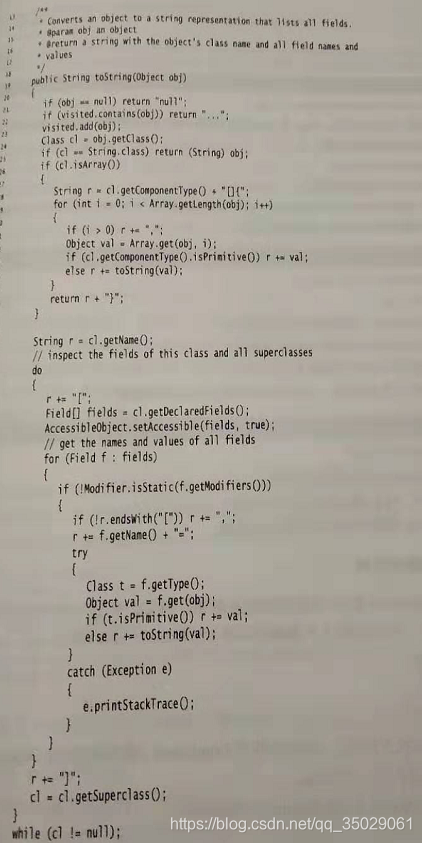
运行时使用反射分析对象
查看对象域的关键方法是Field类中的get方法,f.get(obj)返回一个对象,其值为obj对象的当前值。
Employee harry = new Employee("Harry Hacker",35000);
Class c1 = harry.getClass();
Field f = c1.getDeclaredField("name");
f.setAccessible(true);
Object v - f.get(harry);
//the String object "Harry Hacker"
f.set(harry,"Harry Hacker2");

使用反射编写泛型数组对象

最后,建议不要过多的使用反射,反射是很脆弱的,编译器很难帮助人们发现程序中的错误,只有在运行时才会发现错误并且导致异常。
本文来自互联网用户投稿,文章观点仅代表作者本人,不代表本站立场,不承担相关法律责任。如若转载,请注明出处。 如若内容造成侵权/违法违规/事实不符,请点击【内容举报】进行投诉反馈!