【ESP32 WiFi篇(二)】ESP32 WiFi设备工作流程

文章目录

  • ESP32 WiFi设备工作流程

ESP32 WiFi设备工作流程

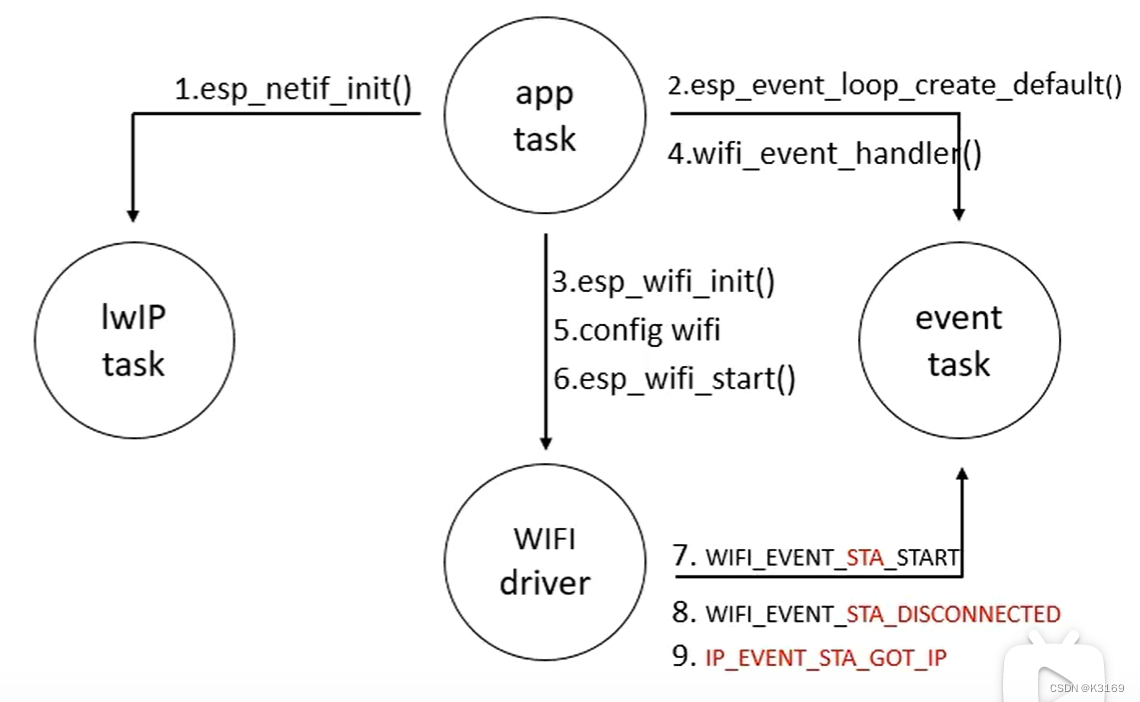
在这里插入图片描述


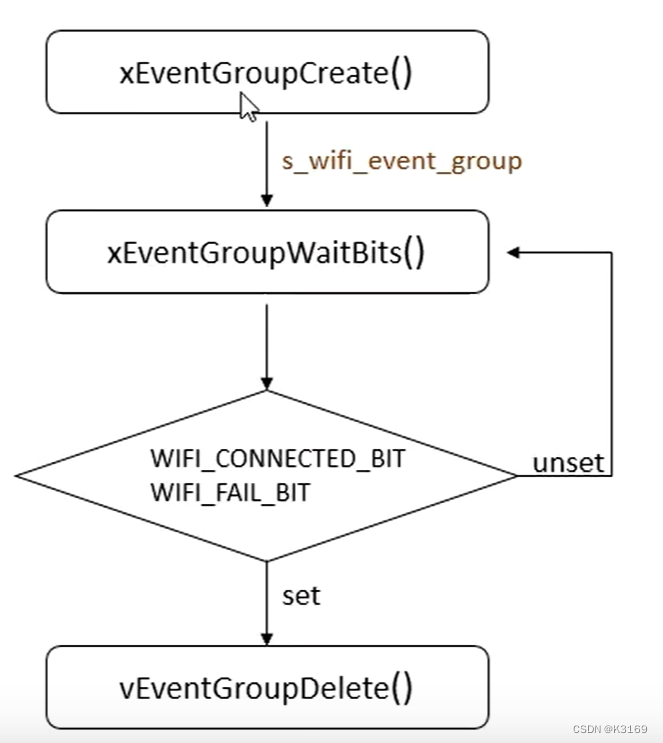
创建事件标志组 s_wifi_event_group等待WIFI_CONNECTED_BITWIFI_FAIL_BIT置为后删除事件标志组
在这里插入图片描述

/* WiFi station ExampleThis example code is in the Public Domain (or CC0 licensed, at your option.)Unless required by applicable law or agreed to in writing, thissoftware is distributed on an "AS IS" BASIS, WITHOUT WARRANTIES ORCONDITIONS OF ANY KIND, either express or implied.
*/
#include 
#include "freertos/FreeRTOS.h"
#include "freertos/task.h"
#include "freertos/event_groups.h"
#include "esp_system.h"
#include "esp_wifi.h"
#include "esp_event.h"
#include "esp_log.h"
#include "nvs_flash.h"#include "lwip/err.h"
#include "lwip/sys.h"/* The examples use WiFi configuration that you can set via project configuration menuIf you'd rather not, just change the below entries to strings withthe config you want - ie #define EXAMPLE_WIFI_SSID "mywifissid"
*/
#define EXAMPLE_ESP_WIFI_SSID      CONFIG_ESP_WIFI_SSID
#define EXAMPLE_ESP_WIFI_PASS      CONFIG_ESP_WIFI_PASSWORD
#define EXAMPLE_ESP_MAXIMUM_RETRY  CONFIG_ESP_MAXIMUM_RETRY#if CONFIG_ESP_WIFI_AUTH_OPEN
#define ESP_WIFI_SCAN_AUTH_MODE_THRESHOLD WIFI_AUTH_OPEN
#elif CONFIG_ESP_WIFI_AUTH_WEP
#define ESP_WIFI_SCAN_AUTH_MODE_THRESHOLD WIFI_AUTH_WEP
#elif CONFIG_ESP_WIFI_AUTH_WPA_PSK
#define ESP_WIFI_SCAN_AUTH_MODE_THRESHOLD WIFI_AUTH_WPA_PSK
#elif CONFIG_ESP_WIFI_AUTH_WPA2_PSK
#define ESP_WIFI_SCAN_AUTH_MODE_THRESHOLD WIFI_AUTH_WPA2_PSK
#elif CONFIG_ESP_WIFI_AUTH_WPA_WPA2_PSK
#define ESP_WIFI_SCAN_AUTH_MODE_THRESHOLD WIFI_AUTH_WPA_WPA2_PSK
#elif CONFIG_ESP_WIFI_AUTH_WPA3_PSK
#define ESP_WIFI_SCAN_AUTH_MODE_THRESHOLD WIFI_AUTH_WPA3_PSK
#elif CONFIG_ESP_WIFI_AUTH_WPA2_WPA3_PSK
#define ESP_WIFI_SCAN_AUTH_MODE_THRESHOLD WIFI_AUTH_WPA2_WPA3_PSK
#elif CONFIG_ESP_WIFI_AUTH_WAPI_PSK
#define ESP_WIFI_SCAN_AUTH_MODE_THRESHOLD WIFI_AUTH_WAPI_PSK
#endif/* FreeRTOS event group to signal when we are connected*/
static EventGroupHandle_t s_wifi_event_group;/* The event group allows multiple bits for each event, but we only care about two events:* - we are connected to the AP with an IP* - we failed to connect after the maximum amount of retries */
#define WIFI_CONNECTED_BIT BIT0
#define WIFI_FAIL_BIT      BIT1static const char *TAG = "wifi station";static int s_retry_num = 0;static void event_handler(void* arg, esp_event_base_t event_base,int32_t event_id, void* event_data)
{if (event_base == WIFI_EVENT && event_id == WIFI_EVENT_STA_START) {esp_wifi_connect();} else if (event_base == WIFI_EVENT && event_id == WIFI_EVENT_STA_DISCONNECTED) {if (s_retry_num < EXAMPLE_ESP_MAXIMUM_RETRY) {esp_wifi_connect();s_retry_num++;ESP_LOGI(TAG, "retry to connect to the AP");} else {xEventGroupSetBits(s_wifi_event_group, WIFI_FAIL_BIT);}ESP_LOGI(TAG,"connect to the AP fail");} else if (event_base == IP_EVENT && event_id == IP_EVENT_STA_GOT_IP) {ip_event_got_ip_t* event = (ip_event_got_ip_t*) event_data;ESP_LOGI(TAG, "got ip:" IPSTR, IP2STR(&event->ip_info.ip));s_retry_num = 0;xEventGroupSetBits(s_wifi_event_group, WIFI_CONNECTED_BIT);}
}void wifi_init_sta(void)
{s_wifi_event_group = xEventGroupCreate();ESP_ERROR_CHECK(esp_netif_init());ESP_ERROR_CHECK(esp_event_loop_create_default());esp_netif_create_default_wifi_sta();wifi_init_config_t cfg = WIFI_INIT_CONFIG_DEFAULT();ESP_ERROR_CHECK(esp_wifi_init(&cfg));esp_event_handler_instance_t instance_any_id;esp_event_handler_instance_t instance_got_ip;ESP_ERROR_CHECK(esp_event_handler_instance_register(WIFI_EVENT,ESP_EVENT_ANY_ID,&event_handler,NULL,&instance_any_id));ESP_ERROR_CHECK(esp_event_handler_instance_register(IP_EVENT,IP_EVENT_STA_GOT_IP,&event_handler,NULL,&instance_got_ip));wifi_config_t wifi_config = {.sta = {.ssid = EXAMPLE_ESP_WIFI_SSID,.password = EXAMPLE_ESP_WIFI_PASS,/* Setting a password implies station will connect to all security modes including WEP/WPA.* However these modes are deprecated and not advisable to be used. Incase your Access point* doesn't support WPA2, these mode can be enabled by commenting below line */.threshold.authmode = ESP_WIFI_SCAN_AUTH_MODE_THRESHOLD,.sae_pwe_h2e = WPA3_SAE_PWE_BOTH,},};ESP_ERROR_CHECK(esp_wifi_set_mode(WIFI_MODE_STA) );ESP_ERROR_CHECK(esp_wifi_set_config(WIFI_IF_STA, &wifi_config) );ESP_ERROR_CHECK(esp_wifi_start() );ESP_LOGI(TAG, "wifi_init_sta finished.");/* Waiting until either the connection is established (WIFI_CONNECTED_BIT) or connection failed for the maximum* number of re-tries (WIFI_FAIL_BIT). The bits are set by event_handler() (see above) */EventBits_t bits = xEventGroupWaitBits(s_wifi_event_group,WIFI_CONNECTED_BIT | WIFI_FAIL_BIT,pdFALSE,pdFALSE,portMAX_DELAY);/* xEventGroupWaitBits() returns the bits before the call returned, hence we can test which event actually* happened. */if (bits & WIFI_CONNECTED_BIT) {ESP_LOGI(TAG, "connected to ap SSID:%s password:%s",EXAMPLE_ESP_WIFI_SSID, EXAMPLE_ESP_WIFI_PASS);} else if (bits & WIFI_FAIL_BIT) {ESP_LOGI(TAG, "Failed to connect to SSID:%s, password:%s",EXAMPLE_ESP_WIFI_SSID, EXAMPLE_ESP_WIFI_PASS);} else {ESP_LOGE(TAG, "UNEXPECTED EVENT");}/* The event will not be processed after unregister */ESP_ERROR_CHECK(esp_event_handler_instance_unregister(IP_EVENT, IP_EVENT_STA_GOT_IP, instance_got_ip));ESP_ERROR_CHECK(esp_event_handler_instance_unregister(WIFI_EVENT, ESP_EVENT_ANY_ID, instance_any_id));vEventGroupDelete(s_wifi_event_group);
}void app_main(void)
{//Initialize NVSesp_err_t ret = nvs_flash_init();if (ret == ESP_ERR_NVS_NO_FREE_PAGES || ret == ESP_ERR_NVS_NEW_VERSION_FOUND) {ESP_ERROR_CHECK(nvs_flash_erase());ret = nvs_flash_init();}ESP_ERROR_CHECK(ret);ESP_LOGI(TAG, "ESP_WIFI_MODE_STA");wifi_init_sta();
}


本文来自互联网用户投稿,文章观点仅代表作者本人,不代表本站立场,不承担相关法律责任。如若转载,请注明出处。 如若内容造成侵权/违法违规/事实不符,请点击【内容举报】进行投诉反馈!

相关文章

立即
投稿

微信公众账号

微信扫一扫加关注

返回
顶部