一般线性模型之功能磁共振成像(the general linear model applied to fmri)
功能磁共振影像数据统计分析的目标主要包括:
- localizing brain areas activated by the task(找到被任务激活的脑区)
- determining networks corresponding to brain function
- making predictions about psychological or disease states
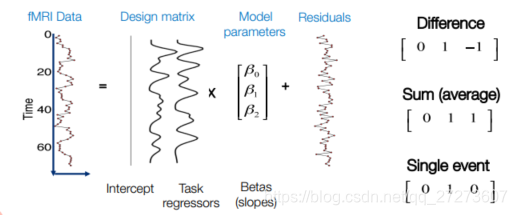
The general linear model (GLM) approach treats the data as a linear combination of model functions (predictors) plus noise (error)
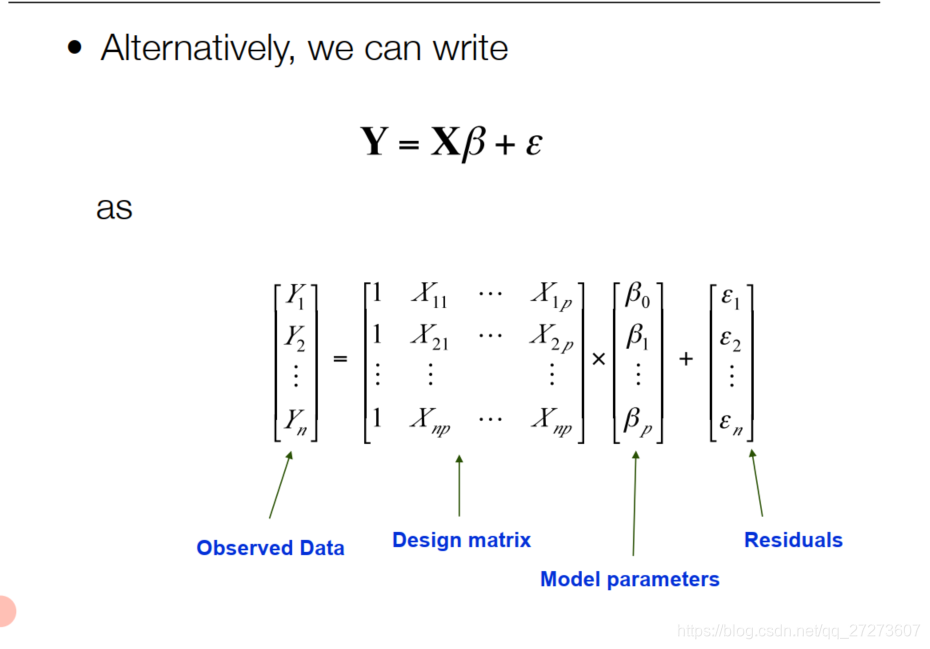
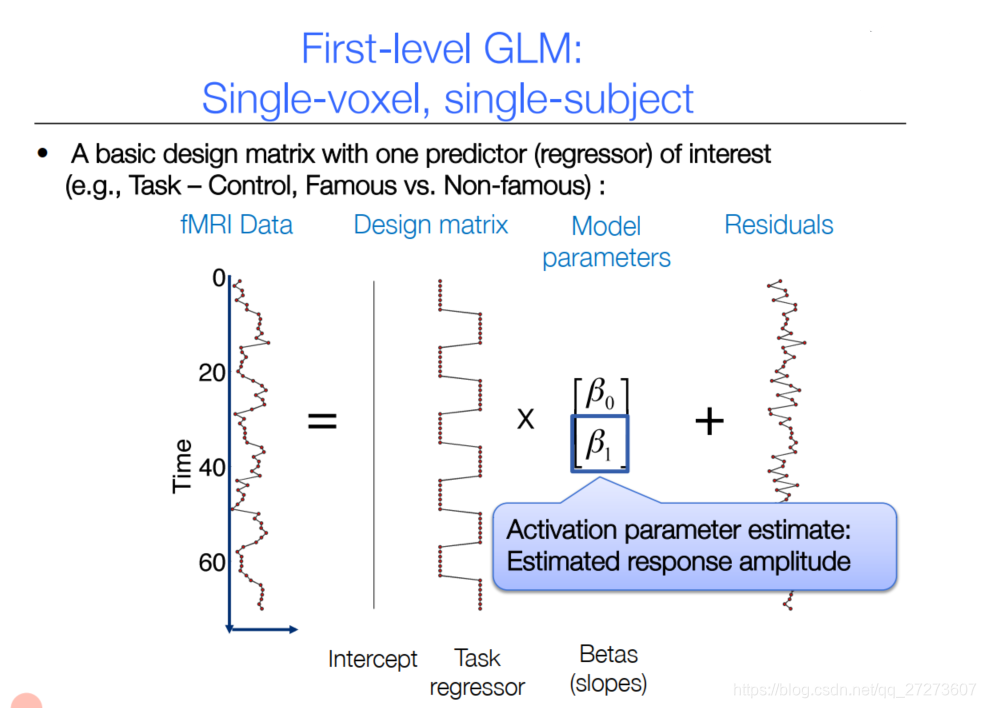
在一般线性模型运用于fmri数据分析时,通过对roi区域的每个体素(each voxel)的时间序列作为outcome(Y).
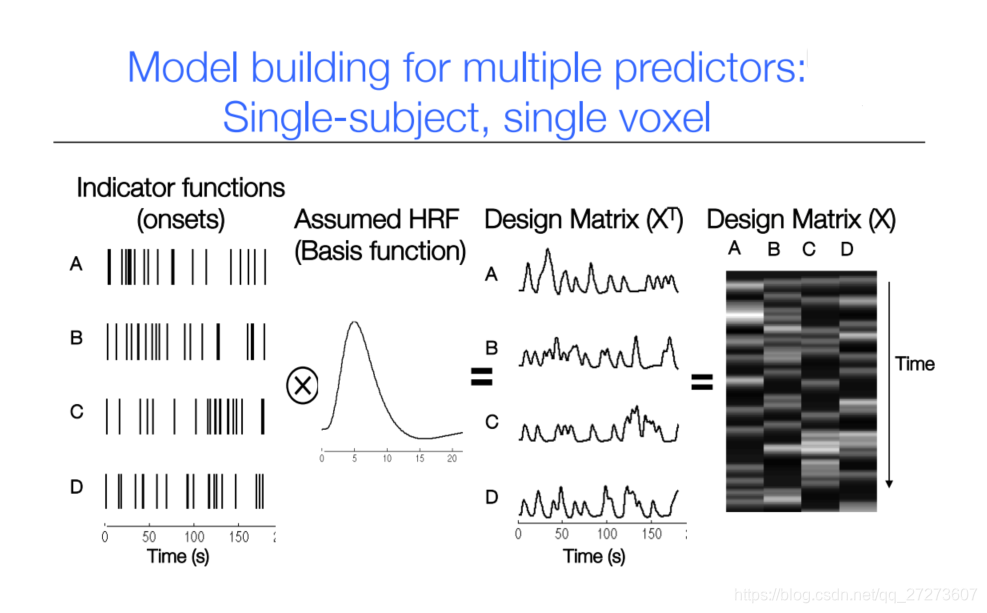
- Stimulus, task, and/or behavioral variables are the predictors (X)
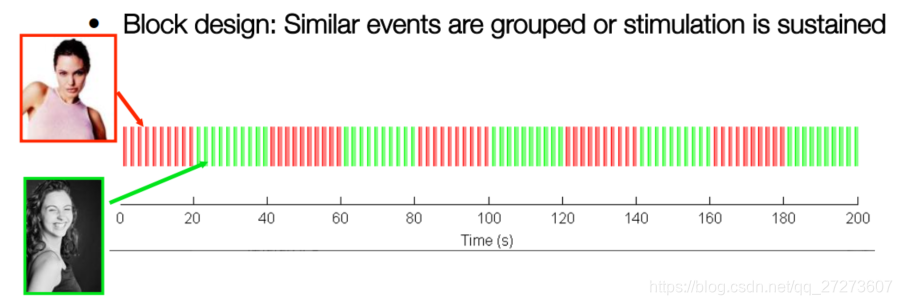
以一个简单的观察图片的fmri实验为例(alternating blocks of viewing famous and non-famous faces),实验设计采用BLOCK design,
即Similar events are grouped or stimulation is sustained
Contrasts:一个灵活而强大的工具,它是GLM的beta参数的线性组合。
当权重矩阵C取不同的值时,反映出不同beta值组合代表的含义。
本文来自互联网用户投稿,文章观点仅代表作者本人,不代表本站立场,不承担相关法律责任。如若转载,请注明出处。 如若内容造成侵权/违法违规/事实不符,请点击【内容举报】进行投诉反馈!