LeetCode每日一刷 --- 手撕单链表习题(2)
目录
1、链表的回文结构
2、相交链表
3、复制带随机指针的链表
1、链表的回文结构
- 链接直达:
链表的回文结构
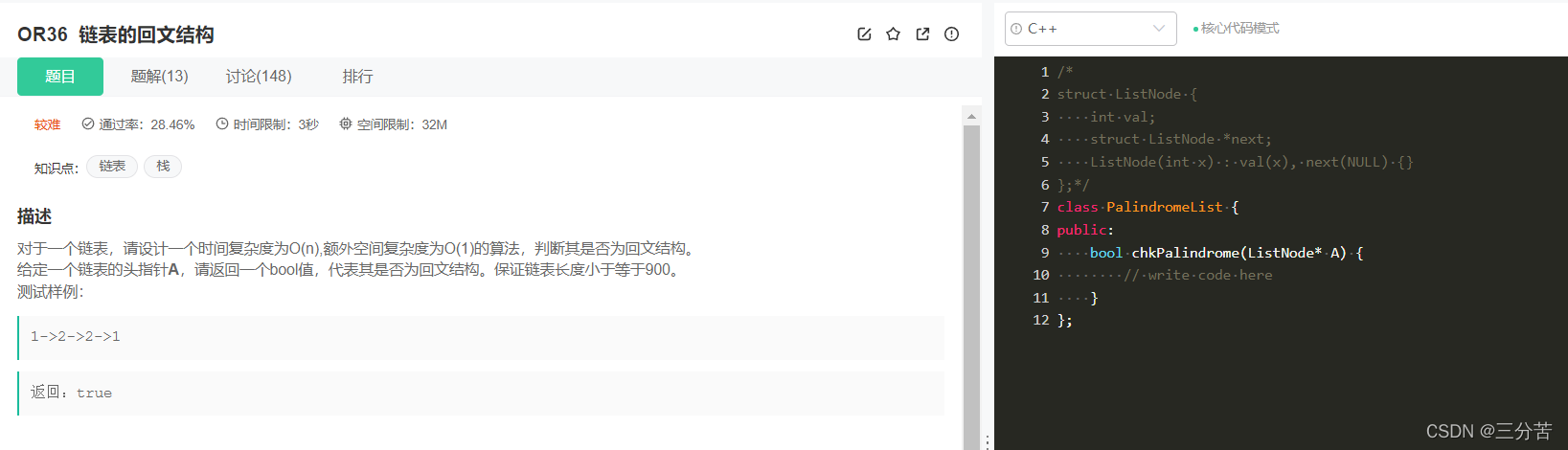
- 题目:
- 思路:
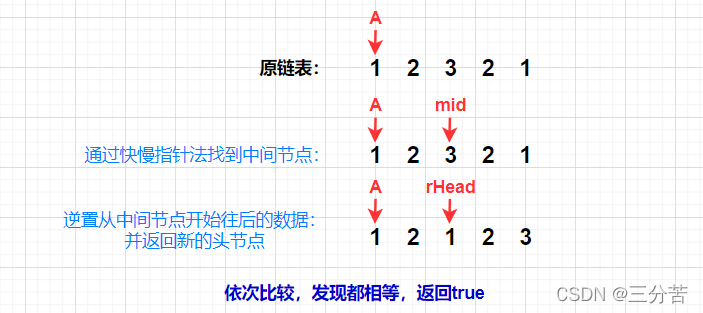
找中间节点再逆置,此法非常巧妙,找中间节点和逆置这两块内容在上一份博文中已经详细讲解过,这里不多赘述,这样做的原因是执行上述操作后遍历原头节点和逆置后新头节点,判断值是否相等,若遍历后都相等则返回true,反之false。
- 代码如下:
class PalindromeList {
public:
//第一步:找到中间节点struct ListNode* middleNode(struct ListNode* head) {struct ListNode* slow = head;struct ListNode* fast = head;while (fast && fast->next){slow = slow->next;fast = fast->next->next;}return slow;}
//第二部:逆置从中间节点开始往后的数据,并返回新的头节点struct ListNode* reverseList(struct ListNode* head) {if (head == NULL){return NULL;}struct ListNode* n1 = head;struct ListNode* n2 = head->next;struct ListNode* n3 = NULL;while (n1){n1->next = n3;n3 = n1;n1 = n2;if (n2){n2 = n2->next;}}return n3;}bool chkPalindrome(ListNode* A) {// write code herestruct ListNode* mid = middleNode(A);struct ListNode* rHead = reverseList(mid);while (A && rHead){if (A->val == rHead->val){A = A->next;rHead = rHead->next;}else{return false;}}return true;}
};
2、相交链表
- 链接直达:
相交链表
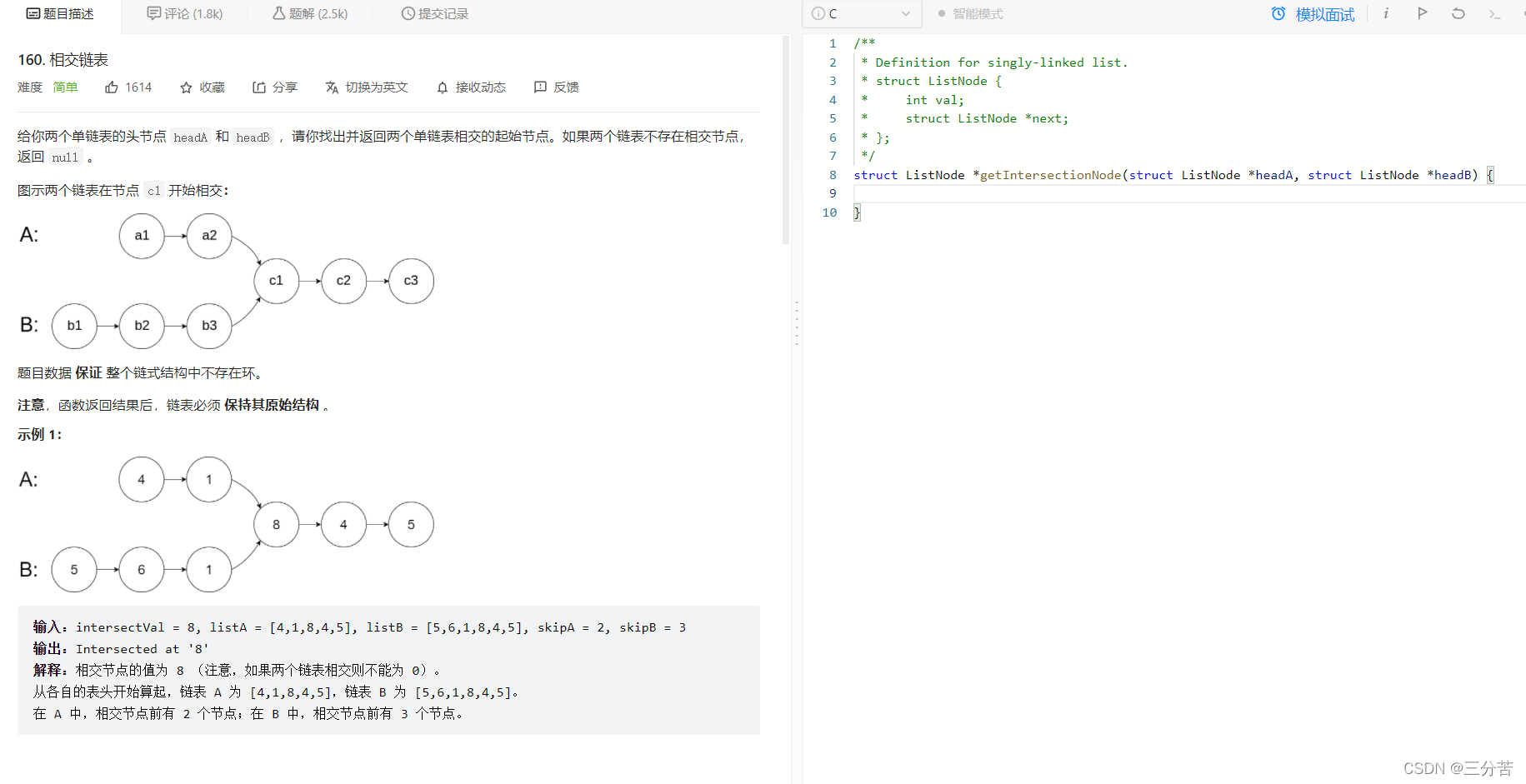
- 题目:
- 思路:
法一:A链表的每个元素跟B链表依次比较,如果有相等,就是相交,第一个相等的就是交点。
此法的时间复杂度是O(M*N),此法的优势就是在判断好是否相交后直接把相交的节点求出来了,注意:在比较的时候不能拿值去比较,要拿地址去比较。此法的缺陷就是效率相对较低,可以再进行改进。
法二:遍历原链表 + 快慢指针
先判断两个链表是否相交
依次遍历两个链表到尾,看两个尾节点地址是否相同,若相同则一定相交。此时的时间复杂度就是O(M+N),相较于法一可是优化了太多。
再找出第一个交点
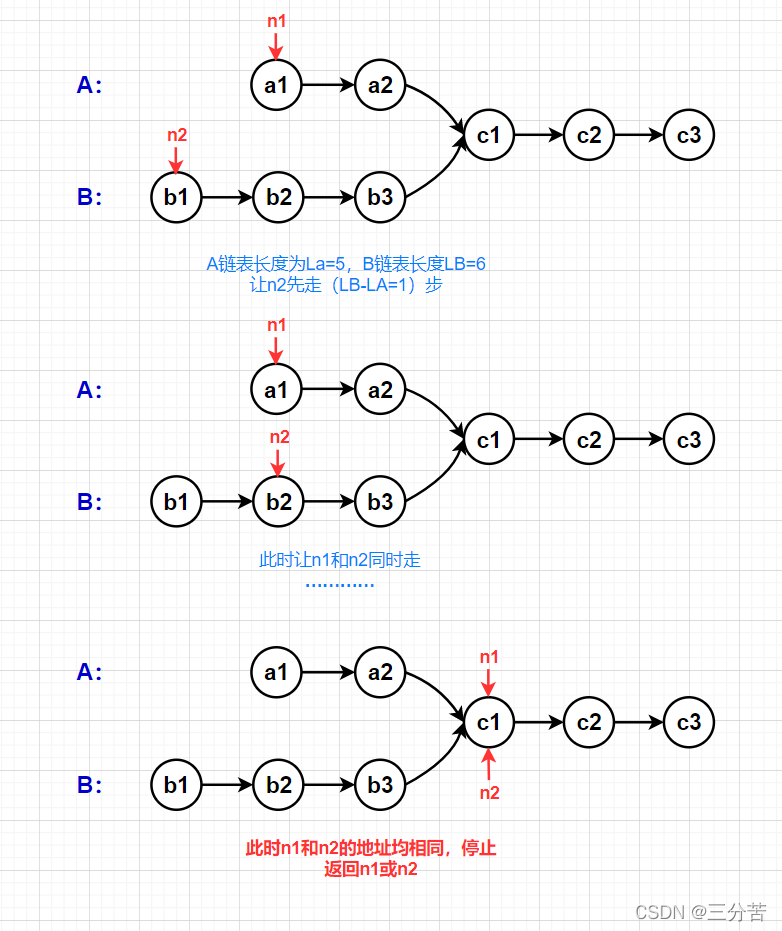
执行完上一步知道了链表相交,接下来就要求交点了,先求出两个链表的长度La,Lb。再定义连个指针分别指向两个链表的头,让长度较长的链表指针先走 | La-Lb | 步,再让两个链表指针一起走,若发现地址存在相同,那么就停止,此时找到交点。这种情况的时间复杂度同样是O(M+N)。
- 代码如下:
struct ListNode* getIntersectionNode(struct ListNode* headA, struct ListNode* headB) {int lenA = 0;int lenB = 0;struct ListNode* cur1 = headA;struct ListNode* cur2 = headB;//1、判断是否相交while (cur1->next){cur1 = cur1->next;lenA++;}while (cur2->next){cur2 = cur2->next;lenB++;}//若相交,进入if判断if (cur1 == cur2){struct ListNode* shortList = headA, * longList = headB;if (lenA > lenB){longList = headA;shortList = headB;}int num = abs(lenA - lenB);//让长的链表先走差距步while (num--){longList = longList->next;}while (shortList && longList){if (shortList == longList){return shortList;}//此时两链表一起走else{shortList = shortList->next;longList = longList->next;}}}//若不相交,则直接返回空return NULL;
}
3、复制带随机指针的链表
- 链接直达:
复制带随机指针的链表
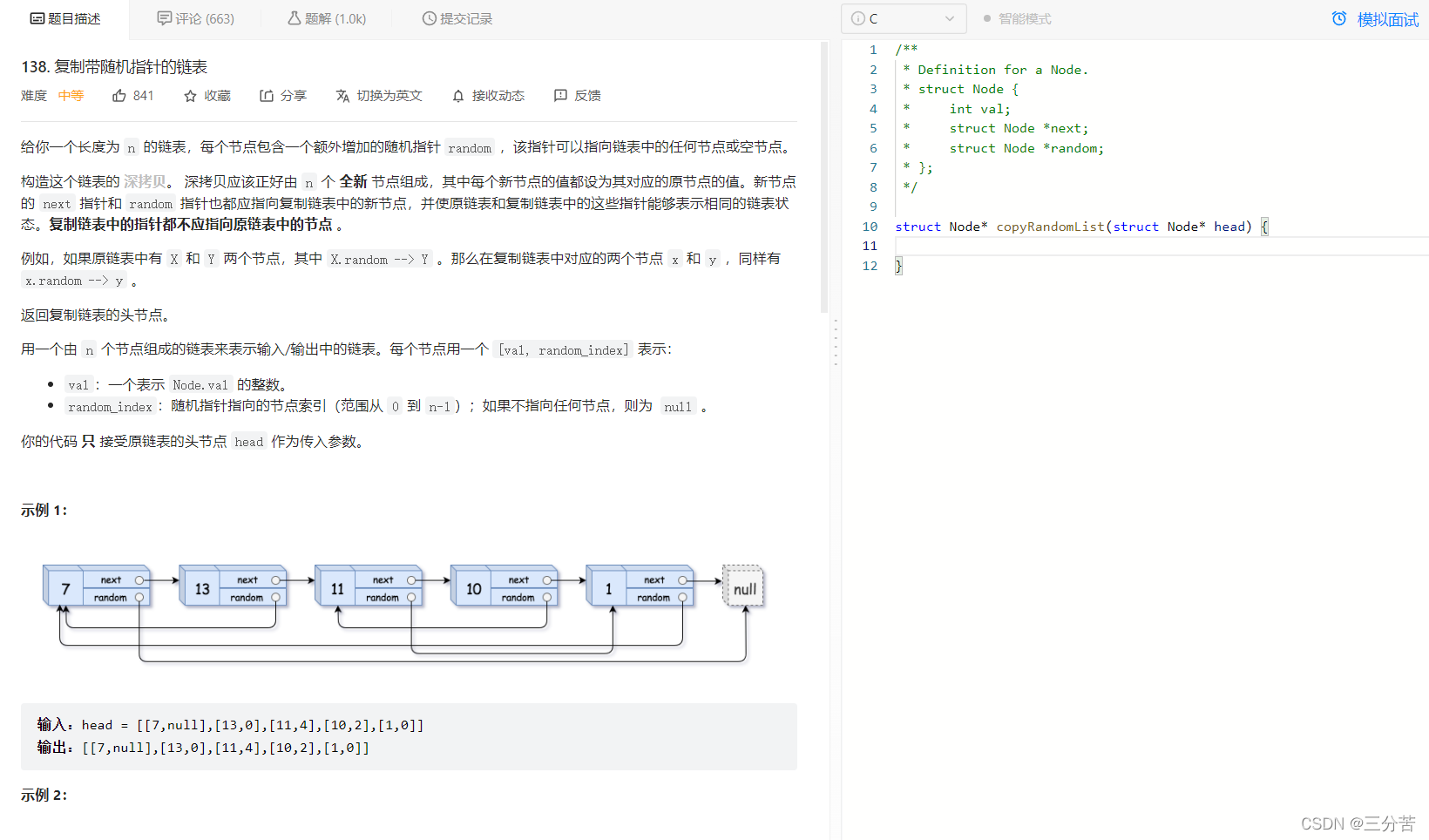
- 题目:
- 思路:
法一:直接复制(malloc)+ 找相对距离
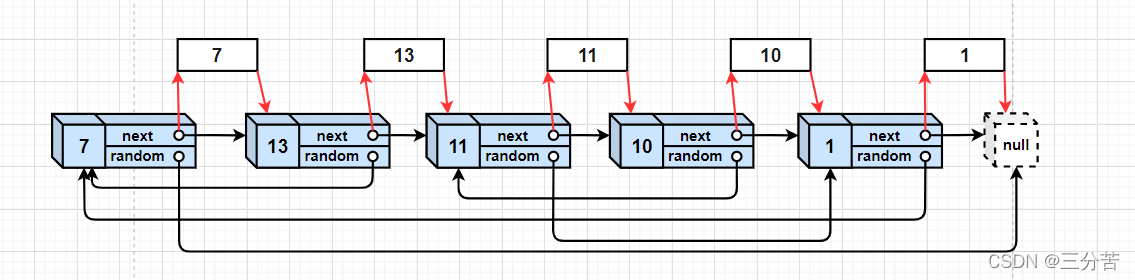
定义一个指针cur指向原链表第一个元素,cur指向第一个值为7,再malloc出一个7来,cur往后走,继续malloc,再尾插,以此遍历下去。新的链表复制出来了,关键在于如何处理新链表的random指针,这里可以采用找相对距离的方法,找原链表random指向第几个,那么新链表对应指向第几个。但是这个方法过于复杂,时间复杂度达到了O(N^2)。不是太推荐
法二:
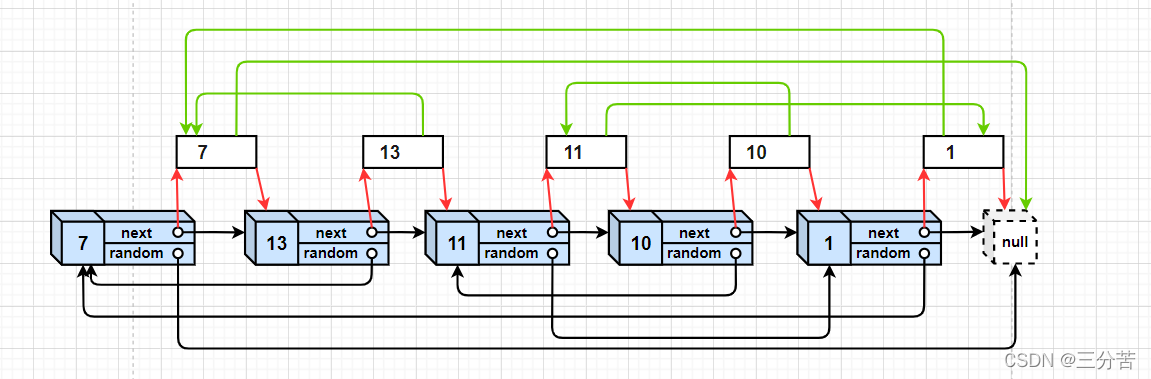
首先,把拷贝节点链接在原节点后面
struct Node* cur = head;
//1、拷贝节点链接在原节点后面
while (cur)
{struct Node* copy = (struct Node*)malloc(sizeof(struct Node));copy->val = cur->val;copy->next = cur->next;cur->next = copy;cur = cur->next->next;
}
接着,链接拷贝节点的random在原节点random后面
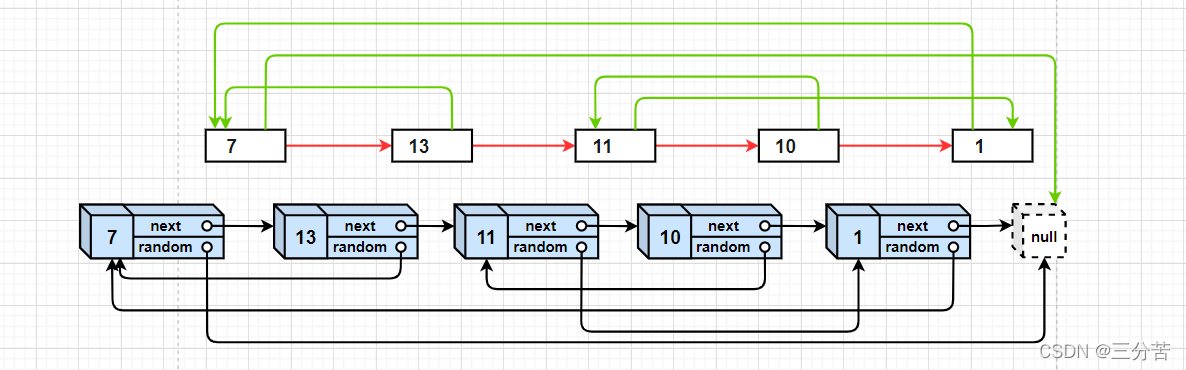
比如我们拷贝出来的13这个数字,拷贝的13的random就是原头13的random的next 。因为在原链表中,13的random指向7,现在想让拷贝出来的13的random指向拷贝出来的7。原链表中,7的next指向拷贝出的7,综上:拷贝的13的random就是原头13的random的next 。以此类推。
//2、更新拷贝节点的random
cur = head;
while (cur)
{struct Node* copy = cur->next;if (cur->random == NULL){copy->random = NULL;}else{copy->random = cur->random->next;}cur = cur->next->next;
}
最后,恢复原链表,把拷贝链表链接在一起
//3、拷贝节点剪下来,链接到一起
cur = head;
struct Node* copyTail = NULL;
struct Node* copyHead = NULL;
while (cur)
{struct Node* copy = cur->next;struct Node* next = copy->next;cur->next = next;if (copyTail == NULL){copyHead = copyTail = copy;}else{copyTail->next = copy;copyTail = copyTail->next;}cur = next;
}
return copyHead;
}
- 总代码如下:
struct Node* copyRandomList(struct Node* head) {struct Node* cur = head;//1、拷贝节点链接在原节点后面while (cur){struct Node* copy = (struct Node*)malloc(sizeof(struct Node));copy->val = cur->val;copy->next = cur->next;cur->next = copy;cur = cur->next->next;}//2、更新拷贝节点的randomcur = head;while (cur){struct Node* copy = cur->next;if (cur->random == NULL){copy->random = NULL;}else{copy->random = cur->random->next;}cur = cur->next->next;}//3、拷贝节点剪下来,链接到一起cur = head;struct Node* copyTail = NULL;struct Node* copyHead = NULL;while (cur){struct Node* copy = cur->next;struct Node* next = copy->next;cur->next = next;if (copyTail == NULL){copyHead = copyTail = copy;}else{copyTail->next = copy;copyTail = copyTail->next;}cur = next;}return copyHead;
}
本文来自互联网用户投稿,文章观点仅代表作者本人,不代表本站立场,不承担相关法律责任。如若转载,请注明出处。 如若内容造成侵权/违法违规/事实不符,请点击【内容举报】进行投诉反馈!