心得:大疆无人机RTMP推流直播(Windows版本已成功)
大疆无人机rtmp推流直播到电脑(Windows版本已成功)
- 一、所需资源
- 二、安装
- 三、ffmpeg推流
- 四、无人机rtmp推流
- 五、Python获取无人机实时视频
一、所需资源
1、nginx的Gryphon版本,它内部已经集成了rtmp的推流编译(nginx-Gryphon)
2、服务器状态检查程序stat.xsl(nginx-rtmp-module)
3、ffmpeg(ffmpeg)
4、VLC(VLC)
二、安装
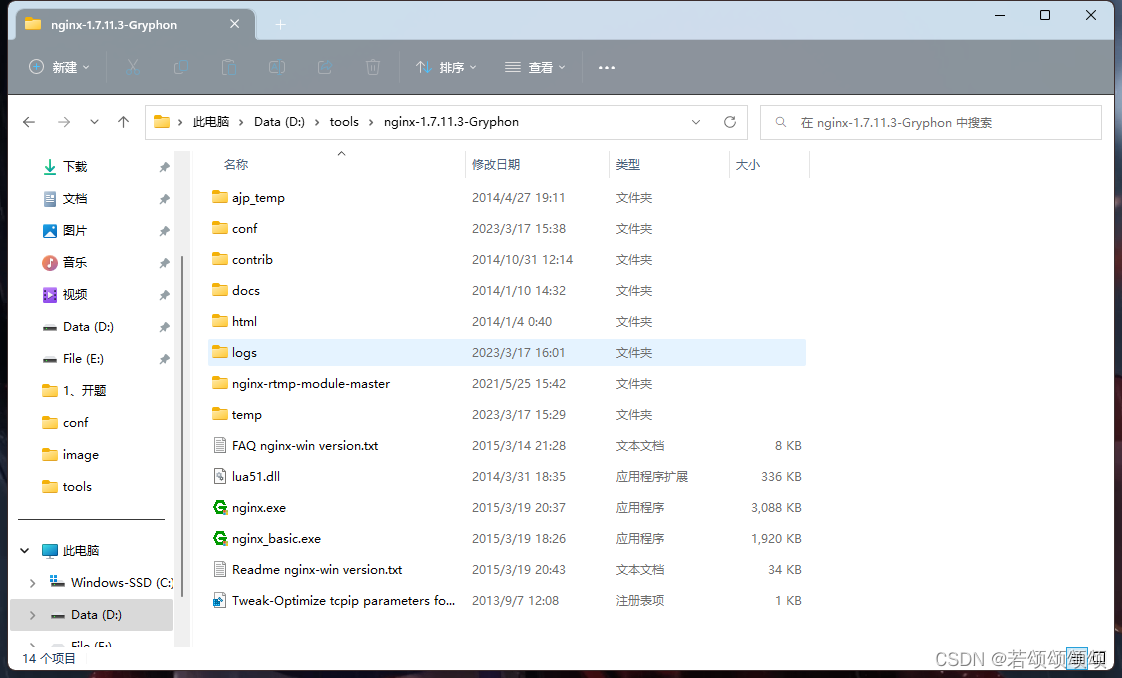
1、将下载好的nginx 1.7.11.3 Gryphon解压修改文件名为nginx-1.7.11.3-Gryphon,绝对路径中不能有中文,必须全为英文!
2、在根目录中的conf文件夹中,若有nginx.conf文件,直接进入修改;若无,则创建一个。
3、在nginx文件中,将以下内容粘贴。
#user  nobody;
# multiple workers works !
worker_processes  2;#error_log  logs/error.log;
#error_log  logs/error.log  notice;
#error_log  logs/error.log  info;#pid        logs/nginx.pid;events {worker_connections  8192;# max value 32768, nginx recycling connections+registry optimization = #   this.value * 20 = max concurrent connections currently tested with one worker#   C1000K should be possible depending there is enough ram/cpu power# multi_accept on;
}rtmp {server {listen 1935;chunk_size 4000;application live {live on;}}
}http {#include      /nginx/conf/naxsi_core.rules;include       mime.types;default_type  application/octet-stream;#log_format  main  '$remote_addr:$remote_port - $remote_user [$time_local] "$request" '#                  '$status $body_bytes_sent "$http_referer" '#                  '"$http_user_agent" "$http_x_forwarded_for"';#access_log  logs/access.log  main;#     # loadbalancing PHP
#     upstream myLoadBalancer {
#         server 127.0.0.1:9001 weight=1 fail_timeout=5;
#         server 127.0.0.1:9002 weight=1 fail_timeout=5;
#         server 127.0.0.1:9003 weight=1 fail_timeout=5;
#         server 127.0.0.1:9004 weight=1 fail_timeout=5;
#         server 127.0.0.1:9005 weight=1 fail_timeout=5;
#         server 127.0.0.1:9006 weight=1 fail_timeout=5;
#         server 127.0.0.1:9007 weight=1 fail_timeout=5;
#         server 127.0.0.1:9008 weight=1 fail_timeout=5;
#         server 127.0.0.1:9009 weight=1 fail_timeout=5;
#         server 127.0.0.1:9010 weight=1 fail_timeout=5;
#         least_conn;
#     }sendfile        off;#tcp_nopush     on;server_names_hash_bucket_size 128;## Start: Timeouts ##client_body_timeout   10;client_header_timeout 10;keepalive_timeout     30;send_timeout          10;keepalive_requests    10;
## End: Timeouts ###gzip  on;server {listen       80;server_name  localhost;#charset koi8-r;#access_log  logs/host.access.log  main;## Caching Static Files, put before first location#location ~* \.(jpg|jpeg|png|gif|ico|css|js)$ {#    expires 14d;#    add_header Vary Accept-Encoding;#}# For Naxsi remove the single # line for learn mode, or the ## lines for full WAF modelocation / {#include    /nginx/conf/mysite.rules; # see also http block naxsi include line##SecRulesEnabled;##DeniedUrl "/RequestDenied";##CheckRule "$SQL >= 8" BLOCK;##CheckRule "$RFI >= 8" BLOCK;##CheckRule "$TRAVERSAL >= 4" BLOCK;##CheckRule "$XSS >= 8" BLOCK;root   html;index  index.html index.htm;}# For Naxsi remove the ## lines for full WAF mode, redirect location block used by naxsi##location /RequestDenied {##    return 412;##}## Lua examples !
#         location /robots.txt {
#           rewrite_by_lua '
#             if ngx.var.http_host ~= "localhost" then
#               return ngx.exec("/robots_disallow.txt");
#             end
#           ';
#         }#error_page  404              /404.html;# redirect server error pages to the static page /50x.html#error_page   500 502 503 504  /50x.html;location = /50x.html {root   html;}# proxy the PHP scripts to Apache listening on 127.0.0.1:80##location ~ \.php$ {#    proxy_pass   http://127.0.0.1;#}# pass the PHP scripts to FastCGI server listening on 127.0.0.1:9000##location ~ \.php$ {#    root           html;#    fastcgi_pass   127.0.0.1:9000; # single backend process#    fastcgi_pass   myLoadBalancer; # or multiple, see example above#    fastcgi_index  index.php;#    fastcgi_param  SCRIPT_FILENAME  $document_root$fastcgi_script_name;#    include        fastcgi_params;#}# deny access to .htaccess files, if Apache's document root# concurs with nginx's one##location ~ /\.ht {#    deny  all;#}}# another virtual host using mix of IP-, name-, and port-based configuration##server {#    listen       8000;#    listen       somename:8080;#    server_name  somename  alias  another.alias;#    location / {#        root   html;#        index  index.html index.htm;#    }#}# HTTPS server##server {#    listen       443 ssl spdy;#    server_name  localhost;#    ssl                  on;#    ssl_certificate      cert.pem;#    ssl_certificate_key  cert.key;#    ssl_session_timeout  5m;#    ssl_prefer_server_ciphers On;#    ssl_protocols TLSv1 TLSv1.1 TLSv1.2;#    ssl_ciphers ECDH+AESGCM:ECDH+AES256:ECDH+AES128:ECDH+3DES:RSA+AESGCM:RSA+AES:RSA+3DES:!aNULL:!eNULL:!MD5:!DSS:!EXP:!ADH:!LOW:!MEDIUM;#    location / {#        root   html;#        index  index.html index.htm;#    }#}}
注:rtmp中的“application live” ,application+空格+live,live即使访问路径,如localhost:1935/live。
4、在nginx.exe所在的目录,即根目录下,进入cmd窗口,输入nginx.exe或.\nginx.exe,启动nginx。
5、可以直接浏览器输入localhost验证是否启动nginx,若出现nginx的主页面,则成功。
6、将服务器状态检查程序解压,放到nginx根目录下。
7、将ffmpeg解压后,将其bin目录添加环境变量。
8、安装VLC
三、ffmpeg推流
ffmpeg推流是为了确定nginx的1935端口已打开并运行rtmp推流功能,以排除故障等问题。
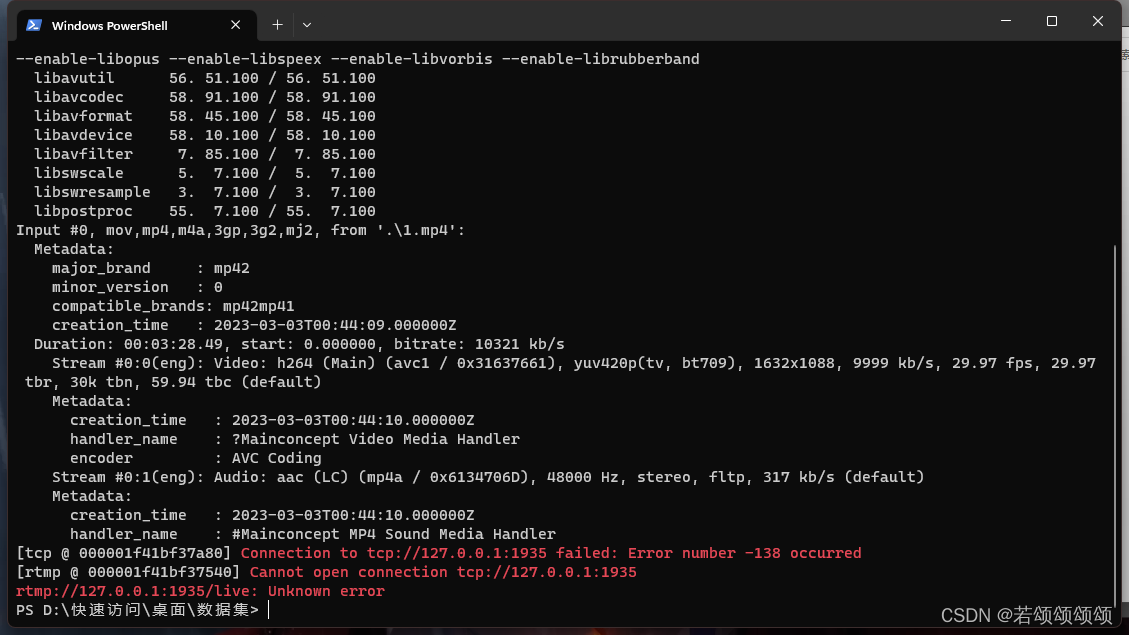
1、在测试视频所在文件夹打开cmd窗口,输入指令 ffmpeg.exe -re -i .\视频名.mp4 -vcodec libx264 -acodec aac -f flv rtmp://127.0.0.1:1935/live
2、若出现以下画面则推流失败,是因为nginx的1935端口未开启,或是rtmp未推流。
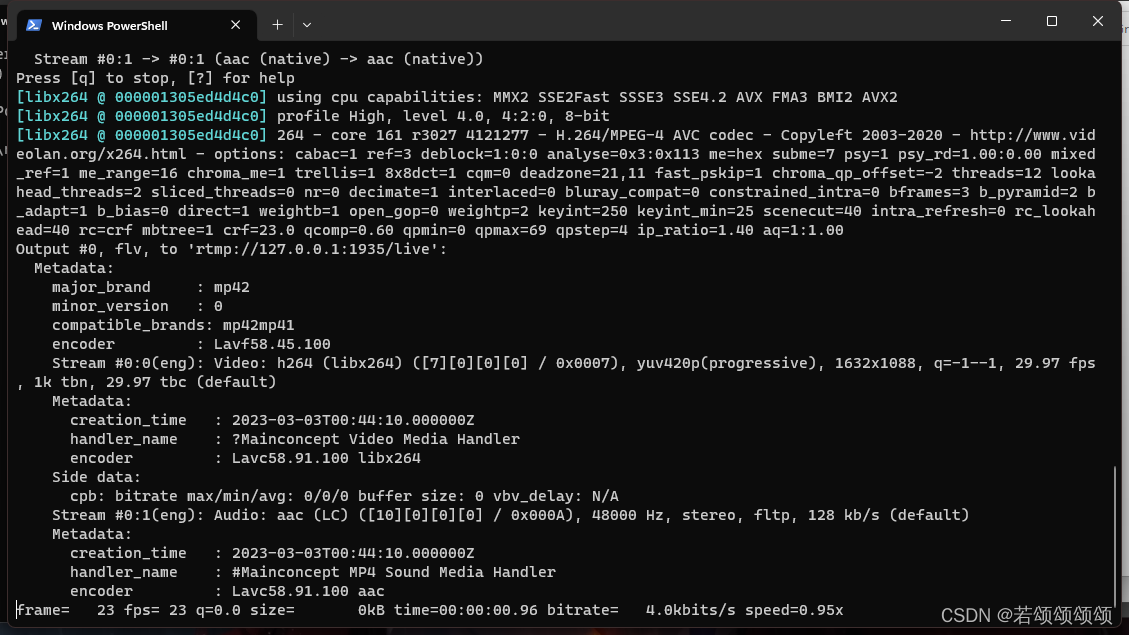
3、若出现以下画面,则成功,frame, fps等信息会不断地变化。
4、打开VLC,在左上角媒体中选择 打开网络串流 ,在网络URL中输入rtmp://127.0.0.1:1935/live,点击播放。
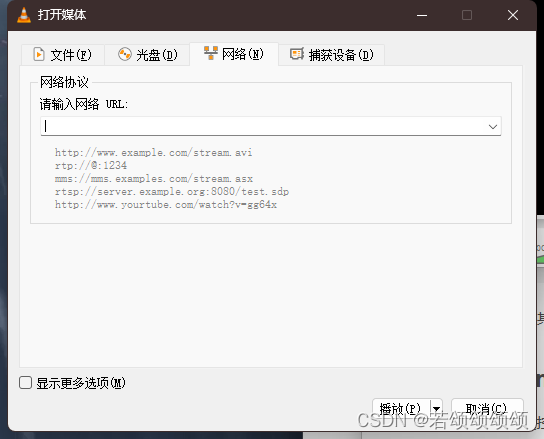
5、若是显示出视频,则成功。
四、无人机rtmp推流
1、保证电脑和无人机遥控器(或遥控器连接的手机)在同一局域网中(即同一路由器或热点)。
2、电脑确认ip地址,打开cmd窗口输入命令ipconfig,确定电脑ip地址。
3、无人机进入自定义直播功能中,输入地址,一般为 rtmp://192.168.x.x:1935/live 或 rtmp://10.0.x.x:1935/live。
4、打开VLC,在左上角媒体中选择 打开网络串流 ,在网络URL中输入与 3 中同样的ip地址,点击播放。
5、若显示出无人机画面,则成功,一般延迟在 3~10s 内。(我是成功了,哈哈哈哈哈!)
注:若无人机无法传输视频,那么把Windows系统的防火墙关闭再试一试。
五、Python获取无人机实时视频
import cv2
import timeif __name__ == '__main__':# 无人机rtmp视频流urlvideo_path = "rtmp://192.168.x.x:1935/live"# opencv获取视频流capture = cv2.VideoCapture(video_path)while True:fps = 0.0t1 = time.time()# 读取某一帧ref, frame = capture.read()fps = (fps + (1. / (time.time() - t1))) / 2print("fps= %.2f" % (fps))frame = cv2.putText(frame, "fps= %.2f" % (fps), (0, 40), cv2.FONT_HERSHEY_SIMPLEX, 1, (0, 255, 0), 2)cv2.imshow("video", frame)c = cv2.waitKey(1) & 0xffif c == 27:capture.release()breakprint("Video Detection Done!")capture.release()cv2.destroyAllWindows()
本文来自互联网用户投稿,文章观点仅代表作者本人,不代表本站立场,不承担相关法律责任。如若转载,请注明出处。 如若内容造成侵权/违法违规/事实不符,请点击【内容举报】进行投诉反馈!