嵌入式C++(十五)

文章目录

  • 一 享元模式
  • 二 桥接模式
  • 三 外观模式
  • 四 观察者模式

一 享元模式

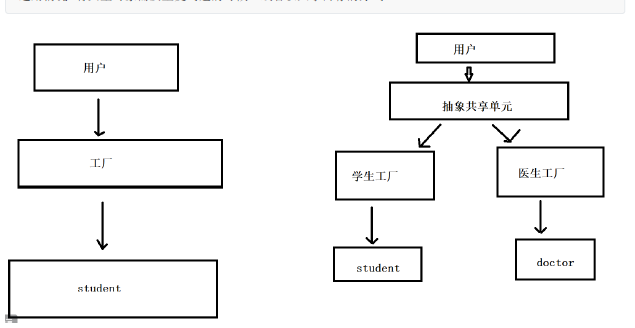
主要通过与其它类对象共享数据来减少内存的使用
适用情况:有大量对象需要重复创建的时候,或者以共享内存的方式
在这里插入图片描述

#include 
#include 
#include 
using namespace std;
class Student
{
private:string name;int age;int id;
public:Student(){}Student(string n, int a, int i){name = n;age = a;id = i;}string GetName(){return name;}int GetAge(){return age;}int GetId(){return id;}
};
class FwFactory
{
private:multimap *m;
public:FwFactory(){m = new multimap;}~FwFactory(){while (!m->empty()){Student *tmp = m->begin()->second;delete tmp;m->erase(m->begin());}delete m;}void GetPerson(int id){string name;int age;multimap::iterator it;it = m->find(id);if (it == m->end()){cout << "input the name age..." << endl;cin >> name >> age;Student *s = new Student(name, age, id);m->emplace(make_pair(id, s));}else{Student *s = it->second;cout << s->GetName() << " " << s->GetAge() << " " << s->GetId() << endl;}}};
int main(void)
{FwFactory *f = new FwFactory;f->GetPerson(1);f->GetPerson(2);f->GetPerson(3);cout << "**************" << endl;f->GetPerson(2);return 0;
}

二 桥接模式

在这里插入图片描述

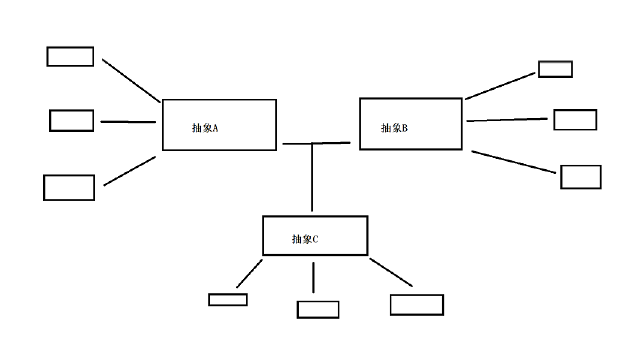
将抽象和实现分离,使他们可以独立变化。
基于类的最小设计原则
#include 
#include 
#include 
using namespace std;class Phone
{
public:virtual void func() = 0;
};
class Iphone :public Phone
{
public:void func(){cout << "this is IPHONE...." << endl;}
};
class HUAWEI :public Phone
{
public:void func(){cout << "this is HUAWEI" << endl;}
};
class Soft  //实现两种从产品的链接,把不同的产品剥离出来,耦合度低
{
protected:Phone *phone;
public:virtual void func() = 0;
};
class QQ :public Soft 
{
public:QQ(Phone *p){phone = p;}void func(){phone->func();cout << "this is QQ" << endl;}
};
class Vchat :public Soft
{
public:Vchat(Phone *p){phone = p;}void func(){phone->func();cout << "this is Vchat" << endl;}
};
int main(void)
{Phone *p = new Iphone;Soft *a = new QQ(p);a->func();return 0;
}

三 外观模式

提供一个简单一致的界面,为了系统中统一的一套接口
#include 
#include 
#include 
using namespace std;class SystemA
{
public:void func(){cout << "this is A" << endl;}
};
class SystemB
{
public:void func(){cout << "this is B" << endl;}
};
class SystemC
{
public:void func(){cout << "this is C" << endl;}
};
class Facade
{
private:SystemA *a;SystemB *b;SystemC *c;
public:Facade(){a = new SystemA;b = new SystemB;c = new SystemC;}~Facade(){delete a;delete b;delete c;}void func(){a->func();b->func();c->func();}
};
int main(void)
{Facade *f = new Facade;f->func();return 0;
}

四 观察者模式

当对象存在一对多的关系的时候,使用观察者模式,当一个对象被修改的时候,则会自动通知
依赖他的所有对象。
#include 
#include 
#include 
#include 
using namespace std;
class Infom;
class Observer  //观察者 员工
{
public:virtual void Subscribe(Infom *i) = 0;  //订阅virtual void UnSubscribe(Infom *i) = 0;  //取消订阅virtual void Update(string str) = 0;  //更新状态
};
class Infom  //通知者  秘书
{
public:virtual void Add(Observer *o) = 0;virtual void Remove(Observer *o) = 0;virtual void Notify(string str) = 0;
};
class Secretary :public Infom
{
private:list  l;
public:void Add(Observer *o){l.emplace_back(o);}void Remove(Observer *o){l.remove(o);}void Notify(string str){for (auto &it : l){it->Update(str);}}
};
class Staff :public Observer
{
public:virtual void Subscribe(Infom *i)  //订阅{i->Add(this);}virtual void UnSubscribe(Infom *i) //取消订阅{i->Remove(this);}virtual void Update(string str)  //更新状态{if (str == "WARNING"){cout << "boss is comming" << endl;}else{cout << "continue to play games" << endl;}}
};
int main(void)
{Infom *i = new Secretary;Observer *o1 = new Staff;Observer *o2 = new Staff;Observer *o3 = new Staff;Observer *o4 = new Staff;o1->Subscribe(i);o2->Subscribe(i);o3->Subscribe(i);o4->Subscribe(i);i->Notify("WARNING");return 0;
}


本文来自互联网用户投稿,文章观点仅代表作者本人,不代表本站立场,不承担相关法律责任。如若转载,请注明出处。 如若内容造成侵权/违法违规/事实不符,请点击【内容举报】进行投诉反馈!

相关文章

立即
投稿

微信公众账号

微信扫一扫加关注

返回
顶部